
Q&A
Can You Use Glass Cleaner on a TV or Laptop Screen?
Direct answer
We don't recommend it. Many glass cleaners contain ammonia or a lot of alcohol, which can damage a screen's anti-glare or oleophobic coating and leave haze or spots you can't wipe away. For TVs, monitors, and laptops, use a neutral, ammonia- and alcohol-free screen cleaner sprayed onto a cloth.
Which cleaners can go on a screen?
Yes
- A neutral, ammonia- and alcohol-free screen cleaner, sprayed onto a microfiber cloth
No
- Ammonia-based glass cleaner: ammonia can damage anti-reflective coatings
- High-alcohol glass cleaner: it can haze coatings and evaporates fast enough to streak
- Glass products with shine or anti-fog ingredients: they leave a film on screens
It depends
- Ammonia-free mirror cleaners: gentler, but they're designed for glass; use a screen-specific product on screens
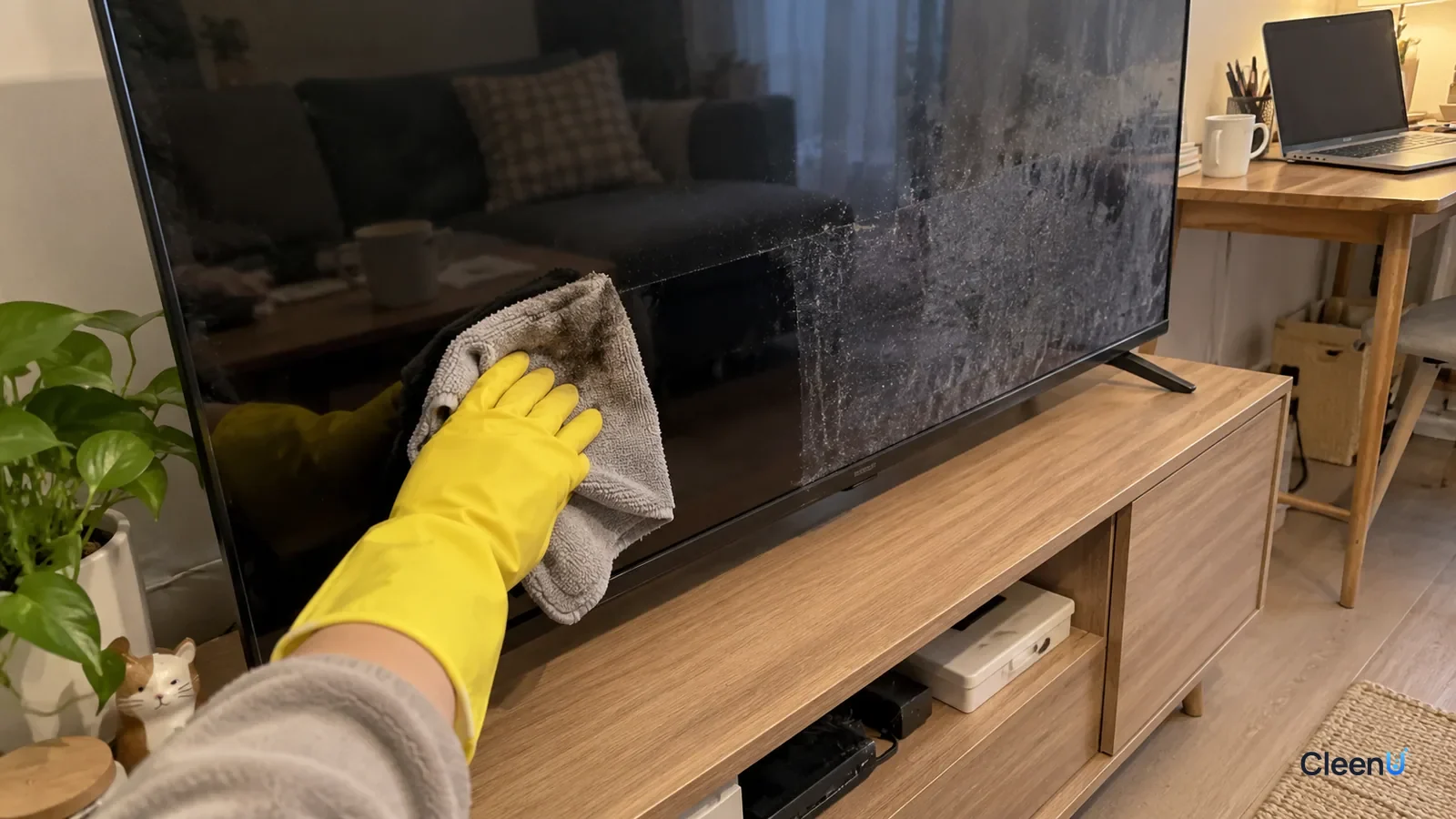
You've got a bottle of glass cleaner from doing the windows, so you give the TV and the computer a quick wipe too. It's all glass, right? But screens and window glass are treated very differently, and damage from the wrong cleaner often can't be wiped off or fixed.
How screens differ from window glass
Window glass is plain glass with no special surface treatment. It shrugs off acids, alkalis, and solvents, so glass cleaners can be fairly strong and built for fast grease cutting and fast drying.
TV, monitor, laptop, and phone screens usually have one or more functional coatings on top.
Anti-glare coating: a microscopically textured, matte surface that scatters room light to cut reflections. Common on computer monitors.
Anti-reflective coating: multiple ultra-thin optical layers that reduce mirror-like reflections. Common on higher-end TVs and laptops.
Oleophobic coating: reduces fingerprint buildup and makes oil easier to wipe off. Common on phones, tablets, and touchscreens.
On some screens the outermost layer isn't glass at all but a plastic polarizer. All of these are thin and sensitive to chemicals.
What in glass cleaner can damage a screen
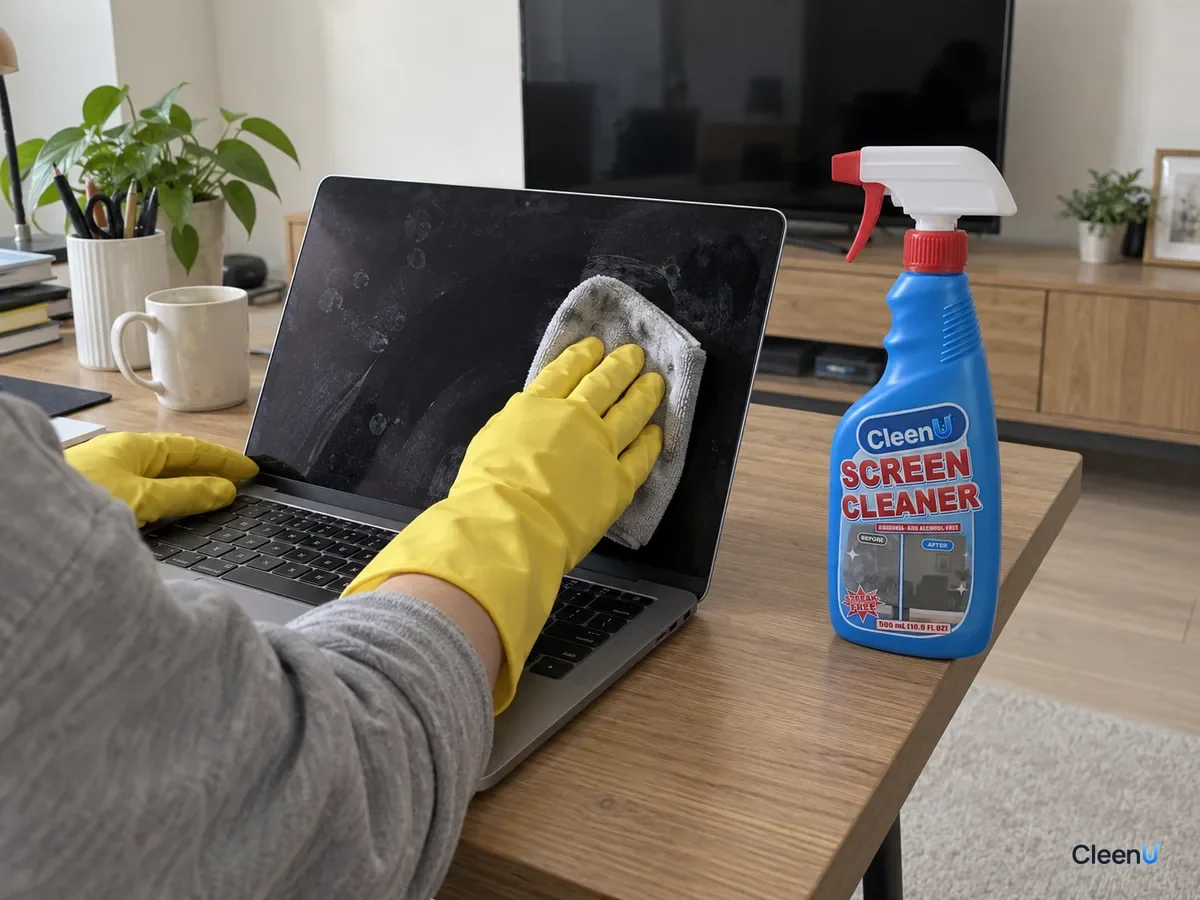
Ammonia: many classic glass cleaners use ammonia because it cuts grease and evaporates without streaks, which is great on windows. But ammonia can react with some screen coatings, and over time cause haze, discoloration, or blotches. Many TV and monitor manuals specifically say not to use ammonia-based cleaners.
High-strength alcohol and solvents: they dissolve grease quickly but can also swell or soften some coatings and plastic polarizers, leaving dull or hazy patches, and they evaporate fast enough to leave drag marks on a big screen.
Shine and anti-fog ingredients: some glass products leave a polymer or surfactant film so glass looks brighter or resists fog. On a screen, that film is just smeary residue.
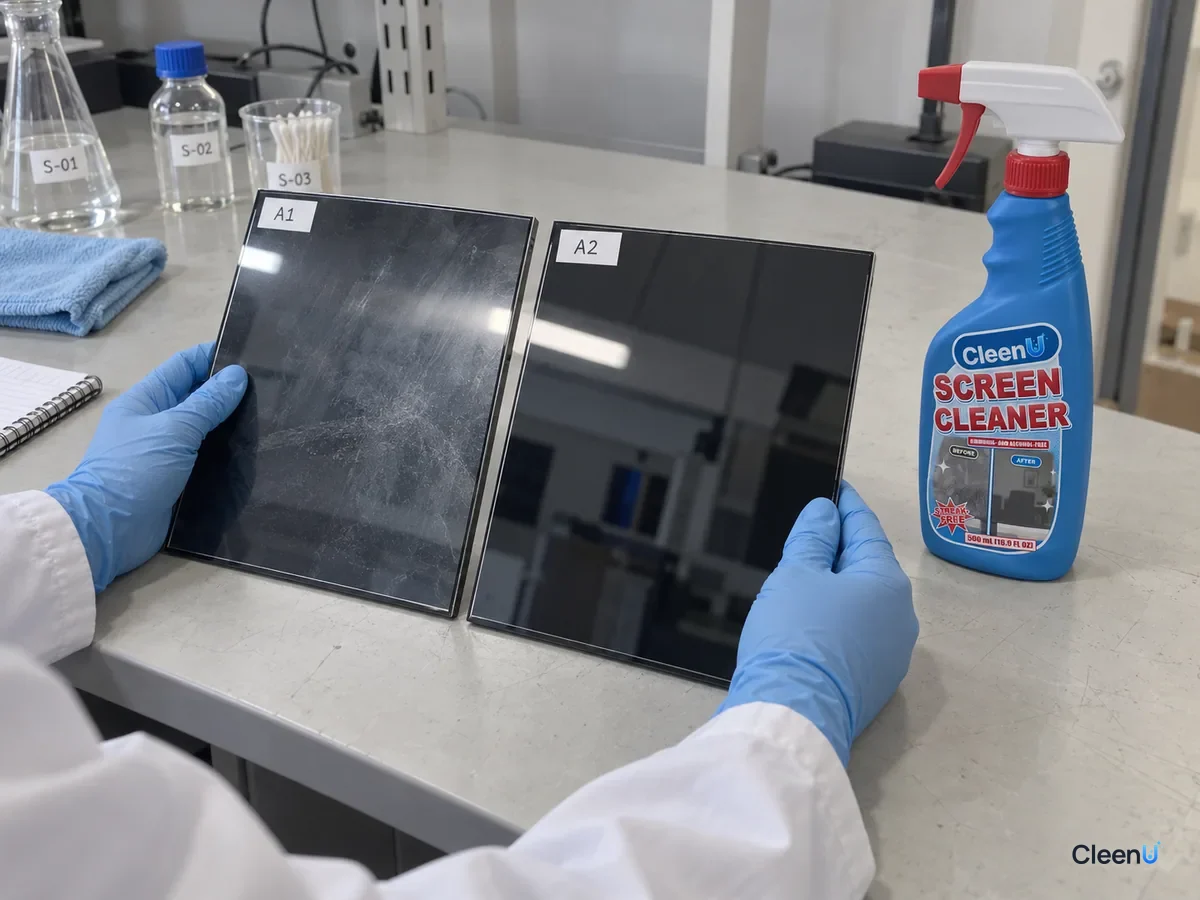
Damaged coatings show up as haze, rainbow blotches, or uneven color that won't wipe away. Cleaning can't fix it, and it usually isn't covered by warranty.
What about an ammonia-free mirror cleaner?
Take CleenU Bathroom Mirror Cleaner as an example. It's a fast-drying mirror and glass spray, pH 6.5 to 8.0 as supplied, made with fast-evaporating alcohols such as isopropyl alcohol and low-residue surfactants, with no ammonia. It's designed for bathroom mirrors, glass partitions, and glass shelves, and its label specifically excludes electronic screens and coated eyeglass lenses. The alcohol that makes mirrors dry fast isn't the best match for screen coatings.
So even with an ammonia-free glass cleaner, switch to a screen-specific product for screens.
What to clean screens with instead
Take CleenU Screen Cleaner as an example. It's a neutral, ammonia-free, alcohol-free screen spray, pH 6.5 to 7.5 as supplied, made with mild nonionic surfactants and low-residue ingredients, with no ammonia, ethanol, or abrasives. Neutral pH and no ammonia or alcohol protect screen coatings; the surfactants emulsify fingerprints and smudges; the low-residue ingredients cut down on streaks. You spray it on a cloth and it dries within seconds.
The right method: turn the screen off and let it cool; dust it with a dry microfiber cloth; mist screen cleaner onto a second cloth so it's slightly damp; wipe gently in one direction without pressing; finish with a dry cloth. For more, see How to clean screens safely and How to clean a TV screen.
Already used glass cleaner on your screen?
Once in a while usually won't cause obvious damage right away. Wipe the screen with a clean microfiber cloth lightly dampened with water or screen cleaner to remove residue, then dry it, and switch to a screen product going forward.
If there's already haze, rainbow blotches, or uneven color that you can still see with the screen off in side light, the coating may be damaged. Cleaning can't restore it; contact the manufacturer.
What's actually on a screen, and why it's hard to wipe off
Most screen grime comes down to three things. The first is fingerprints and palm marks, made of skin oil, salt left behind by sweat, and a little hand lotion. The oil is greasy, and the sweat dries into tiny salt crystals. The second is dust. A screen builds up static while it's running, so fine airborne dust clings to it, especially near the bezel. The third is spatter: specks from a sneeze, a cough, or a snack at the desk. Those dry into small, hard spots that carry protein and sugar.
The surface is what makes them stubborn. An anti-glare matte coating has a microscopic texture, and skin oil settles into the low spots. Wipe it with a dry cloth and you mostly push the oil off the high points and into the valleys, which is why the screen can look worse afterward. An anti-reflective coating will turn even a thin film of oil into a rainbow sheen once the screen is dark. Oleophobic coatings on phones and tablets resist fingerprints when they're new, but they wear thin over time, and prints start sticking more and more.
A screen cleaner works on this grime in two ways: wetting and emulsifying. The lightly dampened cloth spreads the liquid across the oil film. Nonionic surfactants then lower the tension between oil and water, so the skin oil breaks up into tiny droplets the fibers can absorb. Sweat salts and dried spatter dissolve in water, so the damp cloth simply redissolves them and lifts them away. No acid-base reaction happens here, and nothing has to "eat into" the surface, so a neutral, ammonia-free, alcohol-free formula is all the job needs.
Cloth and technique matter more than the spray
Use a clean microfiber cloth. Skip paper towels, bath towels, and old T-shirts. Paper towels are made of fairly stiff wood fibers that can leave fine scratches and lint on a matte coating. Terry loops on a towel drag hard grit across the glass. Microfiber's very fine strands pull dust and oil droplets into the gaps between fibers instead of smearing them.
Go dry first, then damp. A light pass with a dry cloth lifts loose dust and grit. Skip it, and the dust mixes with the cleaner into a fine slurry that leaves hairline streaks. For the damp pass, the cloth should be barely moist, and your pressure should be about what it takes to turn a page. Wipe in one direction, top to bottom, instead of in circles. Circles just move the oil around in place. Take extra care near the edges, because liquid from an overly wet cloth can wick into the gap between the panel and the frame.
When you're done, check the screen in side light. If the oily sheen is gone and the dark screen shows no rainbow smears, you're finished. If a print or two remains, touch up only that spot rather than going over the whole screen again. If a mark won't budge, stays in the same place with the power off, and feels perfectly smooth, it probably isn't dirt. It's more likely coating damage or a panel issue, and more wiping will only blur the area around it.
Buying for offices, conference rooms, and hotels
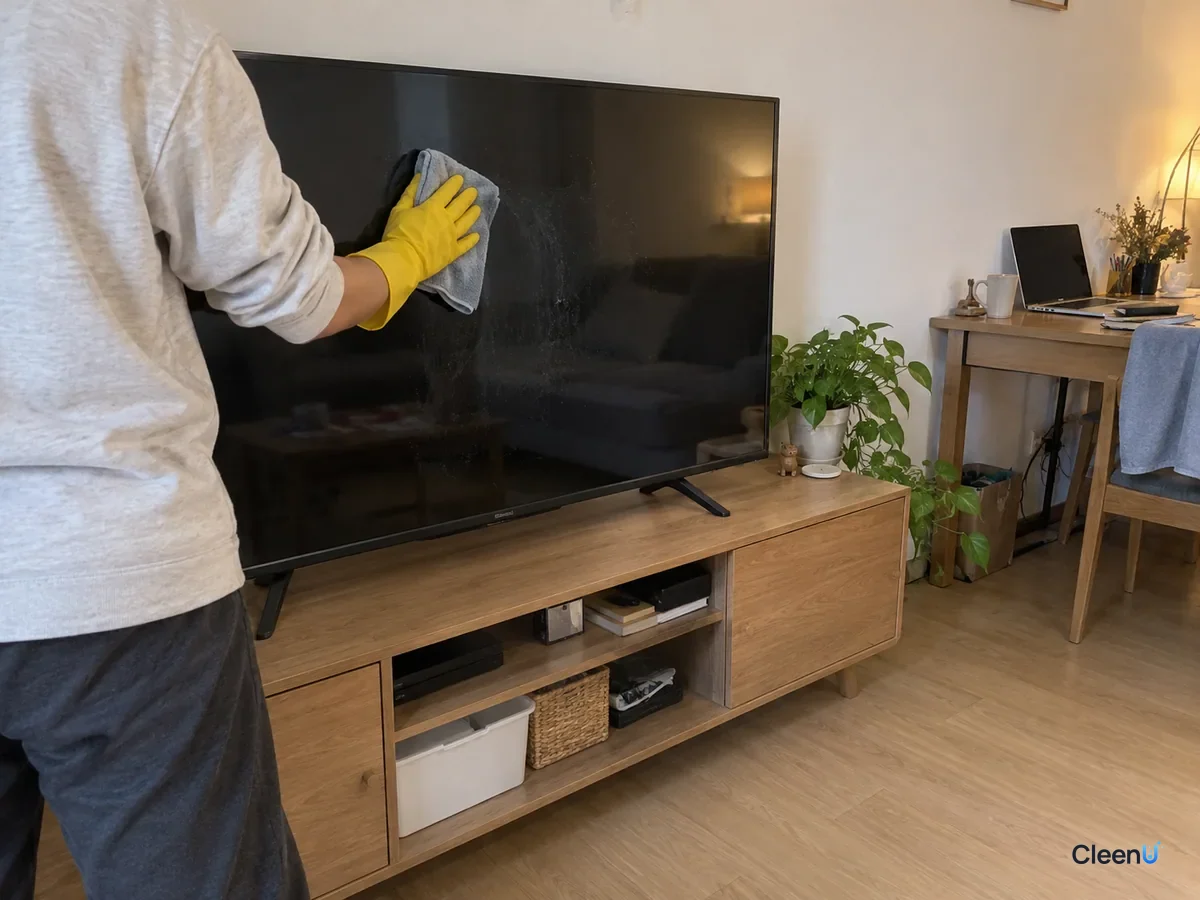
Shared spaces have more screens, more hands, and more spatter than a typical home. When you're buying in volume, look for three things. First, a label that clearly says neutral and ammonia- and alcohol-free. Second, a spray-on-the-cloth method, so staff aren't spraying directly at displays. Third, microfiber cloths in the kit. Also keep glass cleaner and screen cleaner on separate shelves with clear labels. A lot of hazed screens trace back to two look-alike spray bottles on the same cleaning cart.
Windows and mirrors still get glass cleaner
The flip side: windows, mirrors, and glass tables are plain glass with no ammonia- or alcohol-sensitive coatings, so glass cleaner is the right tool. It dries fast and cuts grease for a clear finish. For streaky glass, see Why glass streaks after cleaning.
Stop if you see this
If haze, rainbow marks, or color problems won't wipe away, stop scrubbing with your current product and contact the manufacturer. If liquid runs into the bezel or ports, power off and let it dry. Never spray any cleaner directly on a screen, and don't clean a screen that's on or warm.
Glass cleaner on screens: common questions
Can I use window cleaner on my TV?
We don't recommend it. Many window cleaners contain ammonia or a lot of alcohol, which can damage a TV's anti-reflective coating and leave haze that won't wipe off.
Is ammonia-free glass cleaner okay for a computer screen?
It's still better to use a screen-specific product. Glass cleaners usually contain more alcohol and are designed for glass, not screen coatings.
I used glass cleaner on my screen. Did I ruin it?
A one-time wipe usually doesn't cause immediate damage. Wipe off the residue with water or screen cleaner and use a screen product from now on.
Can I use screen cleaner on windows?
It works on small panes, but it's designed for screens and is gentler on grease. For big windows, glass cleaner is more efficient.
Why won't the haze on my screen wipe off?
The coating may already be damaged. If you can still see it with the screen off in side light and cleaning doesn't change it, cleaning can't fix it; contact the manufacturer.
My TV manual says dry cloth only. Can I use screen cleaner?
Follow the manual. If it says dry cloth only, stick to a dry microfiber cloth.
For a neutral screen spray with no ammonia or alcohol, used on a cloth to clean TVs and monitors without harming their coatings, take a look at our Screen Cleaner.
Glass cleaner isn't a good choice for TVs, computer monitors, or laptops. Screens have anti-glare, anti-reflective, or oleophobic coatings, and the ammonia, higher-strength alcohol, and shine ingredients in many glass cleaners can haze or blotch them permanently. Even ammonia-free mirror cleaners are designed for glass, not electronics. Clean screens with a neutral, ammonia- and alcohol-free screen cleaner: turn the screen off, mist it onto a microfiber cloth, wipe gently, and buff dry. Save the glass cleaner for windows and mirrors.