
Comparison
DIY Vinegar Glass Cleaner vs Store-Bought: What’s the Difference?
Direct answer
Homemade vinegar and water handles light water spots but is weak on grease and fingerprints and smells like vinegar. Rubbing alcohol and water cuts grease fast but evaporates so quickly that it streaks. A well-made glass cleaner balances grease removal, evaporation speed, and low residue, so it's easier to get streak-free glass in one pass.
How to choose
-
You just have a few white water spots and don't want to buy anything
Choose Vinegar and water, finished with a plain-water wipe and a dry cloth
It's effective on water spots and cheap; it struggles with grease and shouldn't be used near stone.
-
You occasionally clean a small pane with fingerprints
Choose A weak rubbing alcohol mix, used sparingly and wiped quickly
It cuts grease fast; on big panes it drag-marks, so ventilate and keep it away from flames.
-
Your bathroom mirror gets toothpaste and skincare splatter every day
Choose A fast-drying mirror and glass cleaner sprayed onto a cloth
It balances grease removal, evaporation, and low residue for a one-pass clean, and no ammonia is gentler on mirror edges.
-
The glass has a thick crust of white scale
Choose An acidic descaler first, then a glass cleaner for upkeep
Heavy scale needs acid; neutral glass cleaners and vinegar water both struggle with it.
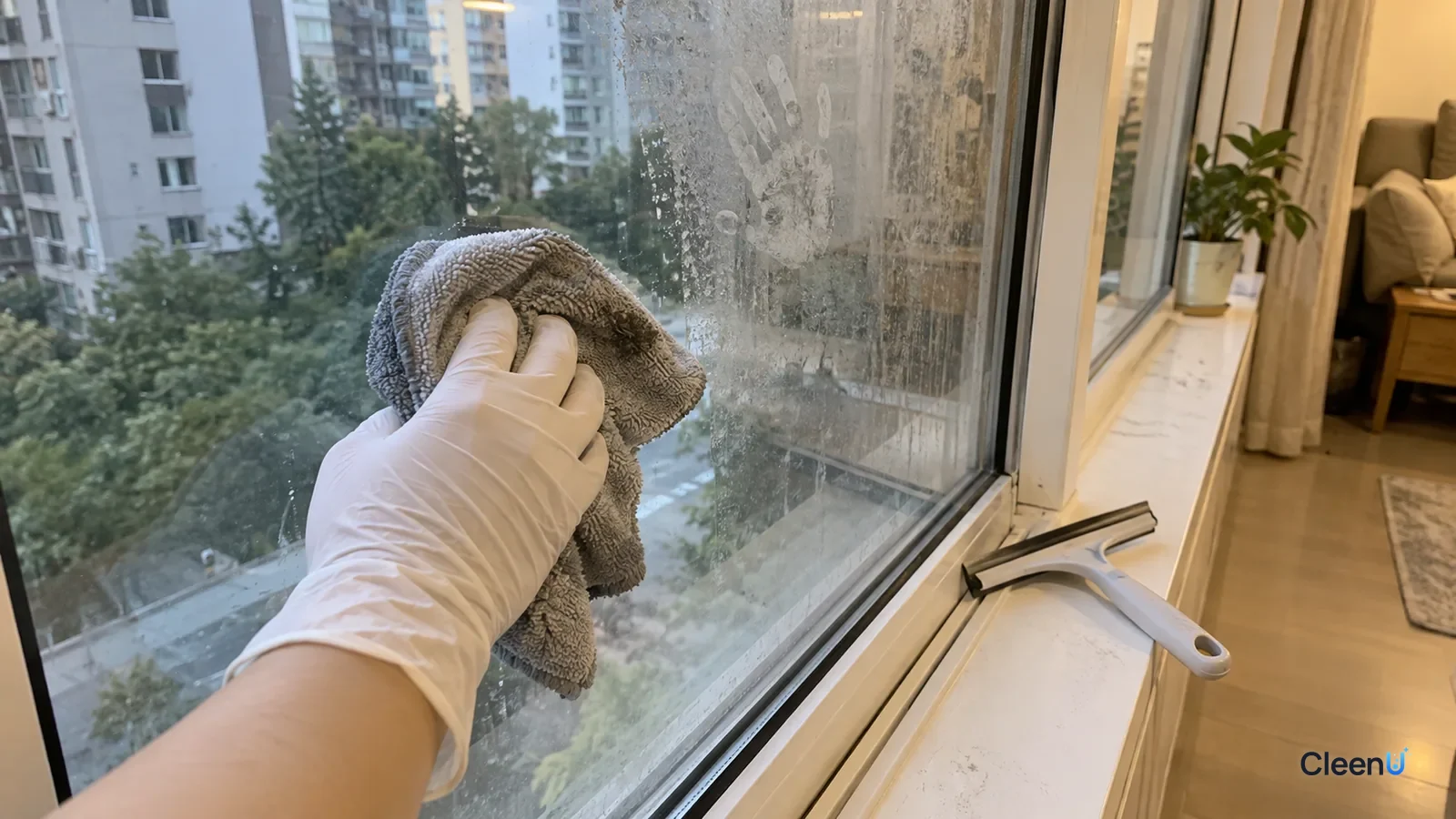
There are plenty of DIY glass cleaner recipes online: vinegar and water, rubbing alcohol and water, vinegar with a squirt of dish soap, baking soda solution. They're cheap and you already have the ingredients. Do they work, and how do they compare with a store-bought glass cleaner? Here's a look by type of grime.
What's on your glass
Glass grime falls into three groups, and each needs something different.
Water spots and scale: calcium and magnesium left when tap water evaporates, white and spotty, common on bathroom mirrors, shower glass, and the outside of windows. It's mineral, so acid dissolves it.
Grease film and fingerprints: skin oil, skincare, and kitchen grease form an oily film that looks smeary in the light. It needs surfactants or solvents to dissolve and emulsify it.
Dust: dry particles that a damp cloth removes, but mixed with grease it turns into a dull gray film.
Getting glass streak-free means removing the grime and also having the liquid evaporate at just the right speed. Too slow and water dries on the glass; too fast and it dries mid-wipe and leaves drag marks. That balance is the hard part of formulating a glass cleaner.
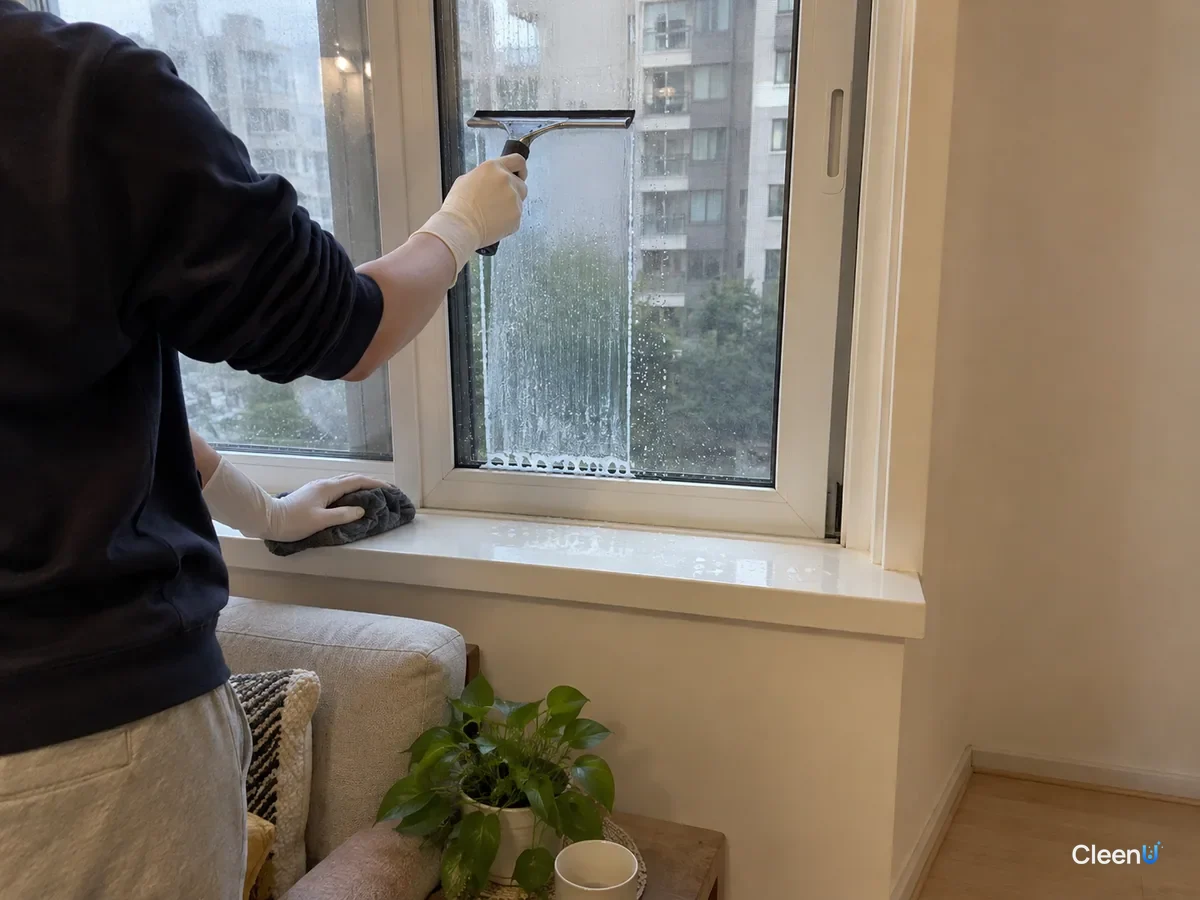
Vinegar and water: good on water spots, weak on grease
White vinegar is mostly acetic acid and mildly acidic when diluted. It dissolves calcium carbonate, so it works on white water spots and light scale.
It does almost nothing to grease, though. Use vinegar water on skincare splatter on a bathroom mirror, fingerprints on a window, or cooking film on kitchen glass and it often gets smearier. It dries slowly, so it tends to leave water marks, and the smell lingers.
It's also an acid, so keep it away from marble windowsills and stone counters, where drips can etch dull spots.
Rubbing alcohol and water: cuts grease, evaporates too fast
Alcohol, whether ethanol or isopropyl, is a solvent that dissolves grease and evaporates quickly, so it beats vinegar on fingerprints and film.
The problem is that it evaporates too fast. On a big window, the area you just wiped dries before the cloth picks up the grease the alcohol lifted, leaving it on the glass as drag marks. The stronger the alcohol, the worse it gets. High-strength alcohol is also flammable, so ventilate and keep it away from flames, and it isn't kind to some coated glass and screen coatings.
Vinegar plus dish soap: cuts grease, leaves a film
Adding a few drops of dish soap to vinegar water is meant to fix the grease problem, and it does emulsify grease. But dish soap is high in solids and foamy, so even a little too much dries into a white film on the glass that shows every swirl in the sun. To avoid it, you have to wipe again with plain water.
What a good glass cleaner solves
A store-bought glass cleaner is typically water, a small amount of low-residue surfactant, evaporating alcohols or solvents, and sometimes a little ammonia or other additives. It has to do three things at once: cut grease (surfactants and solvents), evaporate at the right speed (the alcohol ratio), and leave almost nothing behind (low residue). That balance is hard to hit consistently with a homemade mix.
Take CleenU Bathroom Mirror Cleaner as an example. It's a fast-drying mirror and glass spray, pH 6.5 to 8.0 as supplied, made with fast-evaporating alcohols such as isopropyl alcohol and low-residue surfactants, with no ammonia. It's ready to use: spray and wipe, no dwell time. The alcohol dissolves the oily part of skincare and fingerprints and helps the liquid evaporate quickly; the surfactants lift toothpaste spots and prints; no ammonia is gentler on the back paint at mirror edges. It's made for bathroom mirrors, glass partitions, and glass shelves, for toothpaste spots, skincare splatter, fingerprints, and water spots. It isn't for mirror edges or backs (avoid pooling), glass with a heavy scale crust, electronic screens, or coated eyeglass lenses.
To be clear: a thick crust of hard-water scale won't come off with a neutral glass cleaner either. That's a job for an acidic descaler.
What about baking soda or newspaper?
Baking soda in water is mildly alkaline and can loosen a thin film of kitchen grease. But it doesn't dissolve well, and when the water dries, any undissolved soda is left on the glass as a white powdery film that needs a plain-water wipe to remove. Mixing it with vinegar doesn't help either. The fizz is an acid-base reaction releasing carbon dioxide, and once it's over you've neutralized both, leaving mostly salty water that cleans worse than either did alone.
Newspaper was the classic window rag because it's absorbent and lint-free. Modern newsprint and inks are different, though, and the ink tends to rub off onto window frames and your hands. A clean microfiber cloth does the same job better.
Same glass, different spot, different answer
Bathroom mirrors collect toothpaste specks, skincare splatter, and fingerprints, with the occasional water spot. Most of that is oily, so you want a fast-drying cleaner that cuts grease. This is exactly where vinegar water smears worst. Mirrors also have a painted backing along the edges, and liquid that seeps in can cause dark edges over time, so spray the cloth, not the mirror edge.
Exterior windows deal with mineral spots from rain, dust, and oily particles from traffic. The panes are large, it's often windy or sunny, and liquid dries fast, so a squeegee leaves fewer streaks than a cloth. If all you're seeing is mineral spots with no film, vinegar water is a reasonable choice here.
Kitchen glass, like cabinet doors and range hood panels, picks up a cooking-grease film that's heavier than fingerprints and can turn tacky. A glass cleaner handles a light film. Once it's yellow and sticky, strip it with a kitchen degreaser first and finish with glass cleaner. Vinegar or glass cleaner alone will be slow going.
Shower doors get hit with hot water and body wash every day, so you usually find hard-water scale and soap scum layered into a white haze. That needs an acidic scale remover first. Glass cleaner and vinegar water are maintenance tools there, not the fix.
The problem with a big batch of homemade spray
Most people mix a full spray bottle and use it over weeks. Tap water, vinegar, and a squirt of dish soap don't have a fixed ratio or anything designed to keep the mix stable, so an old batch can turn cloudy or start to smell. And because the strength changes every time you mix it, a recipe that worked great once can streak the next time. One real advantage of a manufactured cleaner is consistency: the same method gets you the same result from bottle to bottle.
Side by side
DIY glass cleaners vs a store-bought glass cleaner
| Factor | Vinegar and water | Rubbing alcohol and water | Store-bought glass cleaner |
|---|---|---|---|
| Water spots and light scale | Effective | Fair | Fair (heavy scale needs a descaler) |
| Grease film and fingerprints | Weak | Effective | Effective |
| Evaporation | Slow; tends to leave water marks | Fast; tends to leave drag marks | Balanced by formula |
| Streaking | Smears over grease | Drag marks on large panes | Streak-free when used correctly |
| Smell | Vinegar | Alcohol | Usually mild |
| Watch out for | Keep away from stone | Flammable; ventilate; hard on some coatings | Check the label; avoid pooling at mirror edges |
Whatever you use, technique matters more than the recipe
A lot of streaky glass is a technique and tools problem, not a cleaner problem.
Use clean microfiber cloths, one damp and one dry.
Dry-wipe the dust off first, then use cleaner.
Use a light mist, on the cloth or the glass, not a soaking.
On large panes, squeegee top to bottom, then dry the edges with a cloth.
Don't clean windows in direct sun; the liquid dries too fast and streaks.
For why glass streaks and how to fix it, see Why glass streaks after cleaning. For windows, see How to clean windows with a squeegee.
Still streaky? Read the streak
White dots that show up more as the glass dries are minerals left behind, or glass that wasn't dried. Buff with a dry cloth. If they won't buff off, it's scale and needs an acidic product.
A rainbow smear means oil got spread around instead of picked up. The cloth is too wet or already loaded with grease. Switch to a clean side.
An even white haze with visible swirl lines under side light is usually surfactant residue from dish soap or too much cleaner. Wipe with a plain-water cloth, then dry.
Lint and fibers point to the cloth. Use a microfiber that doesn't shed.
Drag lines that follow your wiping direction mean the liquid dried too fast, which is common with alcohol mixes, direct sun, or working a big pane slowly. Clean smaller sections at a time and stay out of the sun.
Each of these has a different fix, which is why switching recipes rarely helps until you know which streak you're looking at. In practice, most streaking on mirrors and windows comes from too much liquid, a dirty cloth, or sun, not from the cleaner itself.
Which should you use?
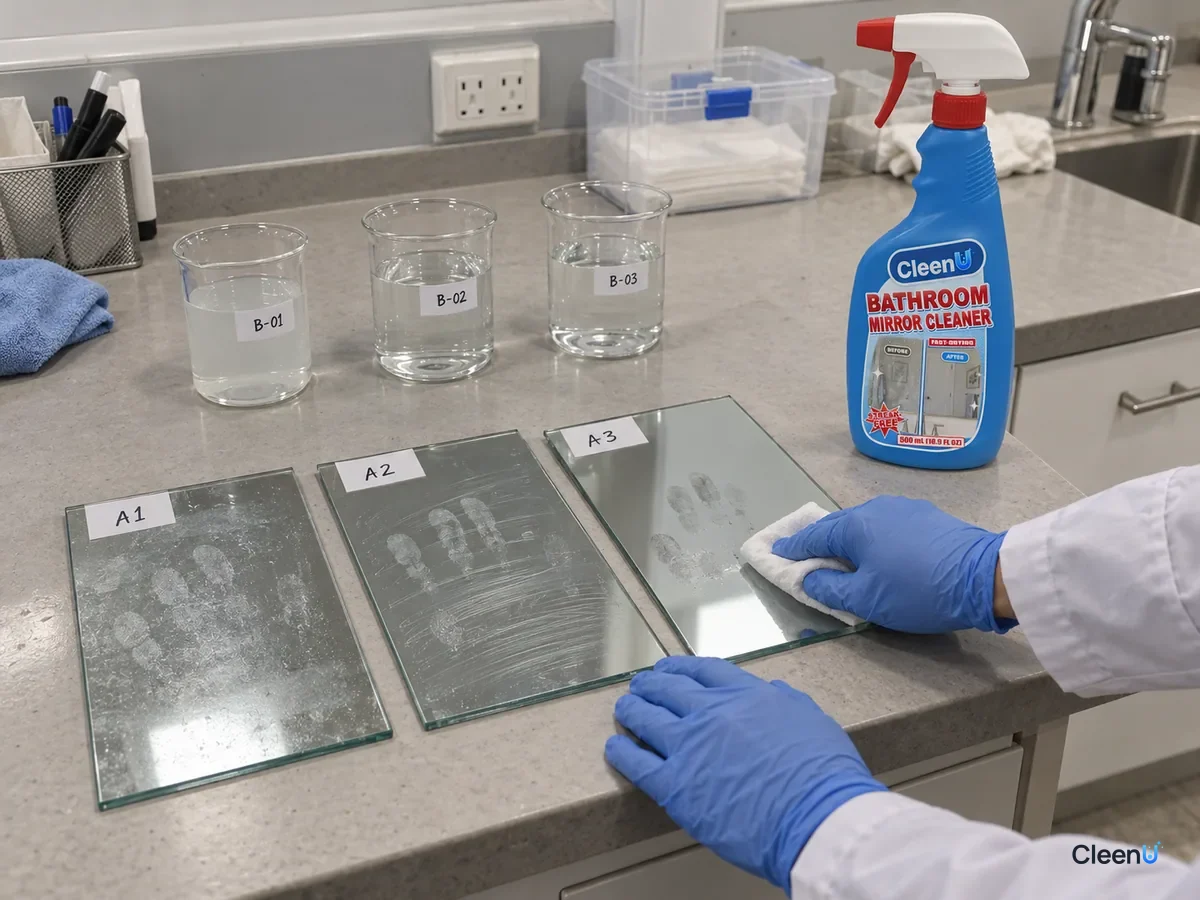
Homemade glass cleaners each have trade-offs. Vinegar water helps with water spots but is weak on grease, smells, tends to leave water marks, and shouldn't be used near stone. Alcohol water cuts grease but evaporates so fast it drag-marks large panes, and it's flammable. Vinegar with dish soap cuts grease but leaves a film. A good store-bought glass cleaner earns its place by balancing grease removal, evaporation speed, and low residue, so you get streak-free glass in one pass. Leave heavy scale to a descaler. Whatever you use, clean microfiber, a light mist, and no direct sun matter more than the recipe.