
How-to
Cleaning Floors in a Pet Home: Paw Prints, Drool, and Odor
Direct answer
Vacuum up pet hair before you mop. Wipe paw prints and drool marks promptly with a low-residue floor cleaner, and blot urine before cleaning it. Dilute cleaner per the label, choose a mild scent, and let floors dry before pets walk on them. Robot mops should use a pet-home solution.
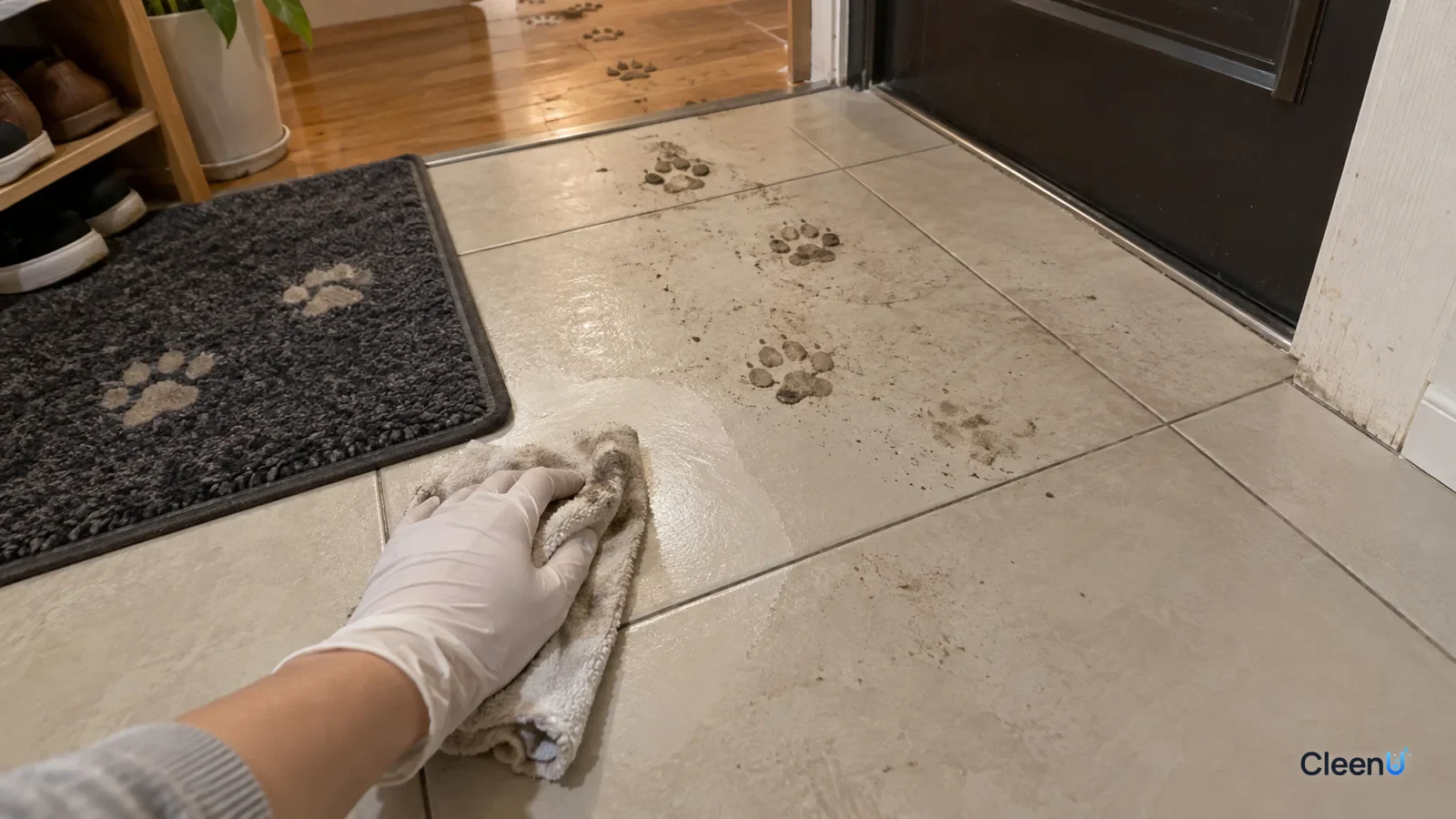
Once you have a dog or cat, the floors never seem done. You finish mopping and there's a trail of muddy paw prints at the door, a ring of dried drool around the water bowl, litter scattered by the box with a faint smell you can't place, and an oily patch where the dog likes to nap.
Pet-home floors differ from other homes in two ways. There are more kinds of mess, and pets live closest to the floor: they lick it, walk on it barefoot, and sleep on it. So you want floors truly clean, with as little residue and as few harsh products as possible. Here's how to handle each part of the house.
What's actually on a pet-home floor
Hair and dander. Dogs and cats shed every day, and more when the seasons change. Hair is light and staticky, clumps with dust, and wraps around a mop pad instantly, so it has to be vacuumed up first.
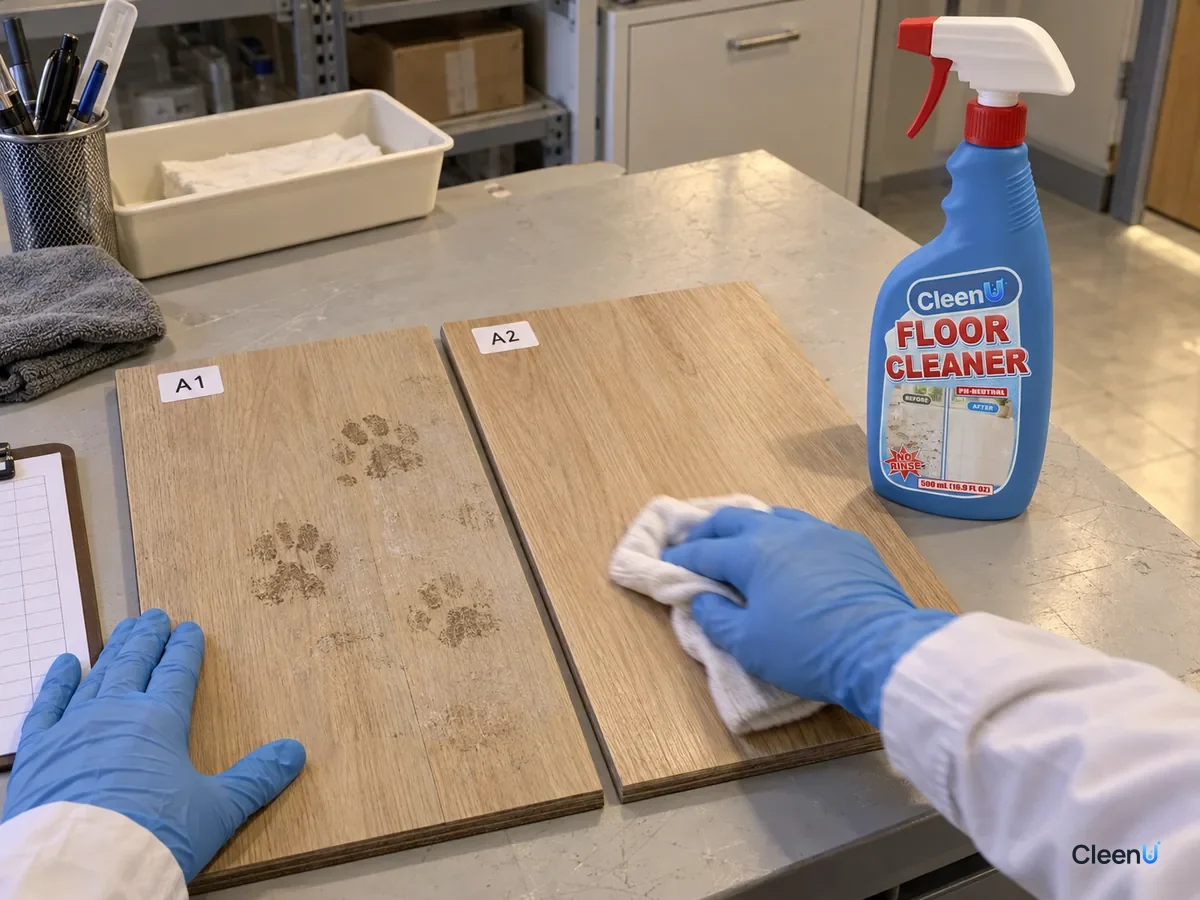
Paw prints. Paw pads secrete a little oil and sweat, and dogs coming in from outside bring mud and grit. A paw print is oil plus dirt. A water-only wipe usually leaves an oily film that dries into a gray print.
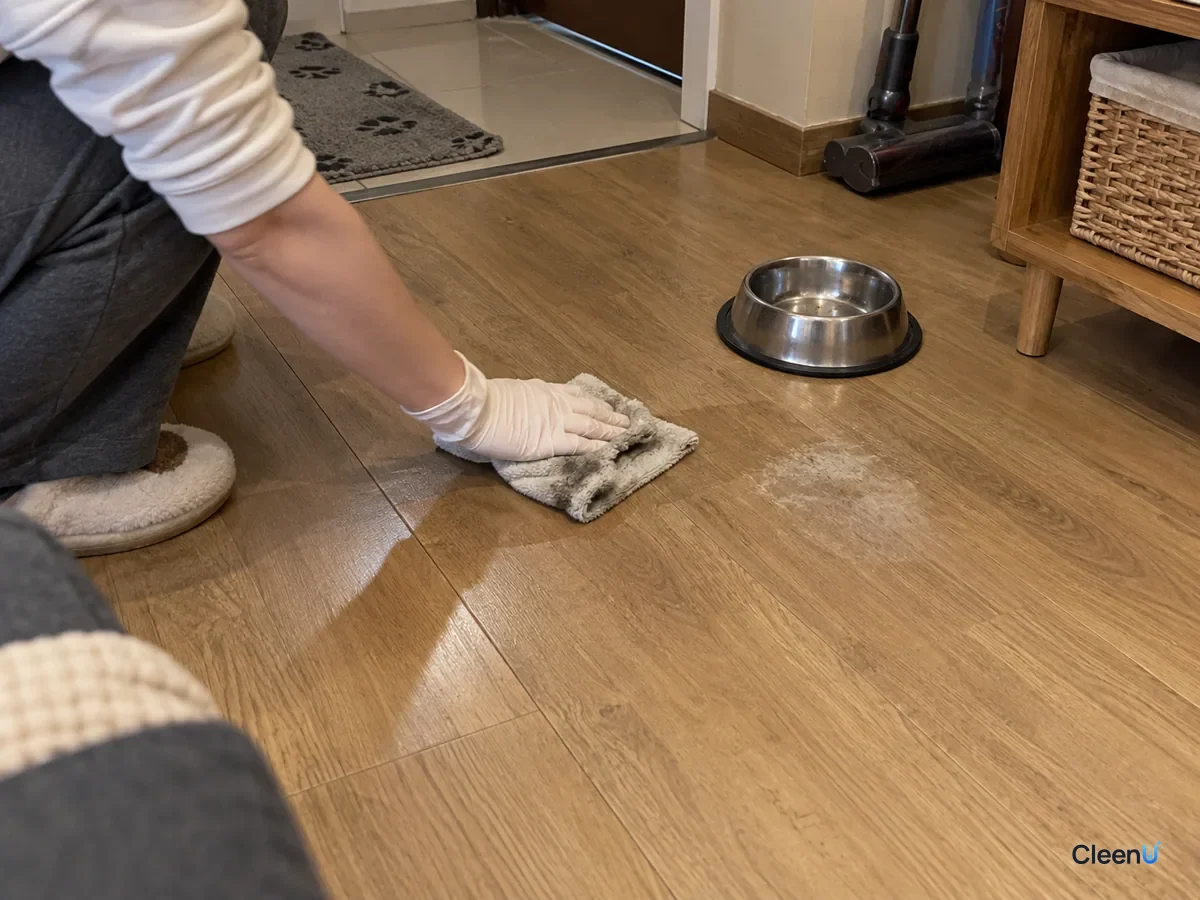
Drool marks. Saliva contains mucins, a bit of protein, and salts. When the water evaporates, it leaves a pale, slightly sticky ring, mostly around food and water bowls.
Urine and vomit. These are the main sources of pet odor. Bacteria break urea down into ammonia. Uric acid forms urate crystals that cling to the floor and gaps and release odor again when they get damp, which is why spots can smell even after they look clean.
Litter. Tiny litter granules tracked out of the box act like sandpaper under a mop and can scratch the floor finish.
Choosing a cleaner
For a pet home, look for a floor cleaner that's low-foam and low-residue so it doesn't leave a tacky film pets might lick, has a mild scent with no heavy fragrance or essential oils, and is diluted per the label. Skip chlorine- or phenol-based disinfectants for routine mopping.
Take CleenU Floor Cleaner as an example. It's a pH-neutral, no-rinse floor cleaner, pH 7.0 to 8.5 as supplied, made with low-foam nonionic surfactants and a small amount of fast-drying solvent, with low solids so no rinse is needed. Spray and mop as is, or mix 1:20 with water for larger areas. Low foam and low solids mean little residue after mopping, and the fast-drying solvent gets pets back on the floor sooner. It's made for sealed hard floors such as tile, vinyl, laminate, and sealed hardwood.
If you mop with a robot, don't pour regular floor cleaner into the tank; use a low-foam robot mop solution. CleenU Robot Mop Cleaning Solution for Pet Homes is a neutral (pH 6.5 to 7.5 as a concentrate), low-foam concentrate. It's fragrance-free with no added fragrance, handles odor with a cyclodextrin-based odor neutralizer, contains no quats or phenols, and dilutes at about 1:50 to 1:100, usually 10 to 20 mL per fill. For more on robot mops with pets, see Robot mopping in a home with cats and dogs.
Room by room
Entry, feeding area, litter area, and pet beds
Whole house
Vacuum hair first, then mop
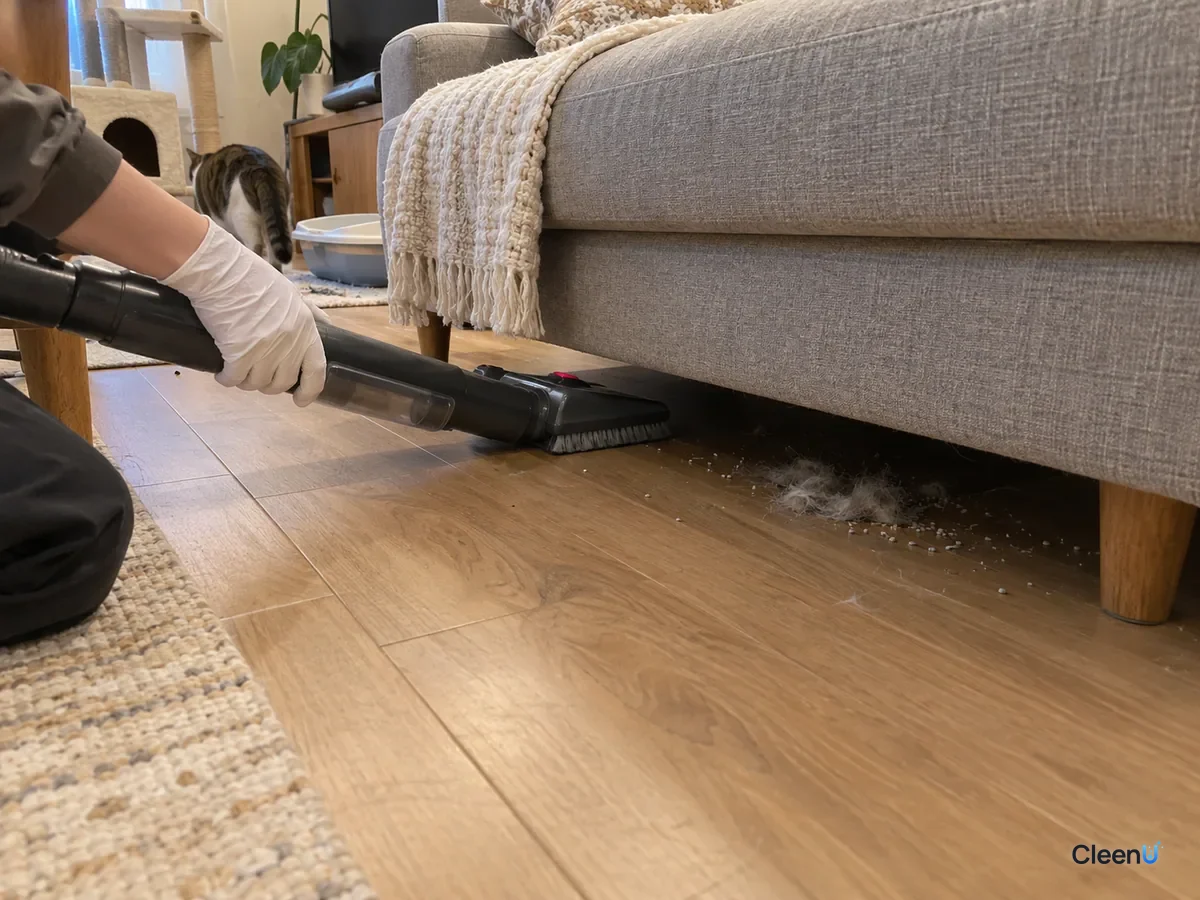
Use a vacuum with a pet-hair brush or a robot vacuum to pick up hair, dander, and litter. Hair collects under the sofa, under beds, and along baseboards. Mop before vacuuming and the hair wraps around the pad and smears across the floor.
Caution:Always vacuum litter-heavy areas first; a pad dragging litter will scratch the floor.
Entryway
Wipe paws at the door, then the prints
Keep an absorbent mat and a dedicated towel by the door and wipe paws on the way in. For muddy prints on the floor, lift the dirt with a dry paper towel first, then spray floor cleaner on the mop or a cloth and wipe to remove both the oil and the dirt.
Food and water bowls
Wipe drool marks daily
Drool and food bits collect around bowls. Wipe the area once a day with a cloth sprayed with cleaner, then dry it. A waterproof mat under the bowls helps, and you can wash it separately.
Litter box and accidents
Blot urine first, then clean
When you find urine, press paper towels on it to soak it up instead of wiping it around. Then clean with floor cleaner and finish with a cloth dampened with plain water, and dry. Sweep up scattered litter daily and clean the floor around the box weekly.
Caution:Don't let a robot mop run over urine. It spreads it around and contaminates the pad and tank.
Pet beds and favorite spots
Tackle oily patches weekly
Where a dog lies often, skin oil leaves the floor feeling greasy or tacky. Spot-clean it weekly with floor cleaner, and wash bed covers separately per their labels.
Finishing up
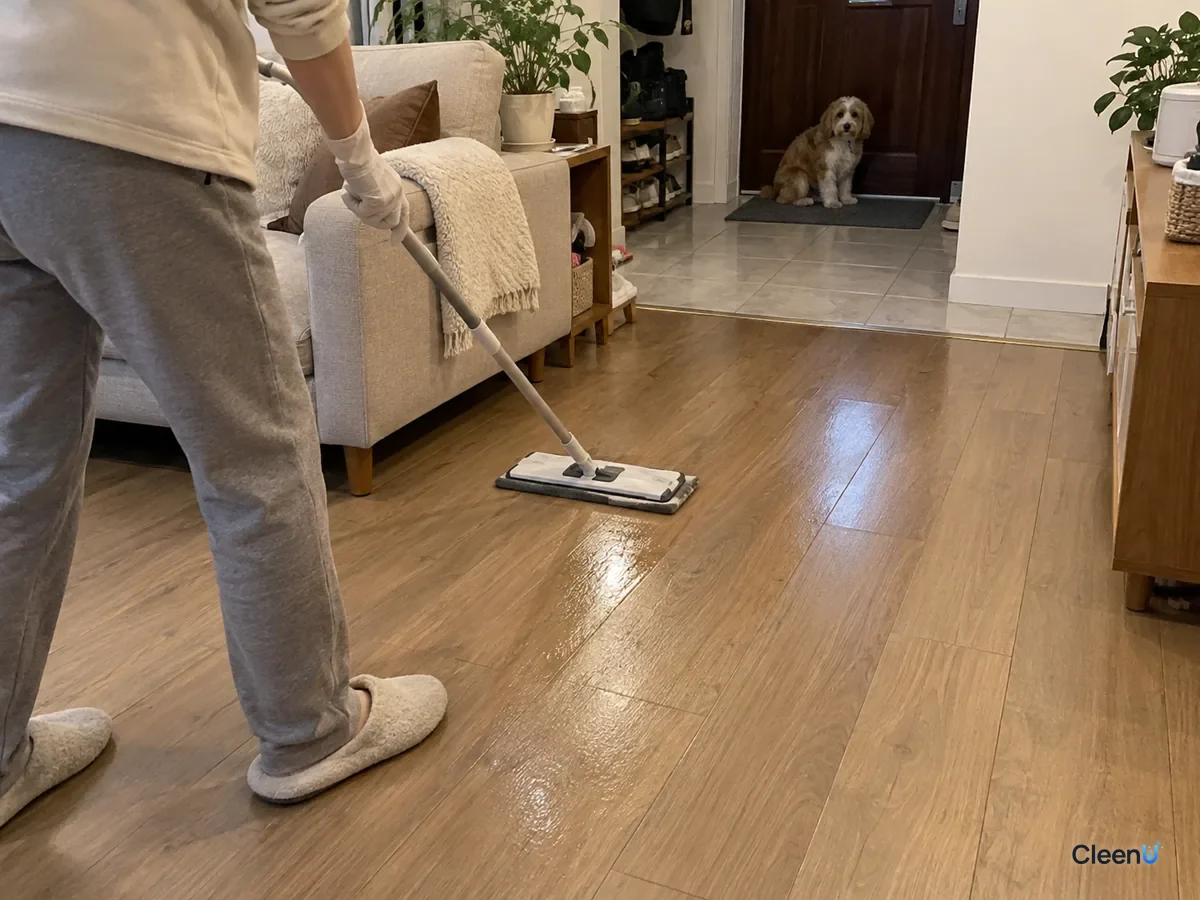
Damp mop, then let it dry
Wring the pad until it's just damp, open a window, and let the floor dry completely before pets come back in. Wash and dry the pad afterward, and keep separate pads for pet areas if you can.
Why urine still smells after you clean it
Fresh urine doesn't smell much. It gets stronger over a few hours because bacteria produce urease, which breaks urea into ammonia, and ammonia has a sharp, pungent odor. Meanwhile, uric acid forms urate crystals that don't dissolve well in water and settle into floor surfaces, grout, and gaps between boards. A water-only wipe makes it look clean, but the crystals remain, and on humid days they pick up moisture and release odor again.
The keys are to blot it up quickly so less soaks into gaps, clean with a floor cleaner to remove leftover organic material, and finish with a plain-water wipe and dry. Gaps and porous surfaces like unsealed wood or cement grout absorb more deeply and may need an enzyme-based pet urine product used per its label.
If a pet keeps going in the same spot, it may be a behavior or health issue as well as a cleaning one, so check with your vet.
How often to clean
Vacuum: daily, or morning and evening during shedding season.
Mop: the whole house two or three times a week, and spot-clean the entry, feeding area, and litter area daily.
Deep clean: once a month, get under the sofa, along baseboards, and around the pet bed where routine mopping doesn't reach.
Robot vacuum: schedule daily vacuuming and every-other-day mopping, and rinse the pad and dirty-water tank after each run so the pad doesn't start to smell.
What to skip in a pet home
Bleach and phenol-based disinfectants for routine mopping. They're harsh, and pets are close to the floor and may lick it. If you do need to disinfect, dilute per the label, rinse-mop with water afterward, and let the floor dry completely before pets come back.
Essential oils or fragrance in mop water. Some essential oils aren't safe for cats, and pets' noses are far more sensitive than ours.
Dish soap for mopping. It foams, leaves residue, and makes floors sticky, and pets lick their paws.
Store cleaner concentrates out of pets' reach with the caps tightened.
Adjusting during shedding season
In spring and fall, many pets shed far more than usual for a few weeks. That's when the order matters most: vacuum first, then mop. Wet hair sticks to the floor and wraps around mop fibers, so mopping first just moves it around. Bump vacuuming up to once a day and keep the mopping schedule the same, but rinse or swap mop pads more often.
Small changes that cut down the mess
A washable mat under food and water bowls catches most of the splashes and kibble dust before they reach the floor. A rough mat at the door traps mud and grit from paws, which also protects floor finishes from scratches. Wiping paws after walks takes a minute and saves a full mop of the entryway.
Stop if you see this
If a pet licks undiluted cleaner and starts drooling, vomiting, or seems lethargic, contact your vet right away and bring the product label. If pets sneeze, paw at their faces, or show red skin after you mop, stop using that product and ventilate more. If cleaner irritates your own skin, rinse with water.
Mopping in a pet home: common questions
What should I mop with if I have cats or dogs?
A low-foam, low-residue floor cleaner with a mild scent, diluted per the label. Skip bleach, essential oils, and dish soap, and let the floor dry before pets return.
Why do paw prints leave gray marks after I wipe them with water?
Paw prints contain oil from the paw pads, and water can't remove oil, so it dries into a gray print. Spray floor cleaner on a cloth and wipe to lift the oil and dirt together.
How do I clean pet urine off the floor?
Blot it with paper towels, clean with floor cleaner, then wipe with plain water and dry. If it soaked into gaps, an enzyme-based pet urine product can help.
Can my robot mop clean up pet urine?
Not directly. Clean it up by hand first, or the robot spreads it around and contaminates the pad and tank.
How often should I mop in a pet home?
Vacuum daily, mop the whole house two or three times a week, and spot-clean the entry, bowls, and litter area daily.
How is a pet-home robot mop solution different?
CleenU's pet-home version is fragrance-free with no added fragrance, uses a cyclodextrin-based odor neutralizer, and contains no quats or phenols. It's neutral and low-foam and is used the same way as the standard version.
For a low-foam, no-rinse cleaner that leaves little residue and dries fast for everyday tile and wood floors in homes with cats and dogs, take a look at our Floor Cleaner.
Pet-home floors deal with hair, oily paw prints, drool marks, urine, and litter. Vacuum first, then mop, and spot-clean the entry, feeding area, and litter area daily. Use a low-foam, low-residue, mild-scented floor cleaner at the label dilution, blot urine before cleaning it, and finish with a plain-water wipe. Skip bleach, essential oils, and dish soap, and let floors dry before pets walk on them. For robot mops, use a low-foam pet-home solution, and never let the robot mop up urine.