
How-to
How to Clean a Microwave: Grease, Splatter, and Odor
Direct answer
Heat a bowl of water for a few minutes and leave the door closed so the steam softens splatter and dried food, then wipe the walls and turntable. For stubborn grease, spray degreaser onto a cloth and keep liquid out of the vents and the waveguide cover. Finish with a plain-water wipe and leave the door open to dry.
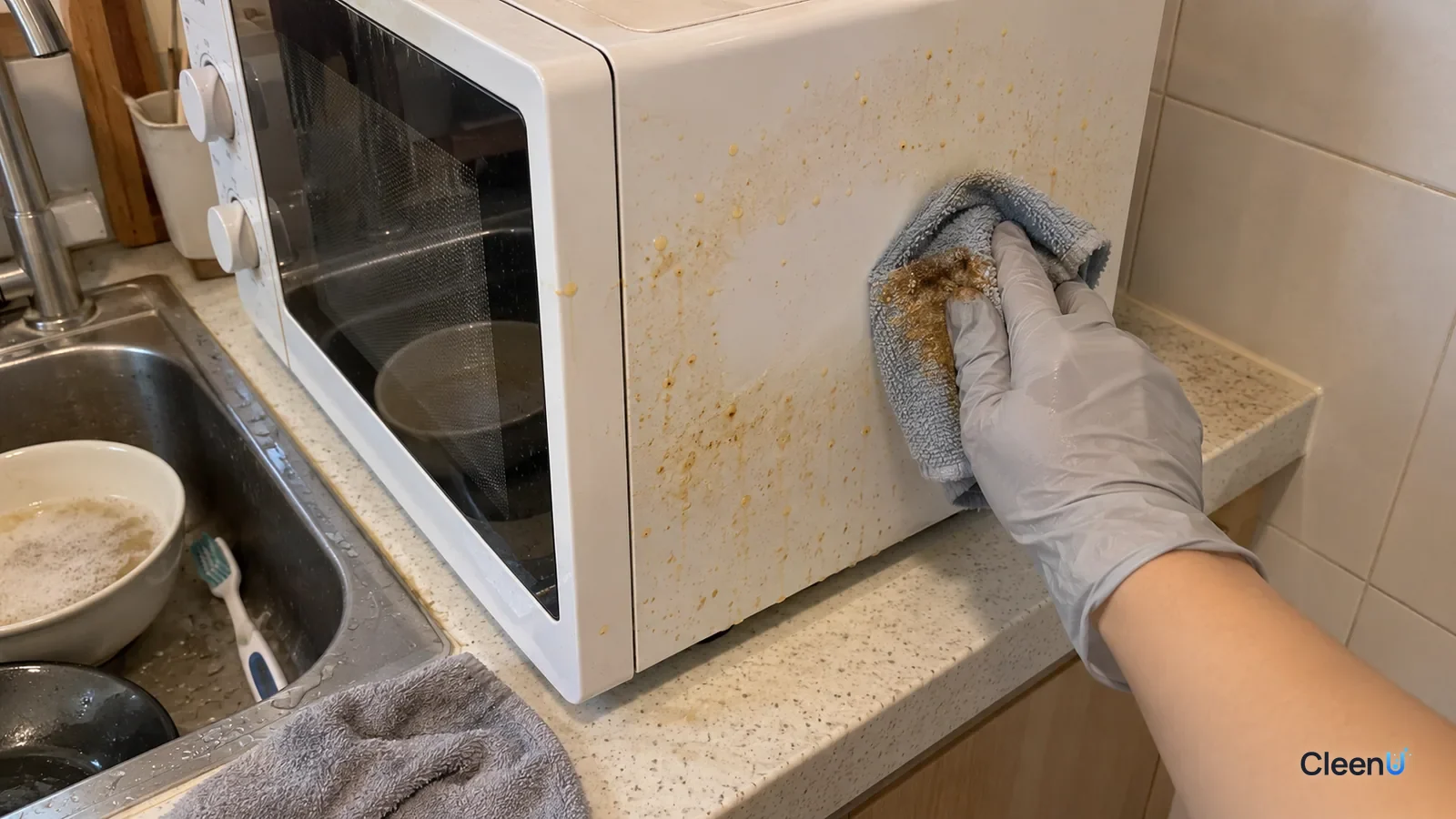
The microwave is one of the most overlooked spots in the kitchen. Soup splatters while reheating, uncovered food pops, the ceiling is speckled with grease, there's a dried ring of sauce under the turntable, and the door opens on a mix of every meal you've heated.
The inside is small, with vents and electronics, so there are a few places to be careful. With the right method, it takes about 15 minutes.
What's inside a dirty microwave
Grease spots: when you heat oily food, fat and water expand and splatter onto the walls and ceiling. The walls get warm again and again, so the spots slowly oxidize, yellow, and harden.
Dried food and sauce: spilled sauce, soup, and oatmeal stick to the turntable and floor and dry out more with every use.
Odor: food bits, oxidized fat, and scorched smells linger on the walls and in crevices; fish, curry, and other strong foods are especially stubborn.
Unlike an oven, a microwave's walls don't get hundreds of degrees hot, so splatter rarely carbonizes into a hard crust. Most of the time, steaming and wiping takes care of it.
Why steam it first
Microwaves heat food by making water molecules vibrate. Bring a bowl of water to a boil and the closed cavity fills with steam. It condenses on the walls, rehydrating dried food and loosening the bond between grease and the wall. After that, most grime wipes off with a damp cloth, no scraping and very little cleaner.
Some people add lemon slices or a splash of vinegar. That's mostly for smell, though citric and acetic acid help a bit with light mineral spots; the grease removal comes from the steam and the wiping.
Using a degreaser in a microwave
For yellowed grease spots or a film on the ceiling that steam doesn't loosen, use a kitchen degreaser.
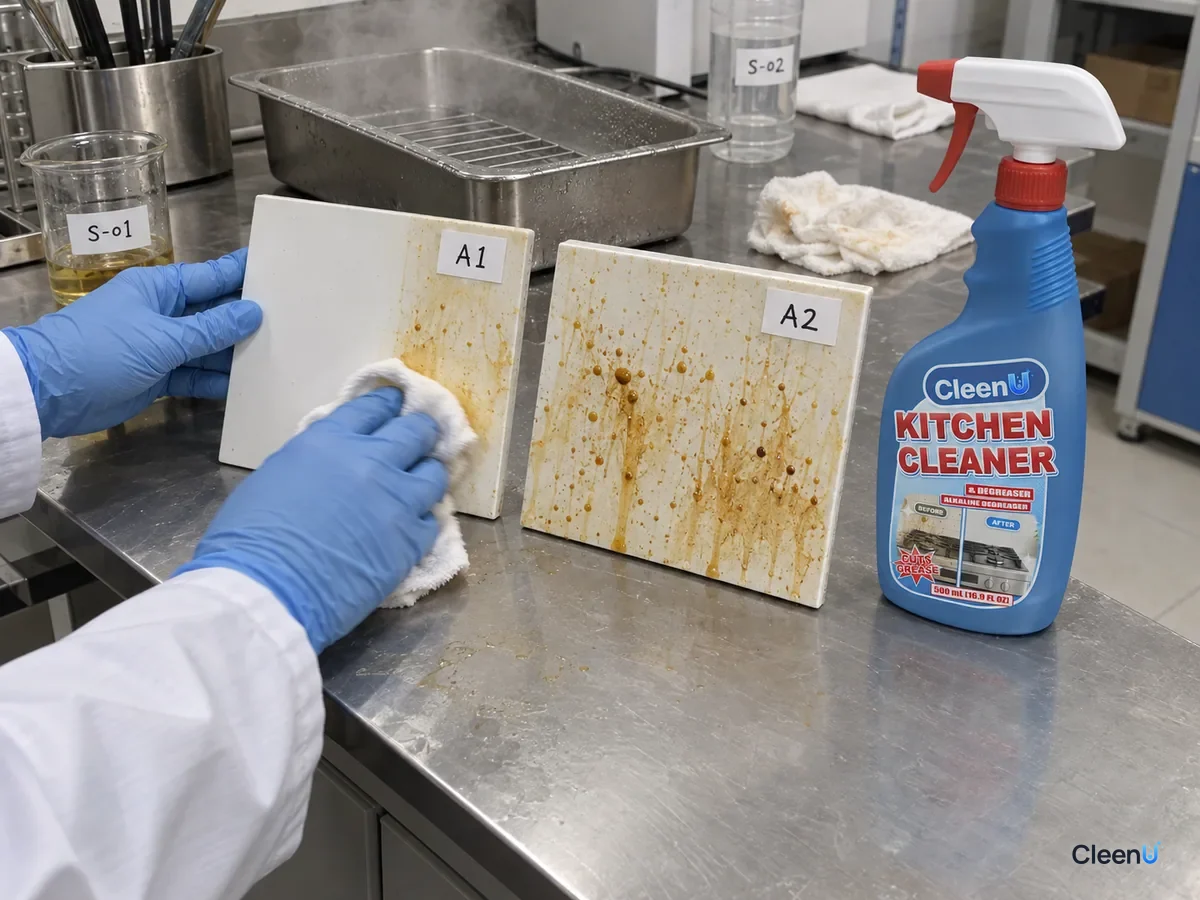
Take CleenU Kitchen Cleaner & Degreaser as an example. It's an alkaline kitchen degreasing spray, pH 10.0 to 11.5 as supplied, made with alkaline builders, nonionic surfactants, and glycol ether solvent, with no chlorine and no abrasives. The builders saponify and loosen oxidized grease, the solvent swells sticky layers, and the surfactants emulsify what's loosened so the cloth can lift it. Always follow with a plain-water wipe.
In a microwave, a few rules apply. Spray the cloth, not the cavity. Keep liquid out of the wall vents and the light cover. The small square panel on the side wall, the waveguide cover (usually mica or plastic), only gets a gentle wipe with a damp cloth: no cleaner, no scrubbing. Wipe thoroughly with plain water afterward so no alkaline residue remains. The degreaser isn't for aluminum, unsealed wood, natural marble, or hot surfaces, so let the microwave cool first.
Six steps to clean a microwave
From steam to dry in six steps
Heat a bowl of water
Fill a microwave-safe bowl halfway to full with water, adding a couple of lemon slices or a spoonful of vinegar if you like. Heat on high for 3 to 5 minutes until it boils and the door window fogs up.
Caution:Use a microwave-safe container, never metal, and don't overfill it or it may boil over.
Leave the door closed for a few minutes
When it stops, wait another 3 to 5 minutes so the steam can soften the grime. Watch for hot steam and a hot bowl when you open the door.
Remove the turntable and roller ring
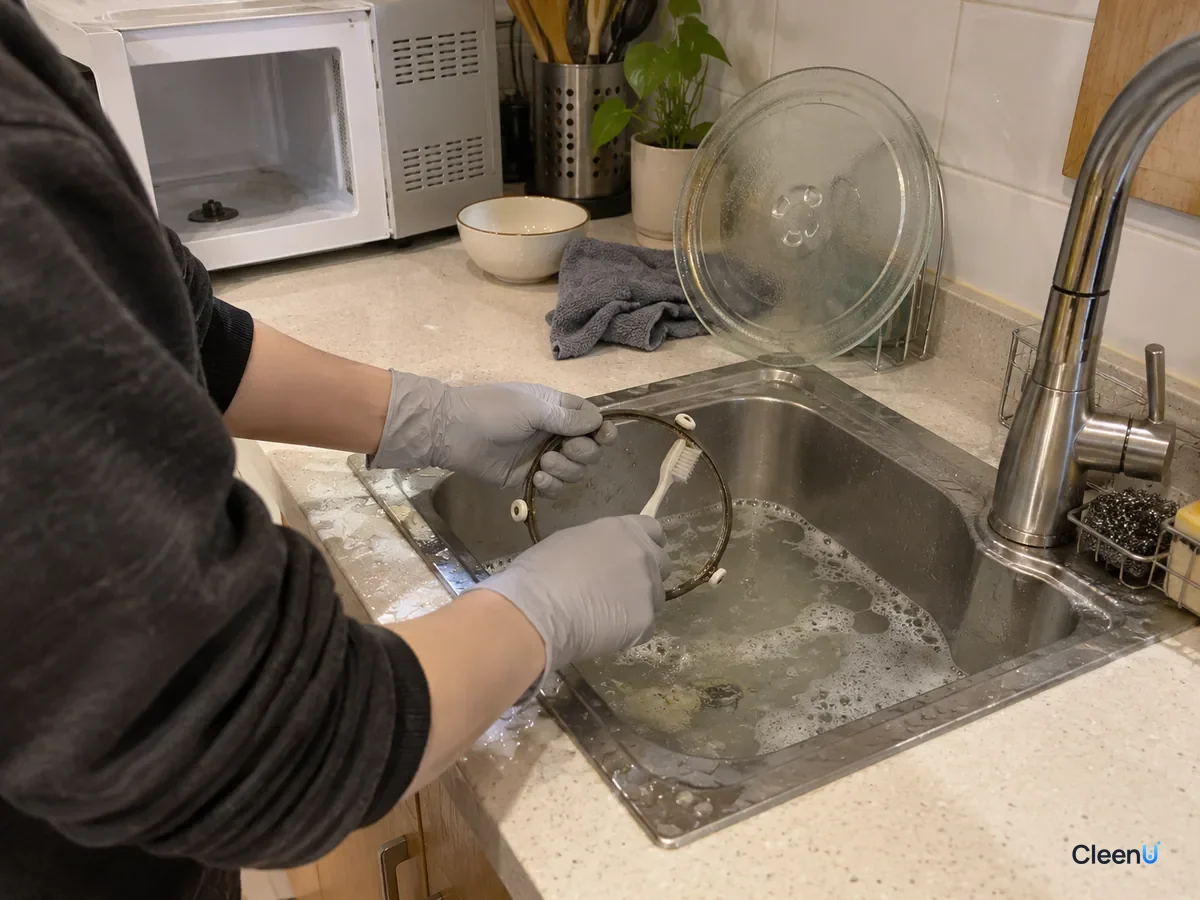
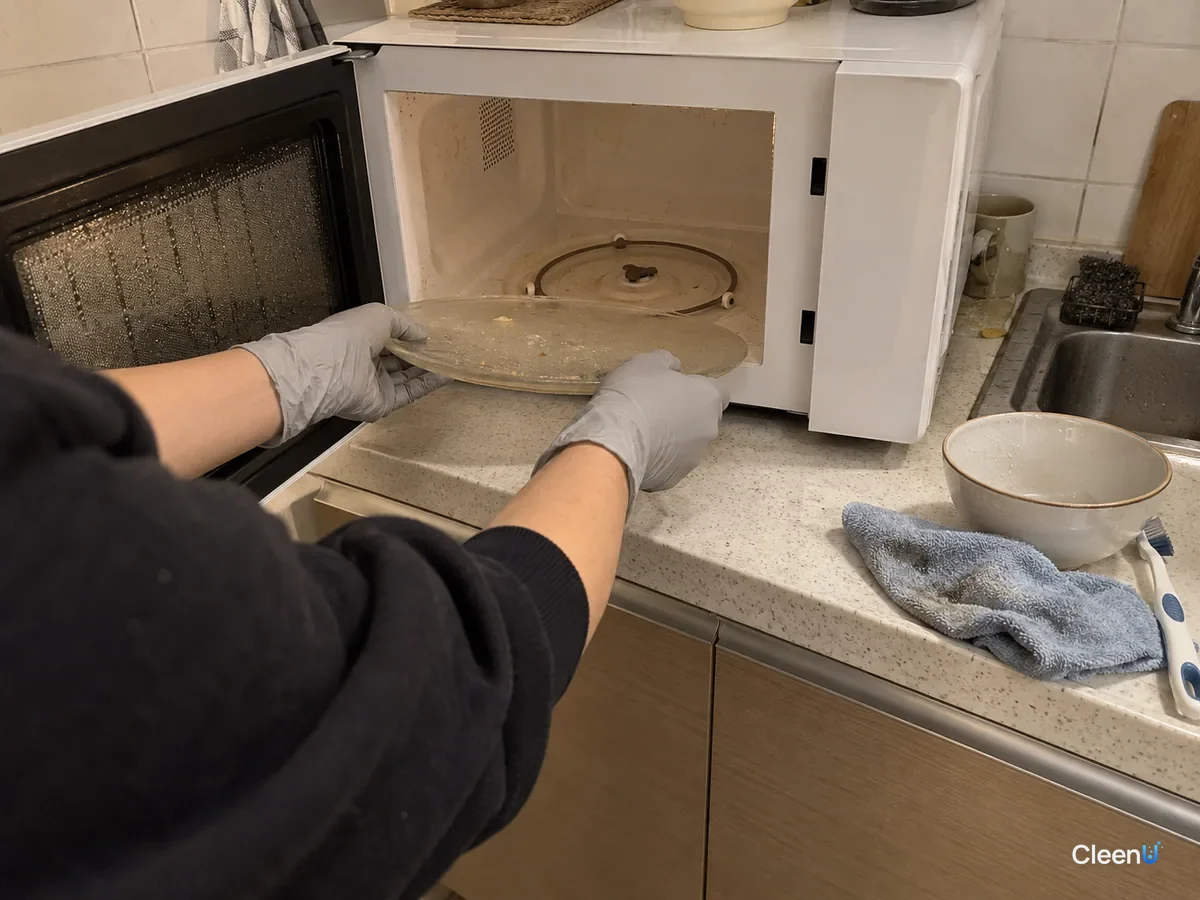
Once the turntable is cool enough to handle, take it and the roller ring out and wash them in the sink with warm water and dish soap, then rinse and dry.
Wipe the ceiling and walls
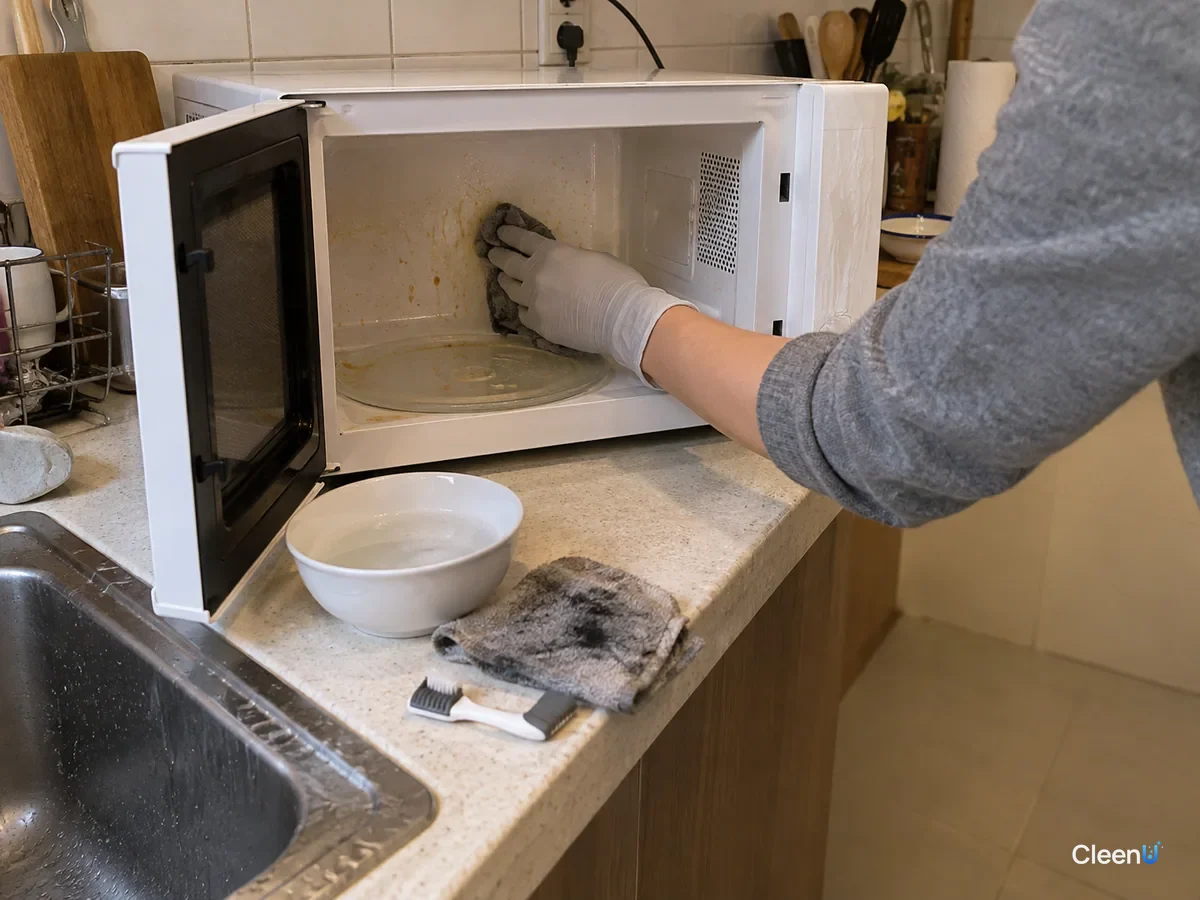
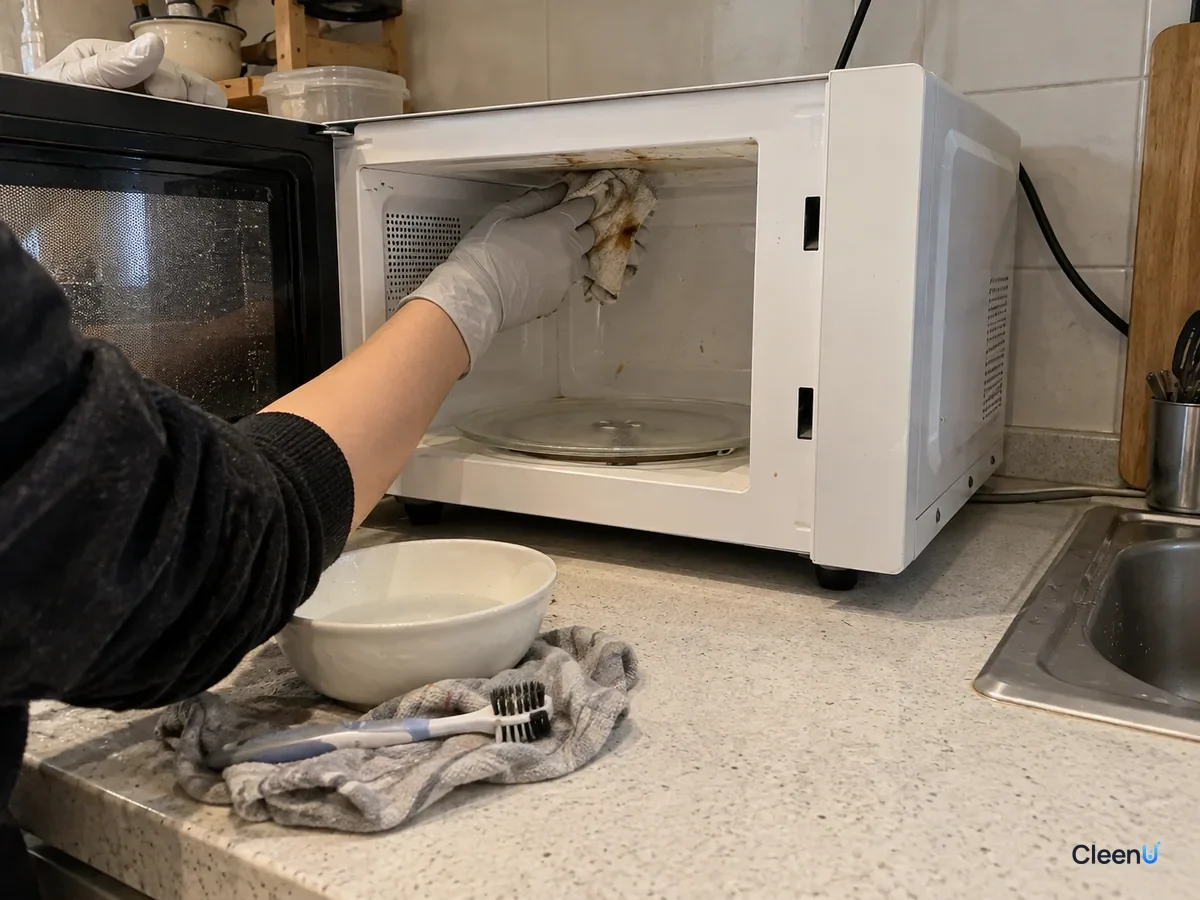
With a damp microfiber cloth, start at the ceiling, then the side walls, back, and floor. Most softened splatter wipes right off. For stubborn spots, spray degreaser onto the cloth, hold it on the spot for a minute or two, then wipe.
Caution:Only wipe the waveguide cover gently with a damp cloth, and keep liquid out of the vents and light cover.
Clean the inside of the door and the seal
Grease and crumbs collect on the inner door glass, the seal around it, and the door gap. Clean them with a damp cloth and an old toothbrush.
Wipe with plain water and air it out
Go over everything with a wrung-out cloth and plain water to remove cleaner, then dry with a towel. Put the turntable back and leave the door open for 10 to 15 minutes to let any smell clear.
Different messes need different moves
Not everything stuck inside a microwave is the same material, and the order you tackle things in should change with it.
The yellow spots on the ceiling and side walls are mostly cooking oil and animal fat. They land as tiny liquid droplets, then get reheated every time you run the microwave. Over weeks, the unsaturated fats oxidize and cross-link, going from slick to tacky to a thin, amber, varnish-like film. Steam softens that film, but oxidized oil still doesn't dissolve in water, which is why a damp cloth often only takes off the top layer. That's where an alkaline degreaser earns its place. The alkalinity converts some of the fat into soap that water can carry away, the solvent swells the tacky layer, and the surfactants lift the loosened oil onto the cloth. Wipe in one direction with one face of the cloth, then turn to a clean face. Scrubbing back and forth with a loaded cloth just spreads the grease into a thinner, wider smear.
Dried soup, oatmeal, and sauce on the turntable and floor are mostly starch, sugar, and a bit of protein. These rehydrate and swell with water, so steam and warm water do most of the work and you usually don't need degreaser at all. If something cooked too long and left a dark, caramelized spot, lay a damp cloth over it for a few minutes, then push it off with the edge of a soft sponge. Skip razor blades and steel wool.
Egg and milk splatter is different again. Protein sets when it's heated, so these spots grip harder than you'd expect. Soften them first, then lift them from the edges with the soft bristles of an old toothbrush instead of rubbing across the top.
How to tell when you're done
Run a clean white cloth over the area you just wiped. If the cloth stays white and the surface doesn't feel tacky under your fingertip, the grease film is gone. A faint yellow tint that feels smooth and doesn't transfer to the cloth is usually discoloration of the interior coating from years of heat, not removable grime. More pressure or a longer dwell won't change it and can wear the coating down.
The coating itself is the other stop sign. If you see chipped paint, bubbling, or small rust spots, the liner is already damaged. Stick to a damp cloth there, skip repeat rounds of degreaser, and check with the manufacturer if the damage is spreading.
Common mistakes
Spraying a lot of cleaner the moment the door opens is the first. The cavity is still warm, so the cleaner evaporates quickly and runs toward the vents; wait a few minutes and spray the cloth instead. The second is skipping the rinse wipe. Alkaline residue left on the walls can give off a smell the next time you heat food, so the plain-water pass matters. The third is attacking the ceiling with a scouring pad. Ceiling spots are hard to see, people press hard, and scratched coating tends to catch grease faster afterward. The fourth is soaking the glass turntable in degreaser. Dish soap and warm water are plenty for glass.
Still smells?
If there's still an odor after cleaning, there's probably residue in a crevice or oxidized fat lingering on the walls. Steam it once more, then leave the door open to air out.
After heating strong-smelling food, leave the door open for a bit before closing it.
Don't put scented products or essential oils in the microwave to cover smells; heating them can be unsafe, and the scent can transfer to food.
If you smell burning, see sparks, or the waveguide cover is blackened or scorched, stop using the microwave and contact the manufacturer.
Keeping it clean
Cover food with a microwave cover or an upside-down microwave-safe plate to block most splatter.
Wipe up spills as soon as the cavity cools; the sooner, the easier.
Wipe the inside with a damp cloth weekly and do the full clean above once a month.
For other kitchen appliances, see How to clean a kitchen. For ovens, see How to clean the inside of an oven.
Stop if you see this
If you see sparks, smell burning plastic, the waveguide cover is blackened or broken, or the door doesn't close properly or the seal is damaged, stop using it and contact the manufacturer. Don't take it apart; microwaves contain high-voltage parts. Unplug it or make sure it's off before cleaning, never spray cleaner directly into the cavity, and keep liquid out of the vents. Keep degreaser off aluminum.
Cleaning a microwave: common questions
How do I get grease spots off the inside of my microwave?
Steam it first with a bowl of water and a few minutes with the door closed, then wipe with a damp cloth. For stubborn spots, hold a cloth sprayed with degreaser on them for a minute or two, wipe, and finish with a plain-water wipe.
Can I spray cleaner directly into the microwave?
We don't recommend it. Spray the cloth so liquid doesn't get into the vents or onto the waveguide cover.
What's the small panel on the side wall?
The waveguide cover, which protects where the microwaves enter. Wipe it gently with a damp cloth only; no cleaner or scrubbing. If it's damaged, have it replaced.
How do I get rid of a microwave smell?
After cleaning, heat a bowl of water (with lemon if you like), let it sit, then air the microwave out with the door open. Leave the door open briefly after heating strong-smelling foods.
Can the turntable go in the dishwasher?
Check the manual. Most glass turntables can be hand-washed; whether yours is dishwasher-safe depends on the model.
How often should I clean the microwave?
Wipe spills right away, wipe the inside weekly, and do a full clean monthly.
For a kitchen degreasing spray that softens yellowed grease spots when used on a cloth and finishes with a simple water wipe, take a look at our Kitchen Cleaner & Degreaser.
Grease, dried spills, and odors in a microwave rarely need hard scrubbing. Heat a bowl of water on high for 3 to 5 minutes and leave the door closed a few minutes to soften the grime, wash the turntable separately, and wipe the walls top to bottom with a damp cloth, holding a degreaser-sprayed cloth on stubborn spots. Finish with a plain-water wipe and leave the door open to dry. Never spray liquid into the cavity or vents, and only wipe the waveguide cover gently. Cover food when heating, wipe spills right away, and clean monthly.