
Troubleshooting
Hazy Film on the Inside of Your Windshield: Causes and Cleaning
Direct answer
The film on the inside of a windshield comes from interior plastics off-gassing, fingerprints, smoking, and dust blown up by the HVAC system. Spray an ammonia-free, low-residue glass cleaner onto a cloth, wipe once side to side and once top to bottom, then buff dry. Don't spray liquid onto the dashboard, and air the car out afterward.
Check these five things first
- Is the film mostly on the inside of the windshield, especially the lower half near the dash?
- Does anyone smoke in the car, or do you use a car air freshener?
- Do you run the air on recirculate most of the time, and when was the cabin air filter last changed?
- What have you wiped it with: tissues, a towel, ammonia glass cleaner, or wet wipes?
- Is the car new, or often parked in the sun?
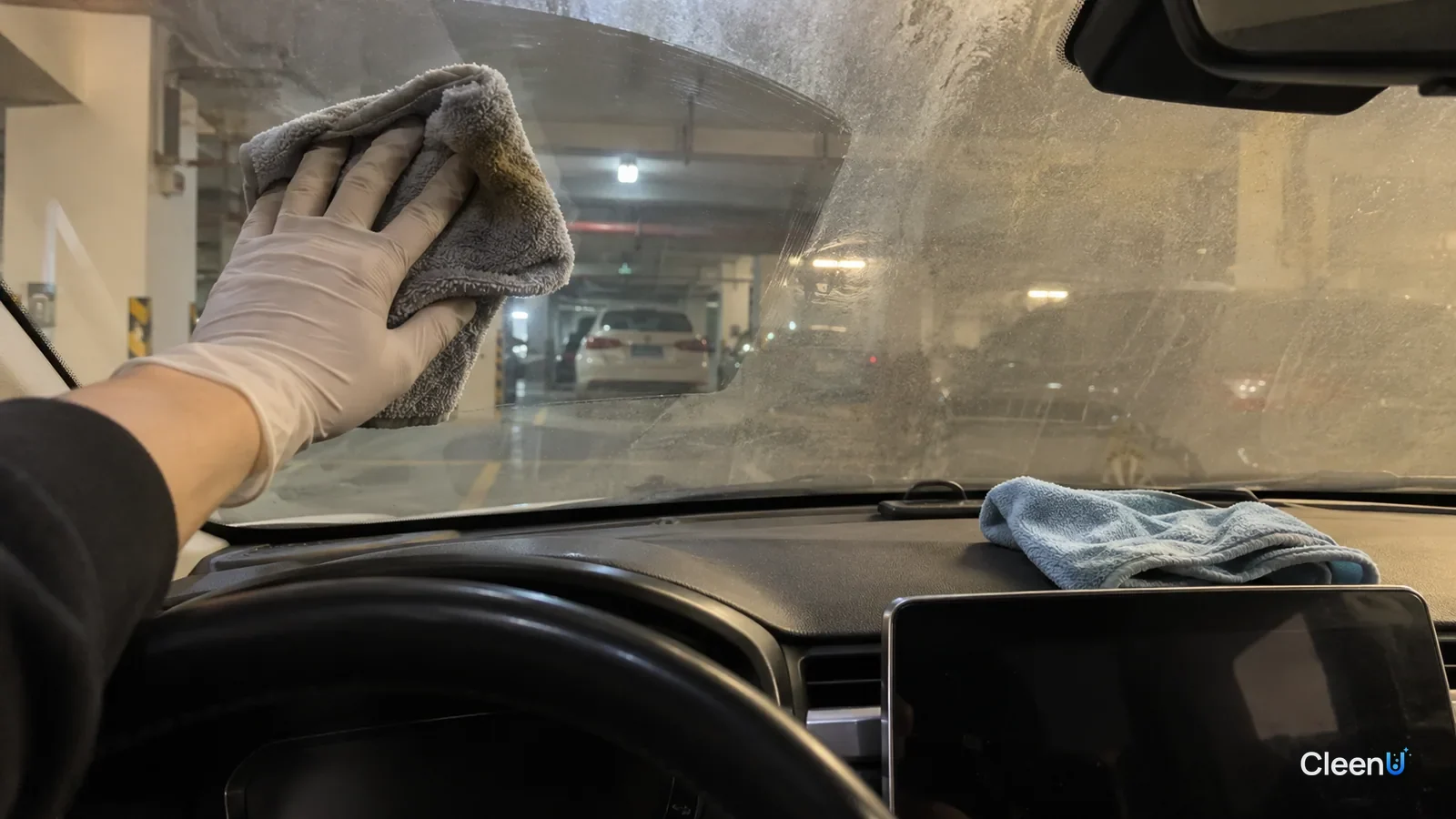
There's a dull film on the inside of the windshield. At night, oncoming headlights turn it into glare and halos. In the morning, low sun turns the glass white. The defroster clears the fog, but the film stays. Wipe it with a tissue and it gets worse.
The film on the inside of car glass is different from the rain and dust outside, and it needs a different approach. It also affects visibility and safety, so it's worth cleaning properly.
Where the film comes from
Interior off-gassing: the dashboard, door panels, and seats contain plasticizers and other compounds in their plastics, leather, and adhesives. When a car bakes in the sun, the cabin gets very hot and those compounds slowly evaporate, then condense on the cooler windshield as an oily haze. New cars and cars that sit in the sun a lot show it most, which is why the film is usually heaviest on the lower windshield near the dash.
Smoking: tar particles in smoke coat every window with a yellowish, tacky film.
Air fresheners: some release oily compounds that settle on the glass.
HVAC dust and oil: with a dirty cabin air filter or constant recirculation, dust and oil in the cabin get blown straight onto the windshield.
Fingerprints and breath: wiping fog with your hand or pointing at things leaves prints, and moisture and oil from breath settle on the glass too.
The film is thin and even, so it's hard to see head-on in daylight, but backlit or at night it scatters light into glare and halos. It also makes fog condense unevenly, so the windows take longer to clear.
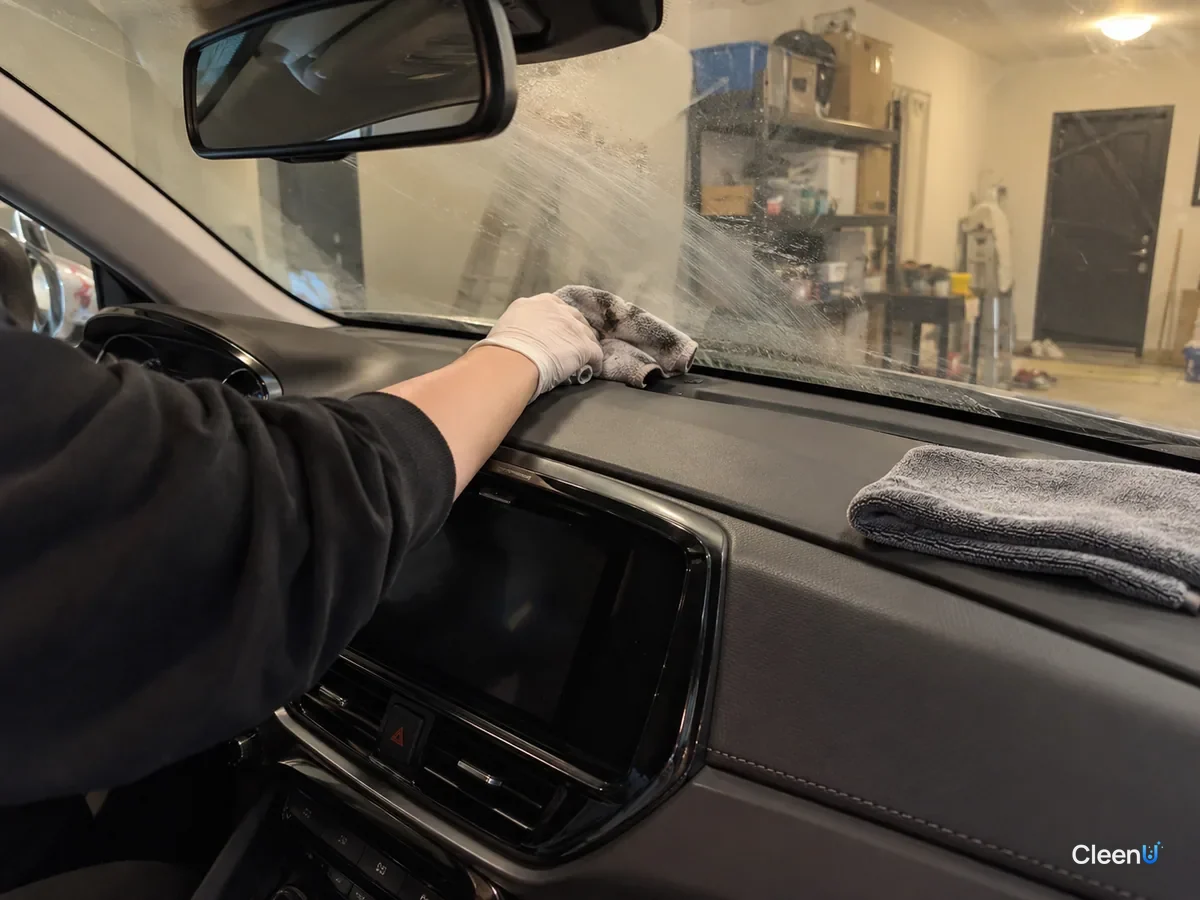
Why tissues and towels make it worse
The film is oily. Tissues and dry towels push it around and spread it instead of removing it, and tissues shed lint. Wet wipes add their own moisturizing film.
Ammonia glass cleaners cut grease, but in a closed cabin the smell is harsh, and if your windows have aftermarket tint, some film makers say to avoid ammonia products.
Common causes, what you see, fix, prevention
| Cause | What you see | Fix | Prevent it |
|---|---|---|---|
| Interior off-gassing | Even haze on the lower windshield, obvious when backlit | Glass cleaner on a cloth, both directions, then buff dry | Use a sunshade and avoid baking in the sun; air out new cars |
| Smoking or air fresheners | Yellowish, tacky film on windows | Several passes; split into two sessions if needed | No smoking in the car; fewer oily fresheners |
| HVAC dust and oil | Dirtier in line with the vents | Clean the glass and replace the cabin air filter | Change the filter regularly; use fresh air mode |
| Fingerprints and hand-wiping fog | Patchy prints | Spot-clean, then buff the whole windshield | Use the defroster instead of your hand |
| Tissues or wet wipes | Smearier with lint | Re-clean with microfiber | Keep two dedicated microfiber cloths in the car |
Choosing and using a glass cleaner
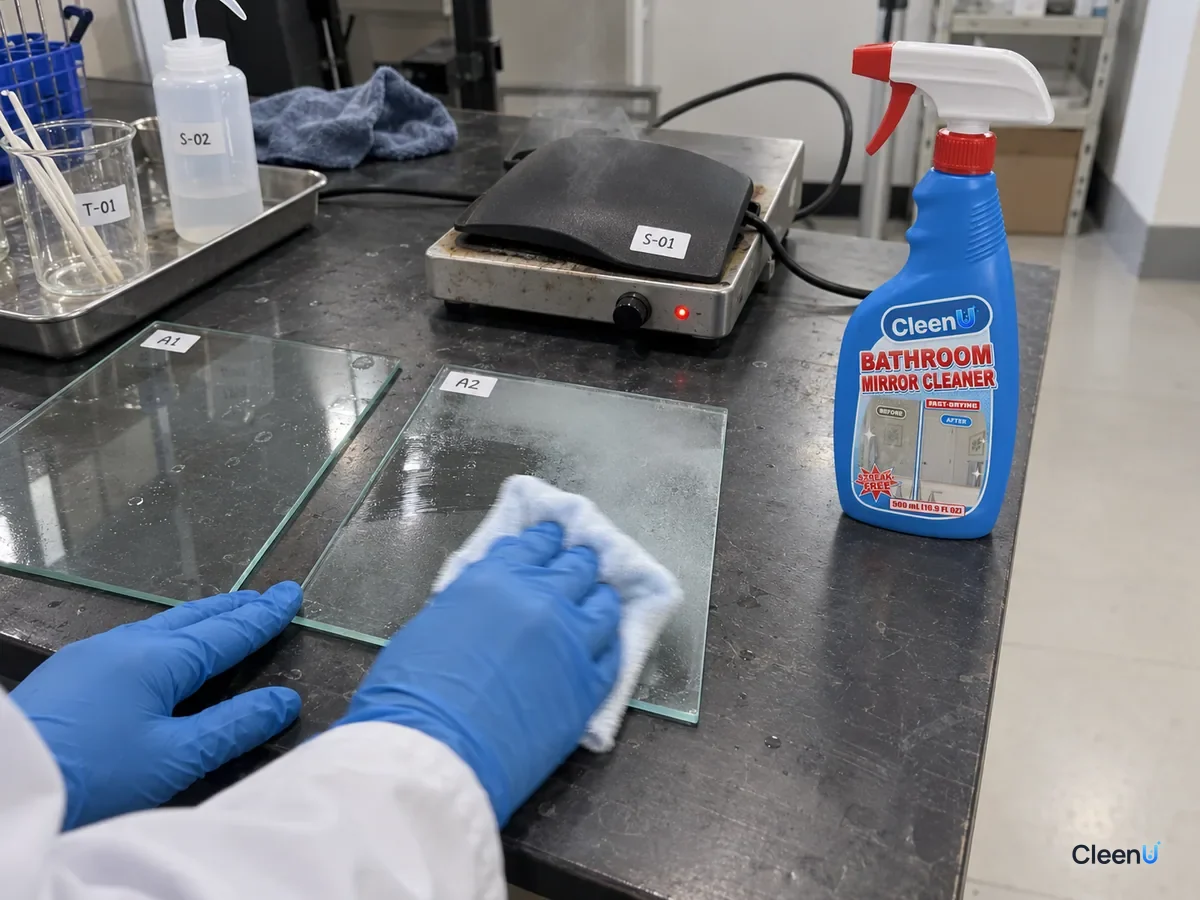
Inside a car you want a cleaner that cuts oily film, leaves little residue, dries fast, and doesn't have a harsh smell. Take CleenU Bathroom Mirror Cleaner as an example. It's a fast-drying mirror and glass spray, pH 6.5 to 8.0 as supplied, made with fast-evaporating alcohols such as isopropyl alcohol and low-residue surfactants, with no ammonia. Spray and wipe; no dwell time. The alcohol dissolves oily film and fingerprints and evaporates quickly; the low-residue surfactants lift grime and leave little behind. It's designed for mirrors and glass and works on car windows too. It isn't for electronic screens, so keep it off the infotainment screen and digital gauges.
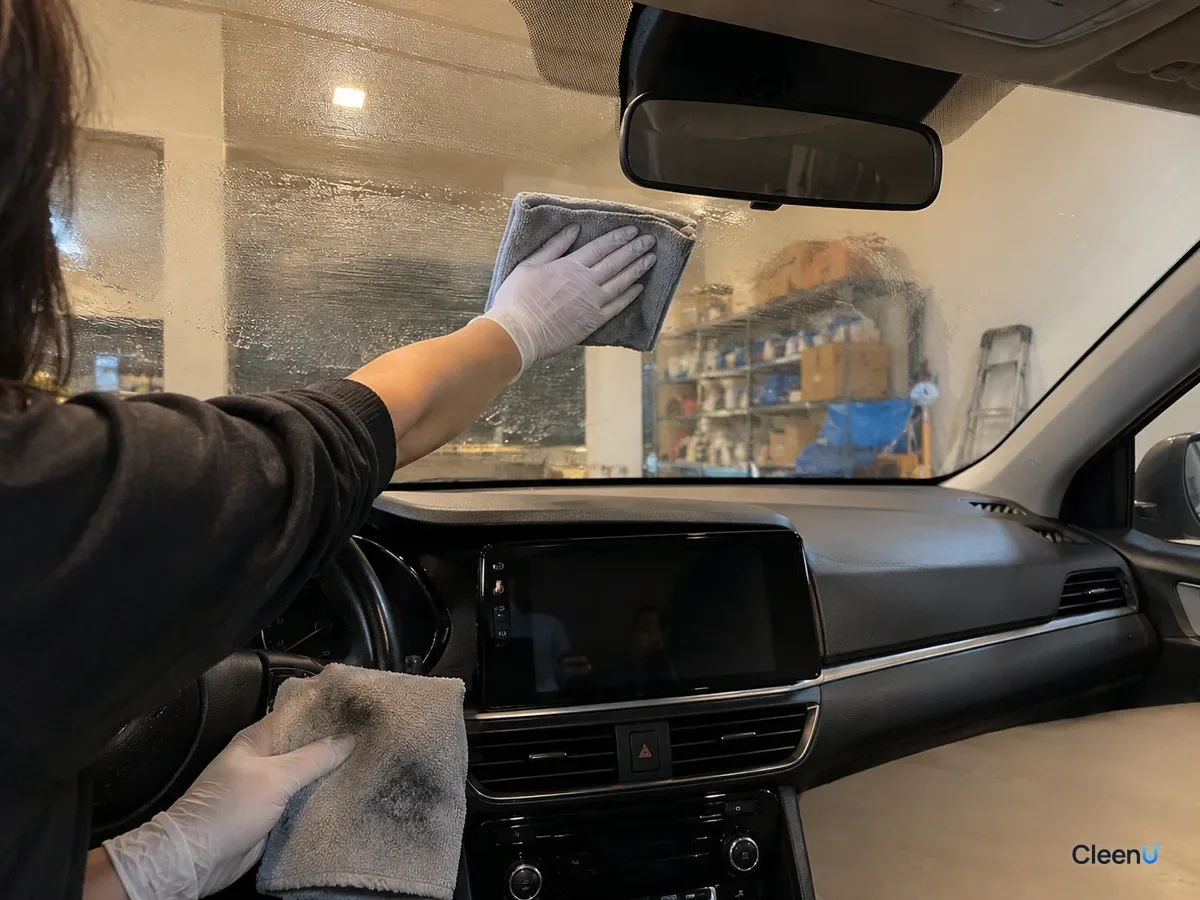
Cleaning the inside of the windshield, step by step
Have two clean microfiber cloths ready: one to clean, one to dry.
Spray the cleaner onto the cloth, not the windshield, so nothing runs onto the dashboard, vents, or electronics.
Wipe side to side first, then top to bottom. For the corner where the windshield meets the dash, use a long-handled windshield tool or wrap the cloth around the back of your hand to reach in.
Switch to the dry cloth and buff side to side and top to bottom until there are no damp streaks.
Sit in the driver's seat and check against the light, or notice it on your next night drive, and touch up any spots.
Clean the side windows and rear window the same way. On a rear window with defroster lines, wipe gently along the lines; don't scrape.
Open the windows for a few minutes afterward.
Why an alcohol-based cleaner suits this film
The plasticizers that off-gas from interior trim are mostly fairly large, oily esters. They barely dissolve in water but dissolve readily in alcohol. Wiping them with plain water is like washing a greasy bowl with water alone: you just push the oil around. With an alcohol-based glass cleaner, the alcohol dissolves and thins the oily film first, the low-residue surfactants then carry that dissolved oil, along with the dust trapped in it, onto the cloth, and the alcohol evaporates, leaving very little behind. Smoker's film is the same kind of oily material, only thicker and tackier, which is why it usually takes two rounds. The first pass lifts most of it, and a second pass with a fresh cloth finishes the job.
Wiping in two directions isn't just a habit, either. When you wipe in one direction, the cloth leaves a thin line of oil at the end of each stroke. Going over the glass in the other direction cuts across those lines and picks them up. The dry buffing cloth's job is to grab the last bit of dissolved oil before the alcohol flashes off, instead of letting it dry right back onto the glass.
How to tell the glass is actually clean
Looking straight at the windshield in daylight, it's hard to tell whether film is still there. Two checks work better. First, breathe lightly on the glass. On clean glass, the fog appears evenly and clears evenly. Where film remains, it fogs in patches or streaks and clears slowly. Second, at dusk or after dark, sit in the driver's seat before you pull out and look at streetlights or oncoming headlights. If there's no obvious halo or smearing, you got it.
If one area keeps fogging in streaks, it either didn't get enough attention or the cloth was saturated with oil. Grab a clean cloth, redo just that spot, then buff the whole windshield once more. If after two or three rounds the same glare stays put no matter what, check for fine scratches in the glass or a problem inside the laminated windshield. Those aren't cleaning problems.
Summer and winter call for different timing
In summer, a car that's been sitting in the sun has hot glass. Cleaner evaporates the moment the cloth touches it and leaves streaks, so run the A/C or open the windows to cool the cabin first. In winter, cold glass fogs the moment you breathe. Run the defroster until the glass warms up to cabin temperature before you start, or the condensation mixes with the cleaner and smears across the whole windshield. In both seasons, a cabin at a comfortable, steady temperature is the best time to do this job, which is often right after a short drive with the climate control on.
Keeping the film from coming back
Use a sunshade when you park to keep the cabin cooler and cut off-gassing.
Air out new cars often.
Don't smoke in the car, and go easy on oily air fresheners.
Replace the cabin air filter regularly and switch to fresh air mode at times.
Use the defroster when the glass fogs, not your hand.
Clean the inside glass monthly while the film is still thin. For streaky glass in general, see Why glass streaks after cleaning.
Stop if you see this
Never clean the windows while driving; park and turn the car off first. If the windshield is cracked or scratched enough to affect visibility, get it repaired or replaced. Keep cleaner off the dashboard, infotainment screen, vents, and electronics, and check your tint film's care instructions before using any cleaner on tinted windows. Air out the car afterward.
Hazy inside windshield: common questions
Why does the inside of my windshield always have a film?
Mostly from interior plastics off-gassing in the heat and condensing on the glass, plus smoking, air fresheners, HVAC dust, and fingerprints.
What should I clean the inside of my windshield with?
An ammonia-free, low-residue glass cleaner sprayed onto a microfiber cloth. Wipe in both directions, then buff dry.
Why do tissues make it streakier?
Tissues push the oily film around without removing it, and they shed lint. Use microfiber.
Can I spray cleaner directly on the inside of the windshield?
We don't recommend it. Liquid runs onto the dash and into the vents; spraying the cloth is safer.
Can I use glass cleaner on tinted windows?
Check the tint manufacturer's guidance first. Generally use an ammonia-free product and a soft cloth.
How often should I clean the inside of my car windows?
Monthly works well, more often for smokers, new cars, or cars that sit in the sun a lot.
For an ammonia-free, fast-drying, low-residue glass cleaner that lifts oily film and fingerprints from the inside of car windows when sprayed on a cloth, take a look at our Bathroom Mirror Cleaner.
The film on the inside of a windshield mostly comes from interior plastics off-gassing in the heat, plus smoking, air fresheners, HVAC dust, and fingerprints, and at night or when backlit it causes glare that affects safety. Tissues and wipes just smear it. Park and turn off the car, spray an ammonia-free, low-residue glass cleaner onto a microfiber cloth, wipe side to side and top to bottom, then buff dry the same way, keeping liquid off the dash and vents. Use a sunshade, don't smoke in the car, change the cabin filter, and clean monthly.