
How-to
How to Clean Sooty Fireplace Glass
Direct answer
Once the stove and glass are completely cool, spray fireplace glass cleaner, wait 1 to 2 minutes, and wipe away the soot and creosote film with a damp cloth or soft scraper, then wipe with clean water and dry. White haze on gas fireplace glass may be mineral deposits, or it may be etching in the glass itself; check which.
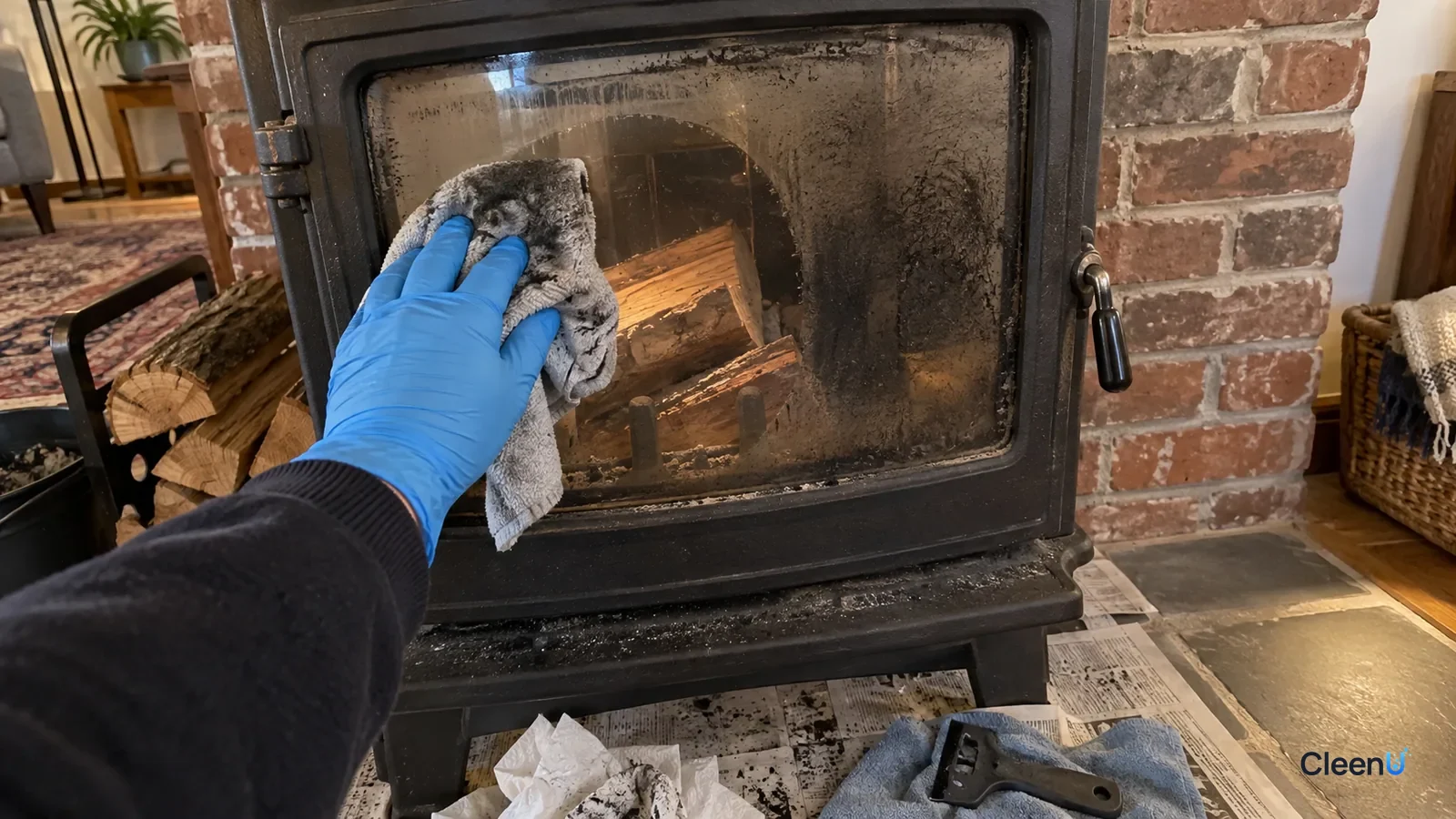
A few fires in, the glass on your wood stove has gone from clear to gray-black and you can't see the flames. Wipe off the black dust and there's a sticky brown film underneath. Gas fireplace glass tends to get a white haze that won't wipe off at all.
What builds up on fireplace glass is different from kitchen or bathroom grime. Figure out what it is and the right method follows.
Why wood stove glass turns black
When wood doesn't burn completely, it gives off smoke full of fine carbon particles (soot) and lots of vaporized organic compounds. Those compounds condense on the relatively cool glass as a brown, sticky film called creosote, and soot sticks to it, so the glass keeps getting darker.
A few things make it happen faster.
Wet or unseasoned wood burns cool and smoky.
Turning the air down too far makes the fire smolder and burn incompletely.
The start-up phase, before the stove is up to temperature.
Wood stacked too close to the glass, or resinous woods like pine.
Soot is dry carbon, and a damp cloth removes some of it. Creosote is a sticky organic film that hardens and darkens every time it's reheated, so water alone won't move it; it takes alkali and solvent to dissolve it.
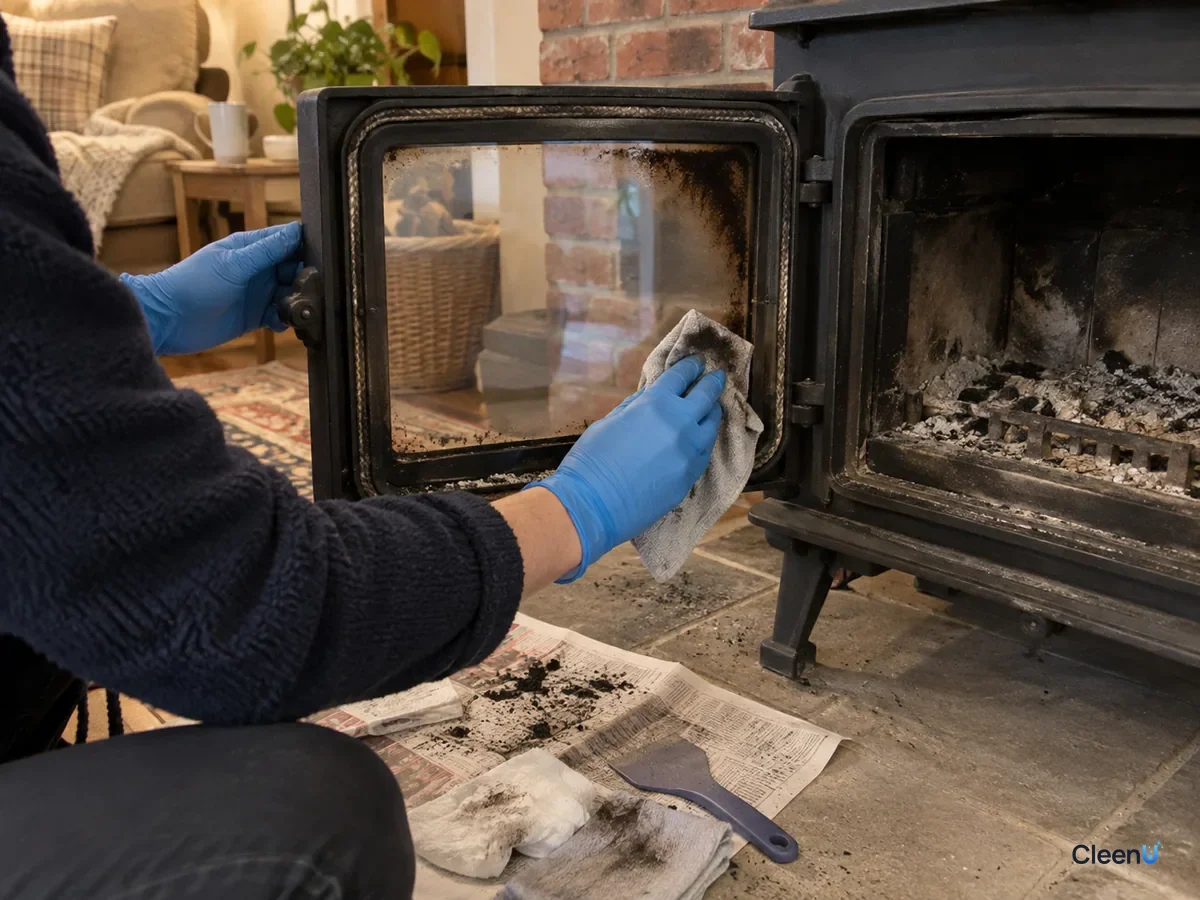
What the white haze on gas fireplace glass is
Gas burns cleanly and usually doesn't leave black soot unless something's wrong with combustion. The common problem is a white or gray-white film, and it's one of two things.
Mineral and combustion deposits. Burning gas produces water vapor, and compounds from the gas and air deposit on the glass as a white film. This can be removed with a fireplace glass cleaner or a gas-fireplace-specific product.
Etching. When deposits are left on and baked at high heat for a long time, they react with the glass surface and etch a frosted haze into it. That's damage to the glass itself, and no cleaner will remove it.
To tell them apart: if the haze is still there after cleaning, nothing scrapes off with a fingernail, and the surface no longer looks smooth from the side, it's probably etching. For gas fireplaces, follow the manufacturer's manual; some brands require a specific cleaner.
How a fireplace glass cleaner works
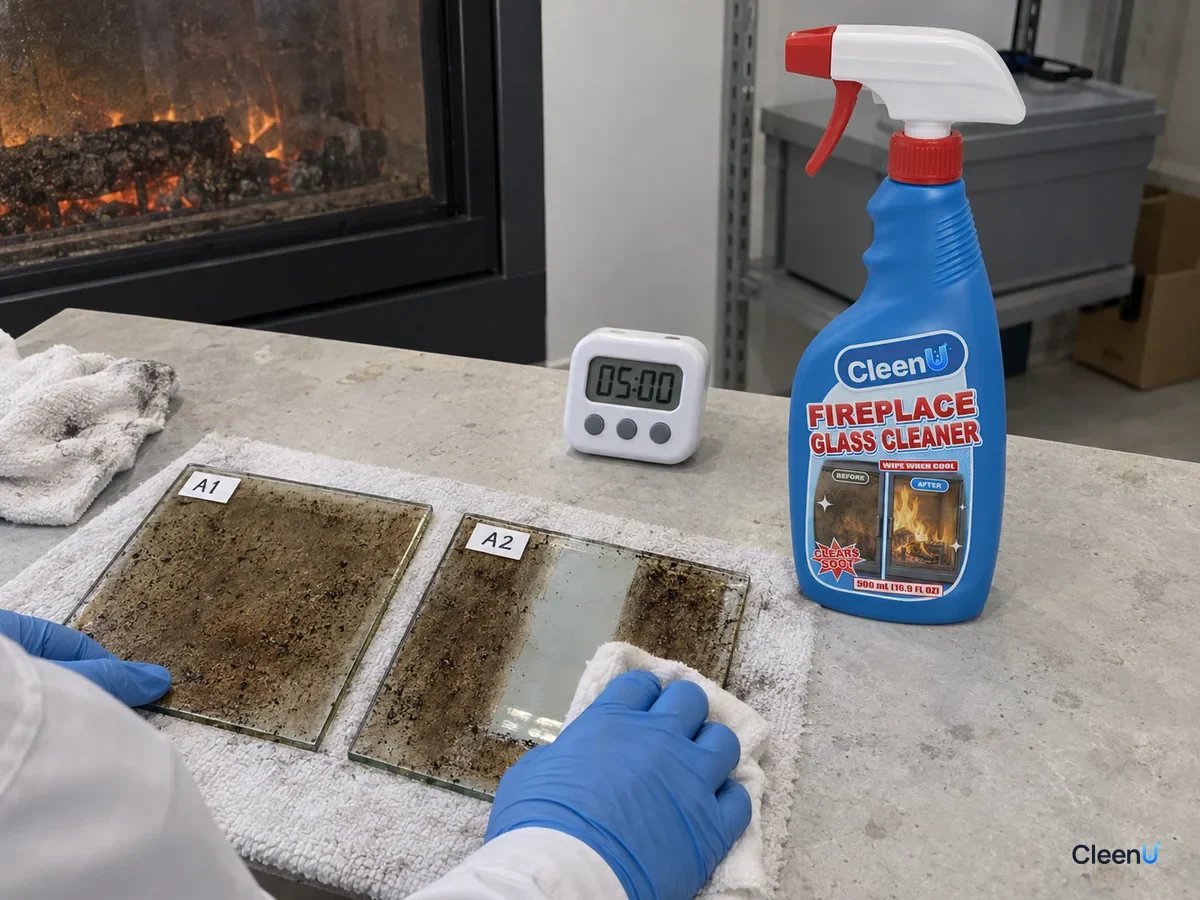
Take CleenU Fireplace Glass Cleaner as an example. It's an alkaline soot and creosote spray, pH 10.5 to 12.0 as supplied, made with alkaline builders, glycol ether solvent, and nonionic surfactants, with no abrasive particles. It's ready to use.
The glycol ether solvent dissolves and softens the organic compounds in creosote. The alkaline builders help break down acidic and oily components so the film releases from the glass. The surfactants wet the glass and disperse soot particles and dissolved creosote so the cloth can carry them away. The 1 to 2 minute wait gives the solvent and alkali time to penetrate.
It's made for heat-resistant glass doors on fireplaces, wood stoves, and gas fireplaces, for soot, creosote film, and gas haze. It isn't for hot glass, door gasket rope, painted stove bodies, aluminum trim, or coated decorative glass you haven't tested.
Six steps to clean fireplace glass
One glass door in six steps
Let the stove cool completely
Wait at least a few hours after the fire is out, until the stove body and glass are completely cool to the touch. For gas fireplaces, turn off the gas and pilot per the manual.
Caution:Cold cleaner on hot glass can crack it from thermal shock, and cleaner dries instantly on hot glass and streaks.
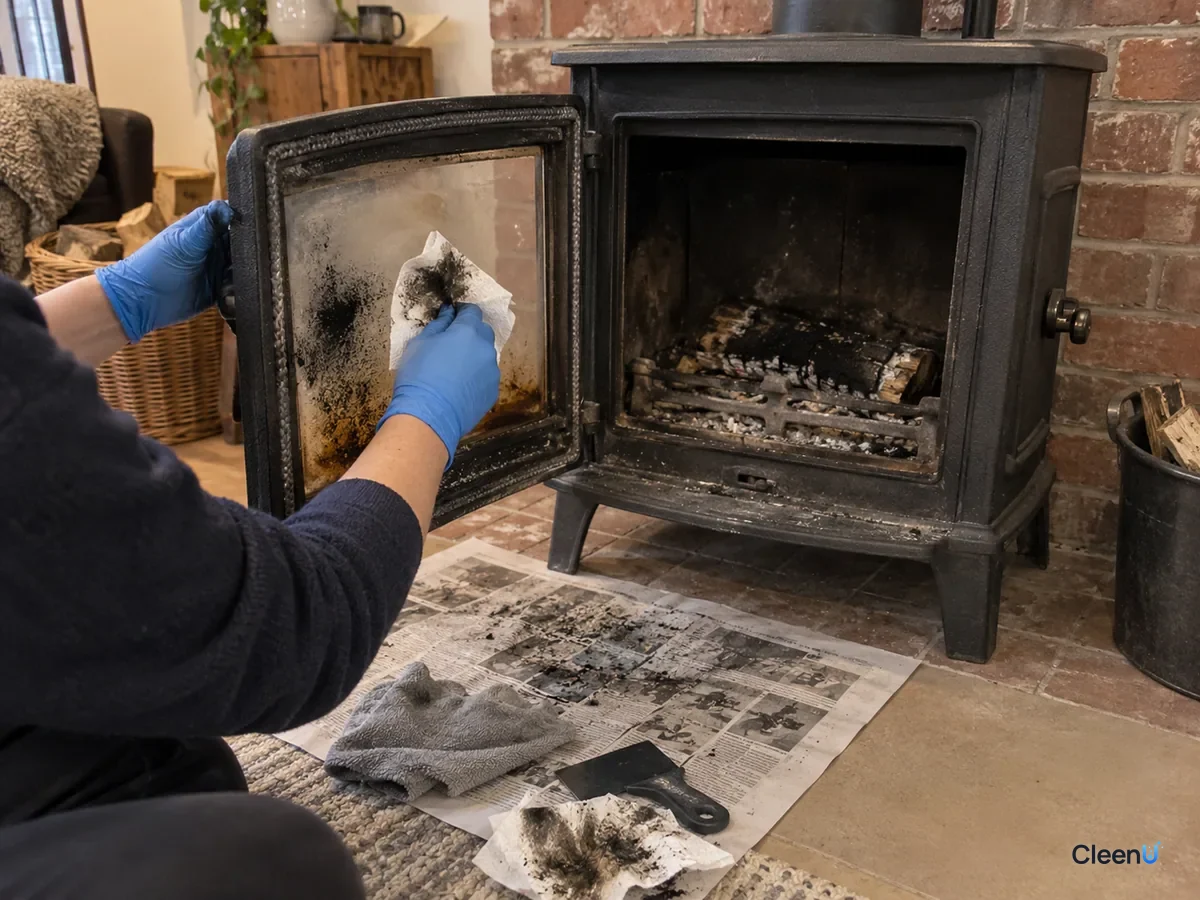
Lay down newspaper and put on gloves
Spread newspaper on the floor in front of the door and put on nitrile gloves. Open the door and clear out ash from the firebox so you don't stir it up while you work.
Wipe off loose soot first
Use a dry or slightly damp paper towel to remove the loose black dust. With that gone, the cleaner can work directly on the creosote film.
Spray and wait 1 to 2 minutes
Spray the inside of the glass evenly, keeping it off the gasket rope around the door and the painted frame; spray the cloth to work near the edges. Wait 1 to 2 minutes.
Wipe and scrape
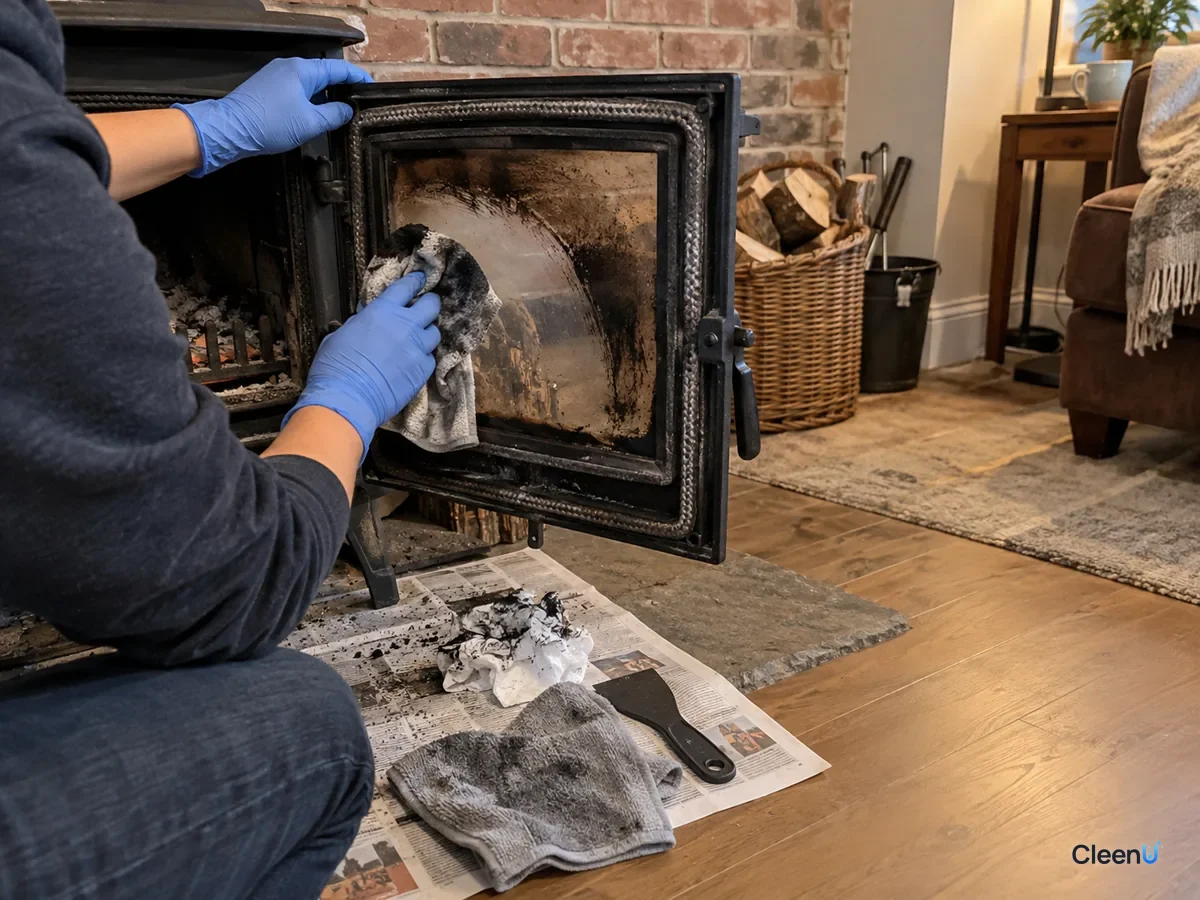
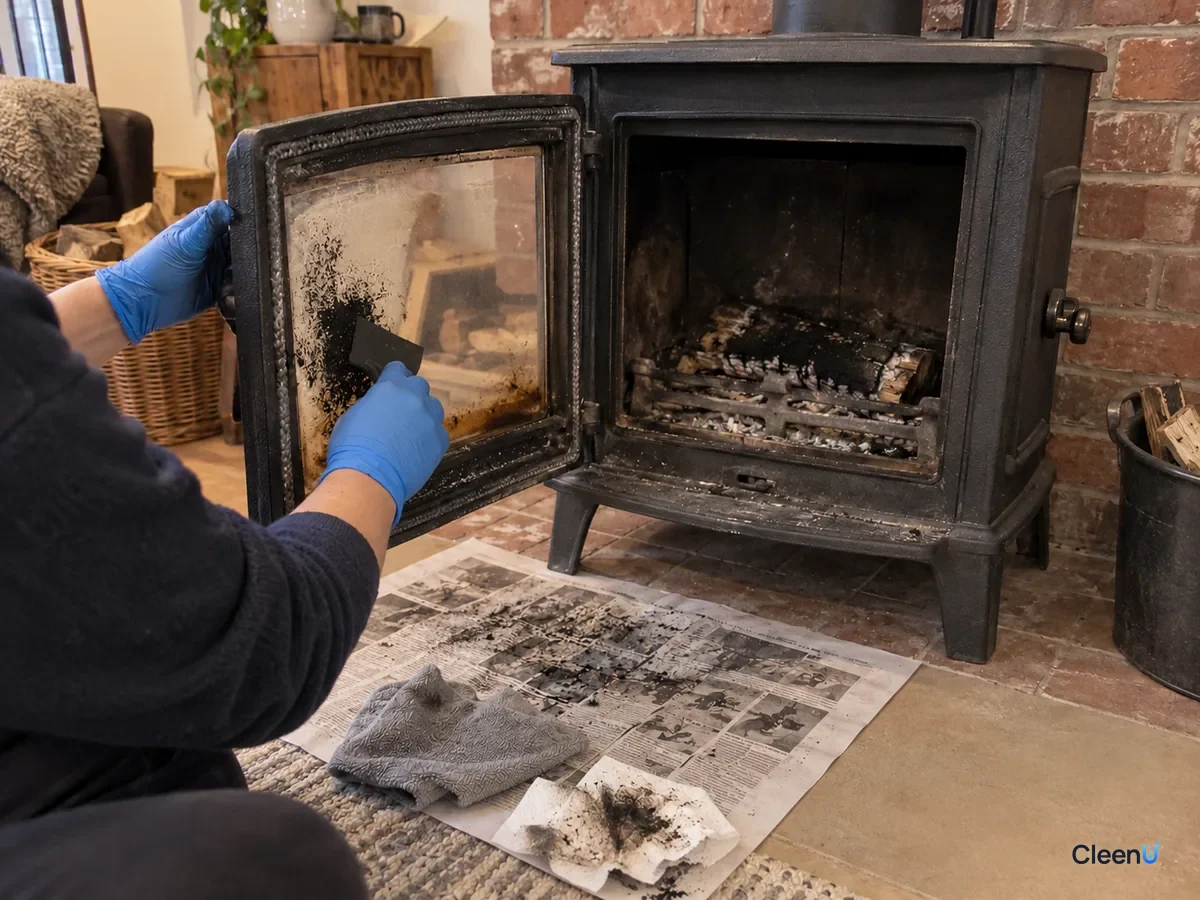
Wipe in circles with a damp microfiber cloth; the black creosote will dissolve onto it. Switch to a clean side or cloth as it gets dirty. Use a soft scraper at a low angle on stubborn spots, and spray again for thick film.
Caution:Don't use steel wool or rough scouring pads; they scratch heat-resistant glass.
Wipe with water and dry
Wipe the glass twice with a wrung-out cloth and clean water to remove alkaline residue, which can otherwise leave white marks the next time it heats up. Dry with a clean cloth and close the door.
Light film, sticky film, or baked-on crust
"Black glass" covers a wide range, and the approach changes with how thick the buildup is.
A thin gray haze is usually soot from one or two fires before much creosote has formed. If a fingertip picks up black powder, one spray, a one-minute wait, and a damp cloth will normally clear it. You won't need the scraper.
A brown, semi-transparent film that feels tacky is condensed creosote, often with soot trapped on top. Give this the full two minutes so the glycol ether solvent can work into the layer and the alkaline builders can loosen it from the glass. Wipe off the softened top layer first, then spray again for what's underneath.
A shiny black crust that looks almost glazed is creosote that has been reheated many times and partly carbonized. It rarely dissolves in one pass. Spray, then push the soft scraper at a very low angle in short strokes, and catch the residue with a cloth instead of smearing it back across the glass. Two or three rounds are safer than forcing it in one.
Expect the edges to be the worst. The perimeter near the door frame runs coolest, so smoke condenses there first. For that band, spray the cleaner onto the cloth rather than the glass so it doesn't run onto the gasket or painted frame.
How to tell when you're done
Before you close the door, look at the glass head-on and then at a low angle toward a light. Head-on, you should see the firebox clearly. At an angle, there shouldn't be a rainbow sheen or wipe marks. A quick pass with a clean, damp white cloth is the easiest check: if it no longer picks up any yellow-brown color, the creosote is gone.
If the cloth comes away clean but the glass still looks cloudy, stop. On a gas fireplace that usually means etching. On a wood stove it can be a heat-related change to the glass surface. More product and more pressure won't make it clear, and scrubbing harder risks scratches.
Don't skip the plain-water wipe at the end. Alkaline cleaner left on the glass can bake into white streaks the next time the stove heats up, which looks like the job wasn't done when it's really dried residue.
What about cleaning glass with wood ash?
You'll see the tip of dipping wet newspaper in fireplace ash to clean the glass. Wood ash contains potassium carbonate and other alkaline compounds that do help break down creosote, and the ash is mildly abrasive, so it works on light soot.
There are downsides. Ash can contain unburned grit that leaves fine scratches, results are inconsistent and weak on thick creosote, and it's not suitable for gas fireplace or coated glass. It's fine in a pinch, but a dedicated cleaner is the safer routine.
Keeping the glass cleaner longer
Burn dry, seasoned wood. Low-moisture wood burns hotter with less smoke. Stack and season it, ideally for six months or more.
Open the air wide during start-up so the stove heats up fast, then turn it down as needed once it's burning well.
Avoid long, smoldering burns.
Many wood stoves have an airwash system that sends part of the incoming air down the inside of the glass to keep soot from settling. Make sure that air inlet isn't clogged with ash.
Clean the glass weekly during burning season while the creosote is still thin and wipes off easily.
For gas fireplaces, clean the glass as often as the manual recommends so deposits don't bake on and etch.
For streak-free glass elsewhere in the house, see How to clean glass without streaks.
Stop if you see this
If the glass is cracked or chipped, or the door gasket is loose or damaged, stop using the fireplace and have a professional replace it. If the glass blackens heavily over and over in a short time or smoke backs into the room, the chimney may be blocked or combustion may be off; have a professional inspect it. If cleaner gets on your skin or in your eyes, rinse with plenty of water. Never clean warm glass, and keep the cleaner off gaskets, painted stove bodies, and aluminum trim.
Cleaning fireplace glass: common questions
What removes black soot from fireplace glass?
A fireplace glass cleaner with alkali and solvent. Once the glass is cool, spray, wait 1 to 2 minutes, wipe with a damp cloth, scrape stubborn spots with a soft scraper, then wipe with clean water.
How often should I clean fireplace glass?
Weekly during burning season works well, while the creosote is still thin. Clean gas fireplace glass as often as the manual recommends.
The white haze on my gas fireplace glass won't come off. Why?
It may already be etched, which cleaning can't fix. Check the manual; if it really bothers you, the glass can be replaced.
Can I clean the glass while it's warm?
No. The temperature difference can crack it, and the cleaner dries instantly and streaks. Wait until it's completely cool.
Why does my stove glass blacken so fast?
Usually wet wood, too little air causing a smolder, or a slow start-up. Burn dry wood and open the air to get the stove hot.
Can I use fireplace glass cleaner on the door frame?
We don't recommend it. Painted stove bodies, gasket rope, and aluminum trim are outside its intended use; avoid them while cleaning the glass.
For a non-abrasive fireplace glass cleaner that dissolves soot and creosote film after a 1 to 2 minute wait on cool glass, take a look at our Fireplace Glass Cleaner.
Black wood stove glass is soot and creosote from incomplete combustion condensing on the glass. White haze on gas fireplace glass may be removable deposits, or it may be etching damage in the glass. Wait until the stove is completely cool, wipe off loose soot, spray fireplace glass cleaner and wait 1 to 2 minutes, wipe and scrape gently, then wipe with clean water and dry, keeping cleaner off gaskets and painted surfaces. Burn dry wood, open the air at start-up, keep the airwash inlet clear, and clean weekly during burning season, and the glass will stay clear.