
How-to
How to Clean Oven Door Glass, Including Between the Panes
Direct answer
Let the glass cool completely, spray oven glass cleaner and wait 5 to 10 minutes, scrape off the baked-on film with a plastic scraper, then wipe several times with a damp cloth. Grease between the panes only comes out if your manual says the door or glass can be removed. If it doesn't, don't force it.
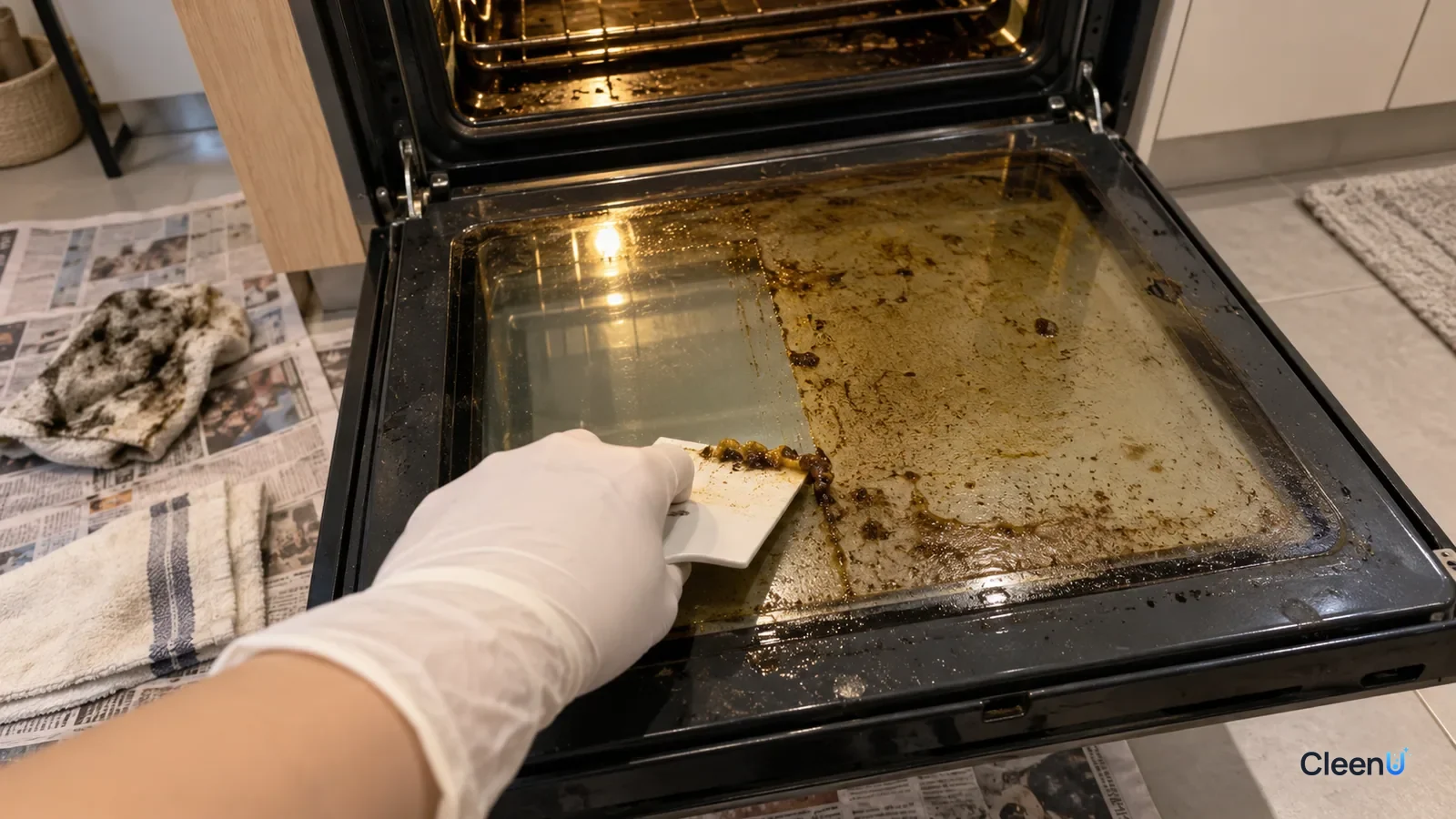
Over time, oven door glass turns the color of tea. It starts as a few grease spots, then becomes a solid tan-to-brown film, and eventually you can't see what's on the baking sheet. Worse, sometimes the inside of the door is clean but there are drips you can't reach. That's grease that got between the panes.
Those two problems need different approaches. Baked-on film on the inner glass comes off with the right cleaner and a scraper. Grease between the panes depends on whether your oven door comes apart. Here's how to handle both.
What that brown film actually is
When you roast meat or wings, fat and juices spatter onto the inside of the door glass as a fine mist and droplets. The oven cavity typically runs 350 to 475°F, and the inner glass gets hot too. With heat and oxygen, the fat oxidizes and polymerizes. The molecules keep cross-linking until liquid fat turns into a sticky resin and then into a hard, lacquer-like film that goes from pale yellow to dark brown.
Every time you bake, that film gets reheated, cross-links further, darkens, and bonds tighter to the glass. By then it's practically baked-on enamel, and dish soap and a damp paper towel barely touch it.
Proteins and sugars in meat juices also char at high heat and form small black spots trapped in the film.
Why grease ends up between the panes
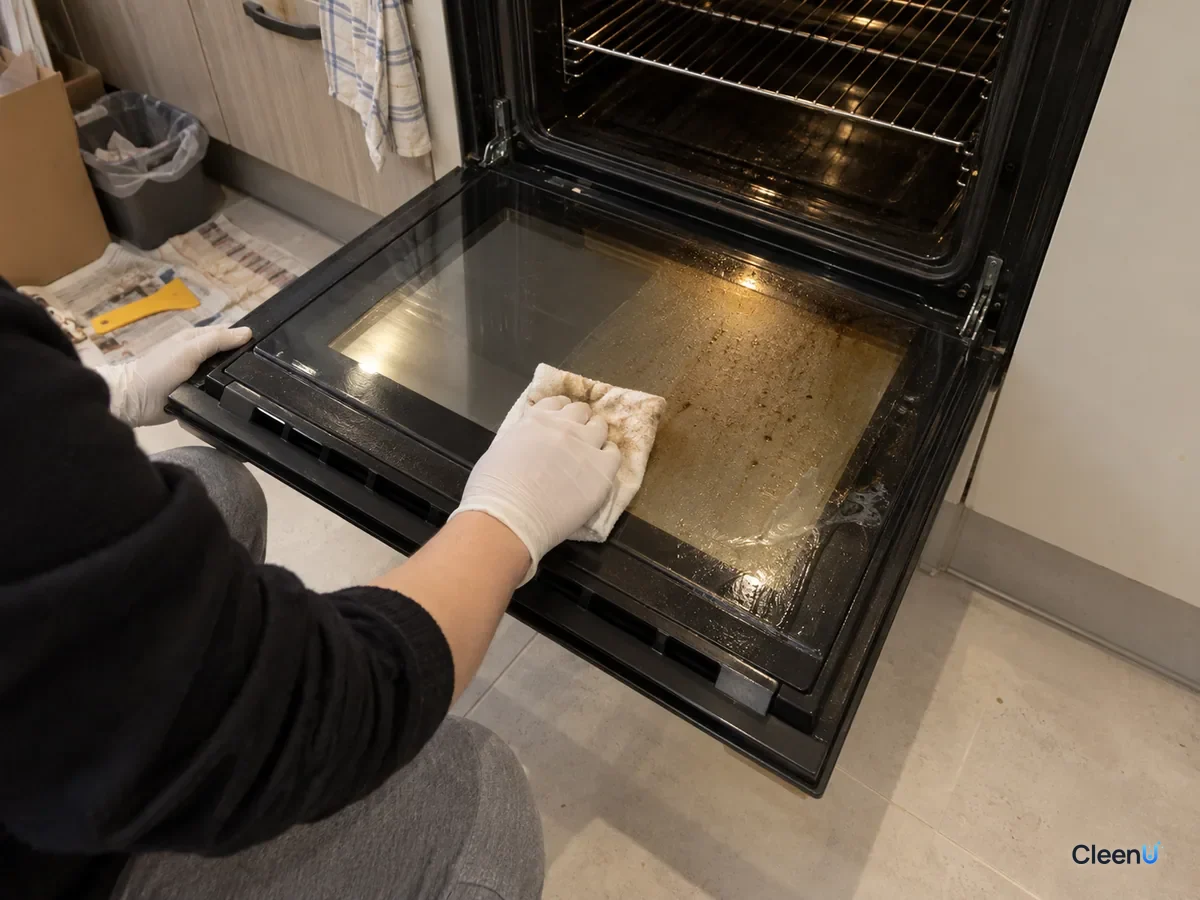
Many oven doors have two or three panes of glass with an air gap between them for insulation, which keeps the outside of the door from getting too hot. There are usually vent slots along the top or bottom of the door. Grease vapor and steam drift through those slots, condense between the panes, and leave streaks and water marks. Spray cleaner aimed at the door edge can also run into the slots and dry into drip marks.
The only way to clean between the panes is from the inside. Some oven doors lift off entirely and the glass slides out. Others are sealed, and taking them apart can compromise insulation, the door seal, or even the hinges. Whether you can clean between the panes comes down entirely to your oven's manual.
How oven glass cleaner works
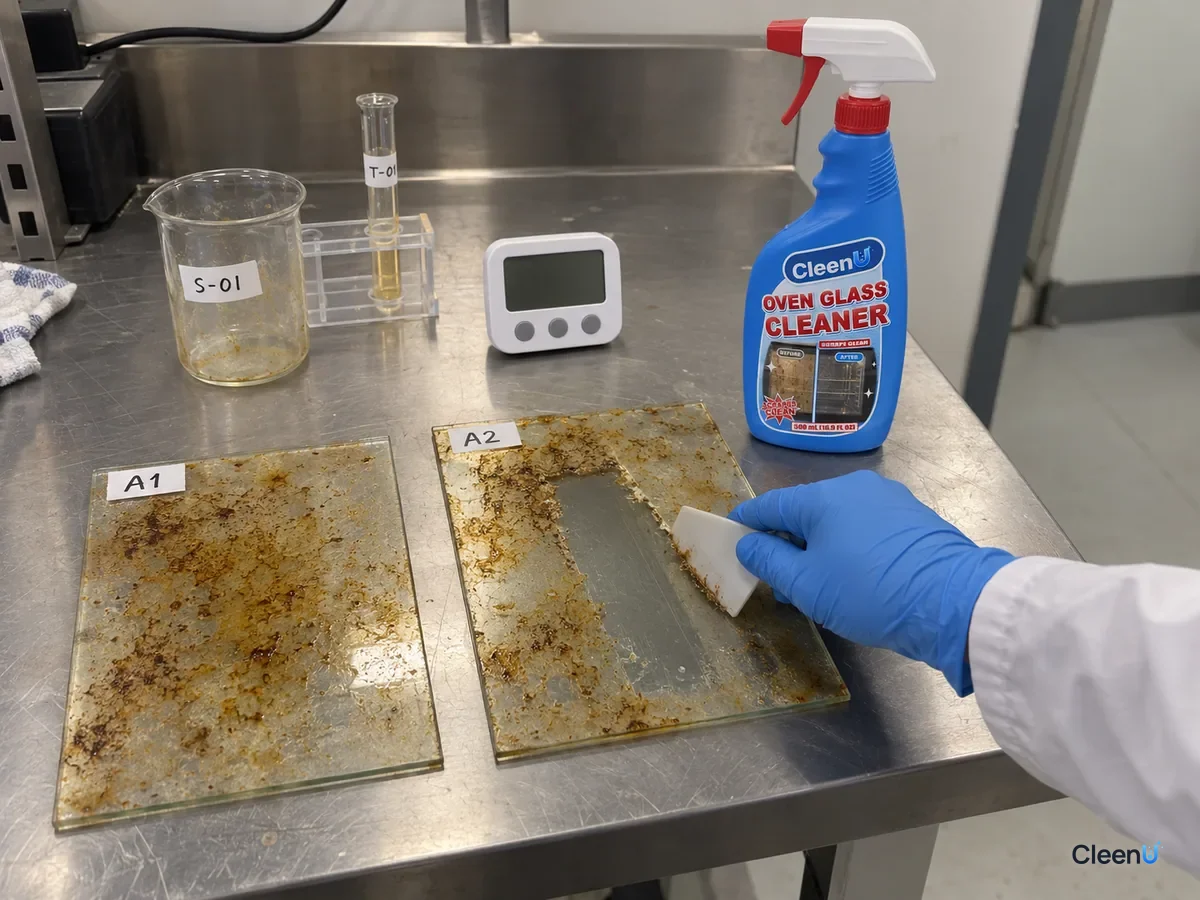
Take CleenU Oven Glass Cleaner as an example. It's a ready-to-use alkaline product, pH 11.0 to 12.5 as supplied, made with alkaline builders, a thickener, alkali-stable surfactants, and solvent, with no abrasive particles.
High alkalinity saponifies the polymerized grease: it breaks the ester bonds in the fat, producing water-soluble fatty acid salts and glycerin, so the hard film softens and loosens. The solvent swells grease that hasn't fully polymerized so the alkali can get in faster. The surfactants wet the surface and emulsify the loosened grime so it wipes away. The thickener lets the cleaner cling to vertical door glass instead of running off, which is what gives it enough dwell time.
That's why you wait 5 to 10 minutes. Saponification takes time; wipe immediately and you only get the top layer. It's made for baked-on film on oven doors, microwave doors, and air fryer windows. Keep it off hot glass, door gaskets, control panels, painted frames, and aluminum trim.
Six steps to clean oven door glass
From the inner glass to between the panes
Turn it off, let it cool, and prep the area
Turn the oven off and wait until the glass is completely cool to the touch. Put on nitrile gloves, lay newspaper or a drop cloth on the floor under the door, and open a window or run the range hood.
Caution:Don't spray warm glass. Alkaline cleaner dries fast on hot glass and can leave white spots.
Protect the parts that shouldn't get wet
Keep cleaner off the door gasket (the rubber or woven seal around the edge), the control panel, the handle, and aluminum trim. Cover them with a dry cloth or plastic wrap, and spray close to the glass, aimed at the film.
Spray and wait 5 to 10 minutes
Cover the film on the inner glass evenly. You don't need a lot, just enough to cling. Give heavy buildup the full 10 minutes. Don't let it dry; if the edges start drying, mist a little more.
Scrape off the softened film
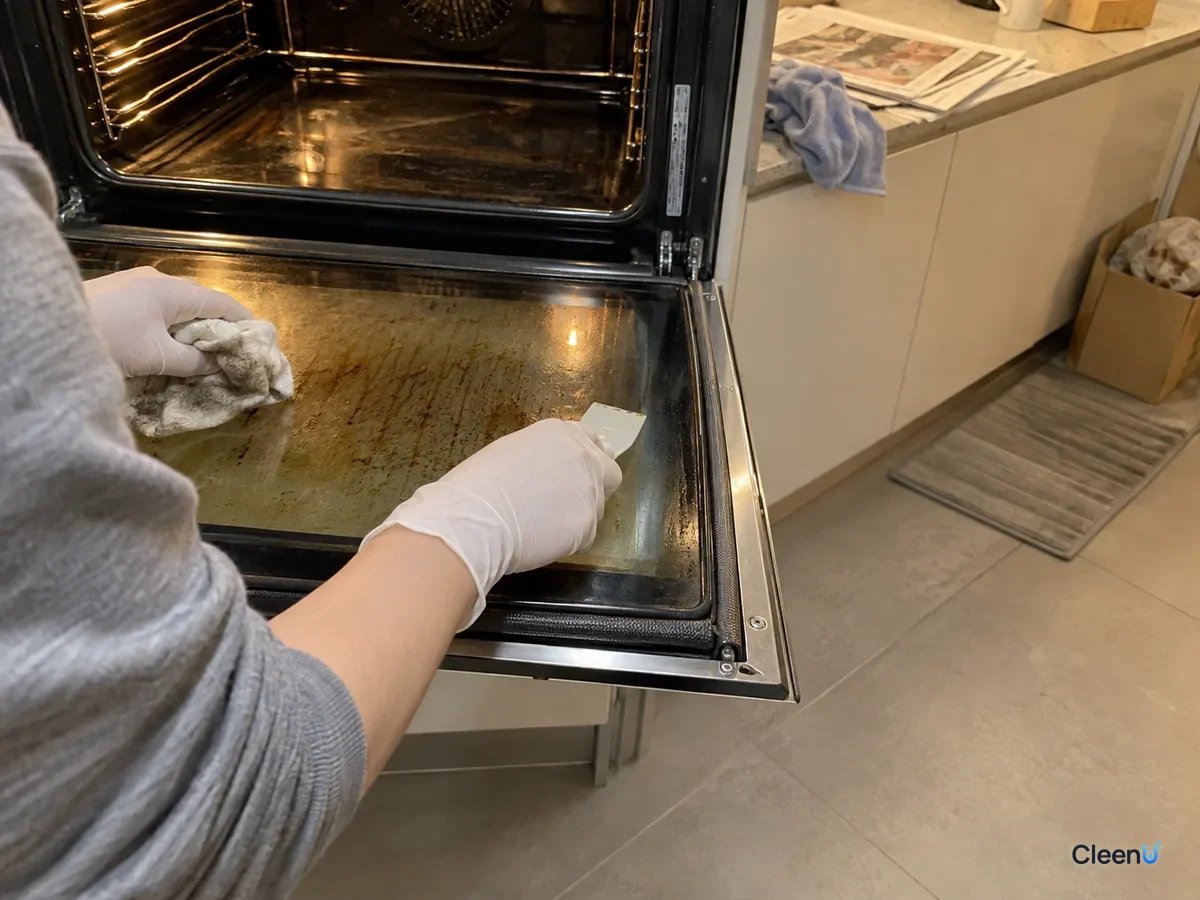
Hold a plastic scraper or cooktop razor scraper at a low angle and push smoothly to lift the softened film. Wipe the gunk off the blade with a paper towel as you go. Work the corners and edges with a folded microfiber cloth. For very thick, old buildup, spray again, wait, and scrape again.
Caution:No steel wool or rough scouring pads. They scratch the glass.
Wipe with water and buff dry
Wipe at least two or three times with a wrung-out damp cloth to remove all alkaline residue, or the next time you bake it can bloom into a white haze. Buff dry with a clean microfiber cloth. The outer glass just needs regular glass cleaner or a damp cloth.
If your manual allows it, take the door apart
If the manual says the door or inner pane is removable, follow its steps to lift off the door or slide out the glass. Lay it on a towel-covered counter, wipe the grease with a cloth dampened with a little cleaner, wipe with clean water, let it dry completely, and reassemble. If the manual doesn't cover it, or you hit clips or screws that look permanent, stop.
Caution:Oven doors are heavy, so get a second person to help. Protect the glass edges, and when reassembling, check that each pane faces the right way and the seals are seated.
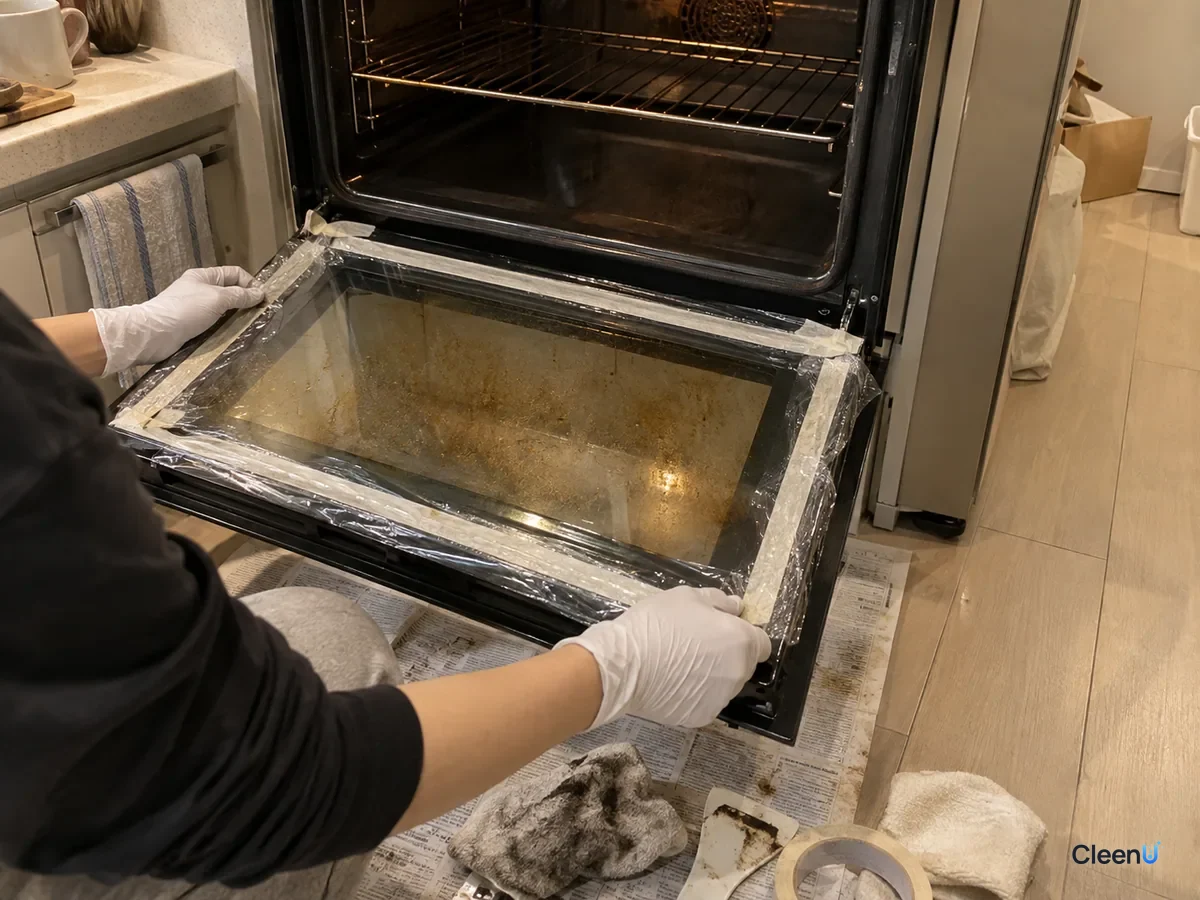
Can you clean between the panes without taking the door apart?
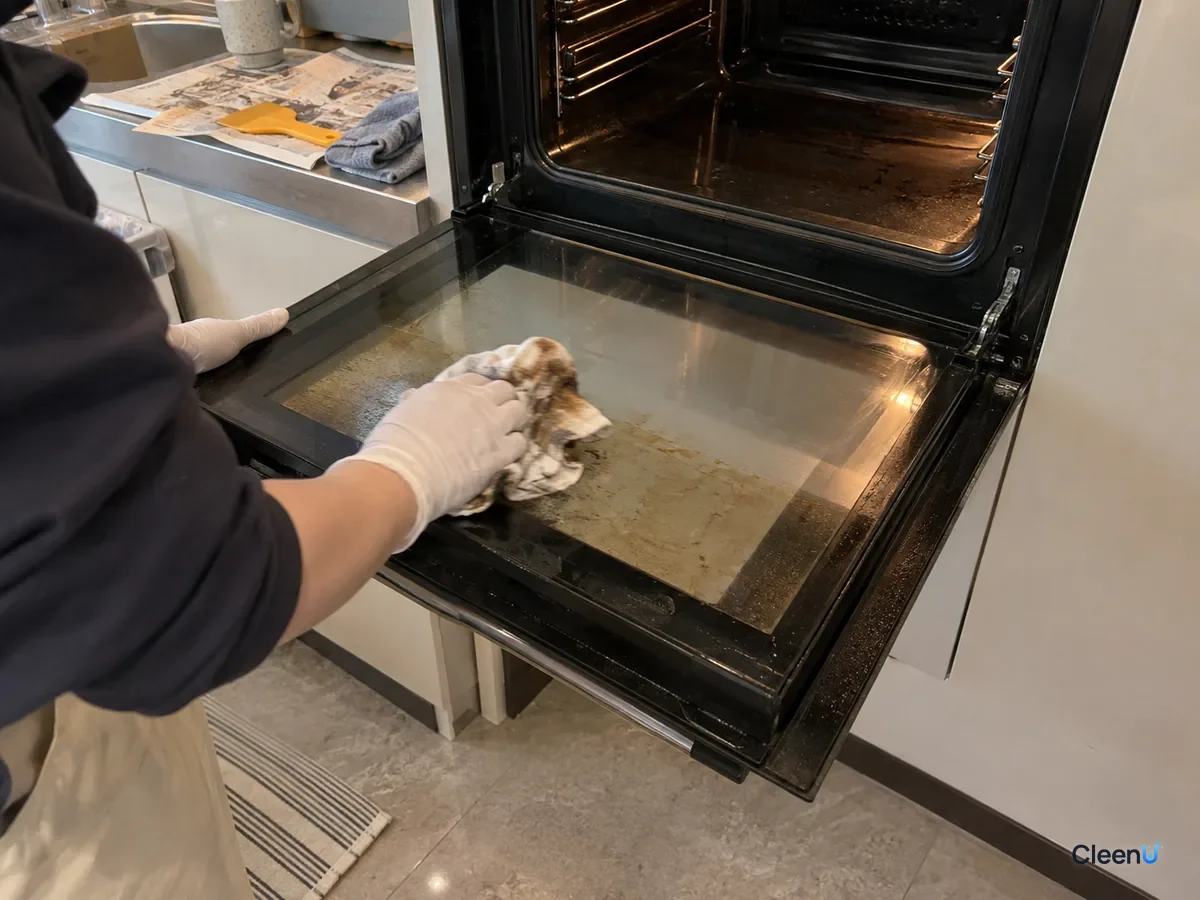
You'll find tips online about taping a cloth to a wire hanger and sliding it through the vent slot. On some ovens the gap is wide enough to reach part of the glass. The risks are real, though: you can scratch the heat-reflective coating on the inner surface, lose the cloth inside the door, or drip liquid in and leave new streaks.
If the grease between the panes is just cosmetic, the safest plan is to keep it from getting worse. Use a rimmed pan, foil, or a cover for greasy roasts to cut down on spatter. When cleaning the inside of the door, spray the cloth, not the door edge. Wipe the glass after baking while it's warm but not hot. If the streaks block your view and the door doesn't come apart, contact the oven maker's service team.
Adjusting for microwave doors and air fryer windows
The inside of a microwave door is usually a metal mesh shield behind a glass or plastic panel. Grease there comes from spattered sauce and oil while reheating food, and it runs much cooler than in an oven, so it rarely hardens into a lacquer-like film. A shorter dwell, about three to five minutes, followed by a damp-cloth wipe is usually enough, and you seldom need a scraper. Watch the door seal and gaps: aim at the middle of the glass so liquid doesn't run along the edges and into the unit.
An air fryer window is small and sits close to the heat, so grease collects around its edge as a hard brown ring. Unplug the unit, let it cool fully, take out the basket, and lay a cloth dampened with cleaner over the window to dwell rather than spraying the housing. If the window is plastic rather than glass, a strongly alkaline cleaner isn't a fit; check the manual first.
How to tell the glass is really clean
Once it's dry, look at the glass at an angle against a light or window. Clear, no yellow cast, no haze: you're done. An even white haze usually means alkaline residue wasn't fully rinsed off; two more passes with a damp cloth and a dry buff will clear it. Small, sharp-edged white spots usually mean cleaner dried on warm glass; rinse those the same way. If a few brown specks remain that the scraper won't move, spray once more, let it dwell, and scrape again. If they still won't budge after two rounds, they may be burned into the surface or be damage to a coating, so stop rather than risk scratching the glass.
How to keep the glass from browning again
After baking, once the glass is warm but safe to touch, give it a quick wipe with a damp cloth. Fresh spatter wipes right off; baked-on film doesn't.
For fatty foods like pork belly or wings, use a rimmed pan, tent with foil, or use an oven-safe cover.
Once a month, treat the inside of the door with oven glass cleaner while the film is still thin. A few minutes of dwell time and it wipes clean.
For the oven cavity itself, see How to clean the inside of an oven. For streak-free glass elsewhere in the house, see How to clean glass without streaks.
Stop if you see this
If the glass is cracked, chipped, or damaged, stop using the oven and contact the manufacturer. If cleaner gets on your skin or in your eyes, rinse with plenty of water right away and see a doctor if your eyes stay irritated. If you find clips, screws, or anything the manual doesn't describe as removable, don't force the door apart. Never mix a strong alkaline cleaner with acidic products, and keep the kitchen ventilated.
Oven door glass cleaning: common questions
Can I clean brown oven glass with baking soda?
For light film, yes, but it's slow on buildup that's been baked many times. Baking soda is only mildly alkaline and works mostly by gentle abrasion. Thick film needs an oven glass cleaner with dwell time and a scraper.
How long should oven glass cleaner sit?
Usually 5 to 10 minutes, with heavy buildup at the longer end; follow the label. Don't let it dry; mist more if it starts to.
Can I clean between the panes without removing the door?
Usually not well. The hanger-and-cloth trick can scratch the coating or leave new streaks. If the door comes apart per the manual, do that; if not, focus on keeping it from getting worse.
Why is there a white haze on the glass after cleaning?
It's almost always alkaline cleaner that wasn't fully wiped off. Wipe two or three more times with a damp cloth, then buff dry.
Can I use the same cleaner on my microwave or air fryer window?
Yes, on the glass window. Keep it off control panels, gaskets, and nonstick coatings, and spray onto a cloth instead of the appliance.
Can I use steel wool on oven glass?
No. Steel wool leaves fine scratches, and grease bonds even harder to scratched glass. Use a plastic scraper or cooktop razor at a low angle.
For an oven glass cleaner that clings to a vertical door and softens baked-on film in a few minutes so it scrapes off easily, take a look at our Oven Glass Cleaner.
Brown oven glass is grease mist that's been oxidized and polymerized into a lacquer-like film by repeated heat. Grease between the panes is vapor that got in through the door vents and condensed. For the inner glass, let it cool, spray oven glass cleaner, wait 5 to 10 minutes, scrape at a low angle, wipe with a damp cloth, and buff dry. For between the panes, take the door apart only if your manual says you can. Wipe after baking and cover greasy foods, and the glass won't build up a thick brown film again.