
How-to
How to Clean Urine Out of a Mattress After a Cat or Dog Pees on It, Without Soaking It
Direct answer
Blot the urine out with thick towels first. Don't flood the mattress with water or blast it with a hair dryer. Treat deep spots with an enzyme cleaner that follows the urine and blot again, mist the surface with a low-moisture mattress spray, then fan-dry until nothing comes up damp.
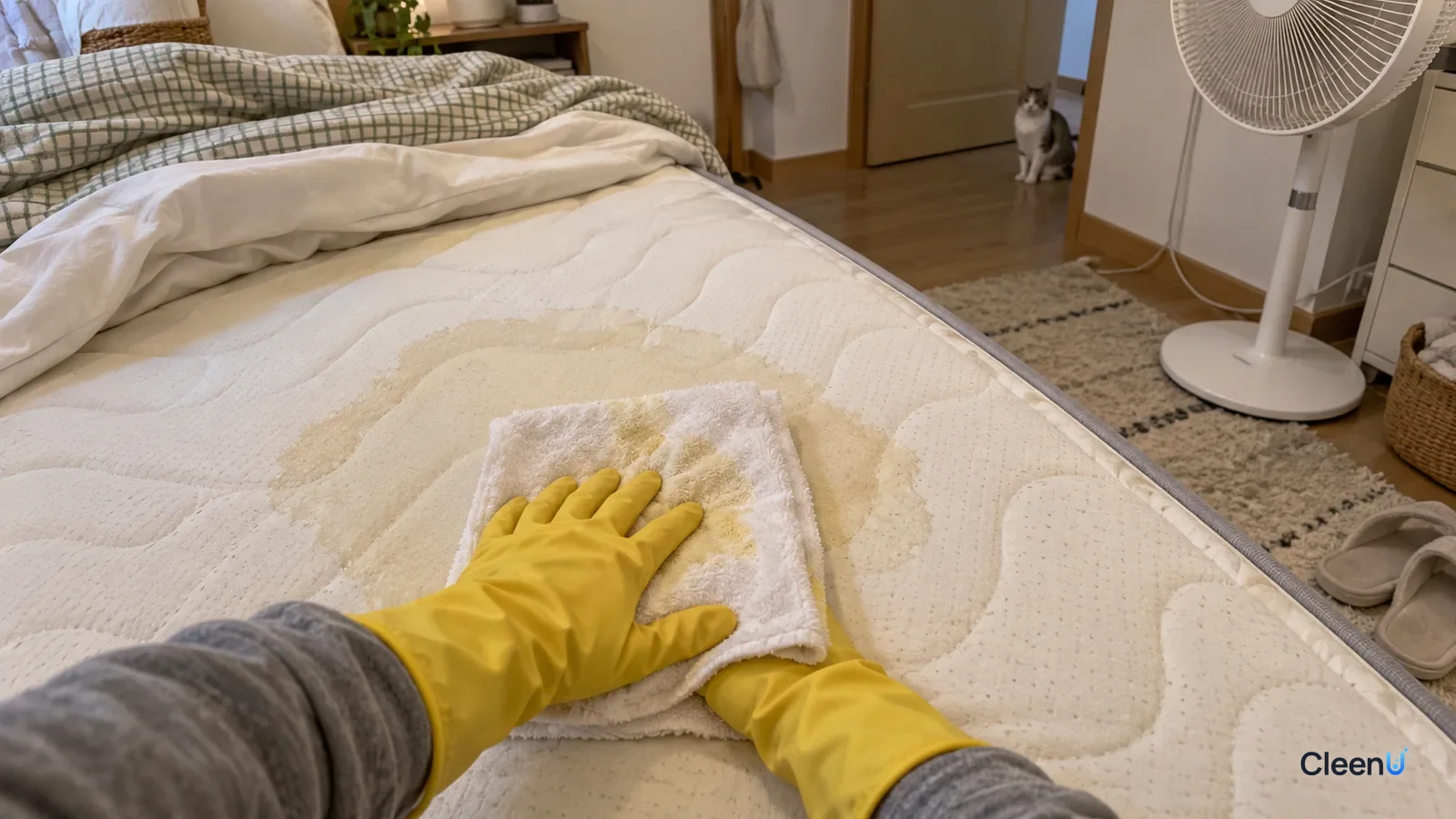
Here's how to clean urine out of a mattress, and why it's not like cleaning a rug. You can't rinse a mattress, and once the foam, latex, or coil pockets inside soak up liquid, they're very hard to dry at home. So the job comes down to one idea: add as little liquid as possible, pull out as much as possible, move a lot of air, and don't stop until it's truly dry. What you blot out in the first ten minutes decides most of the work that follows.
Mattress cleaning also has a ceiling. A cat's small accident usually stays in the cover and quilting, which is very fixable. A large dog can push urine through the foam to the coils, and then you clean what you can reach and rely on drying and a waterproof protector.
What's inside a mattress, and where does urine go?
Most mattresses have five zones.
- Cover: knit or damask polyester, cotton, or a Tencel blend. Urine passes through in seconds; the ring on top is just the entry point.
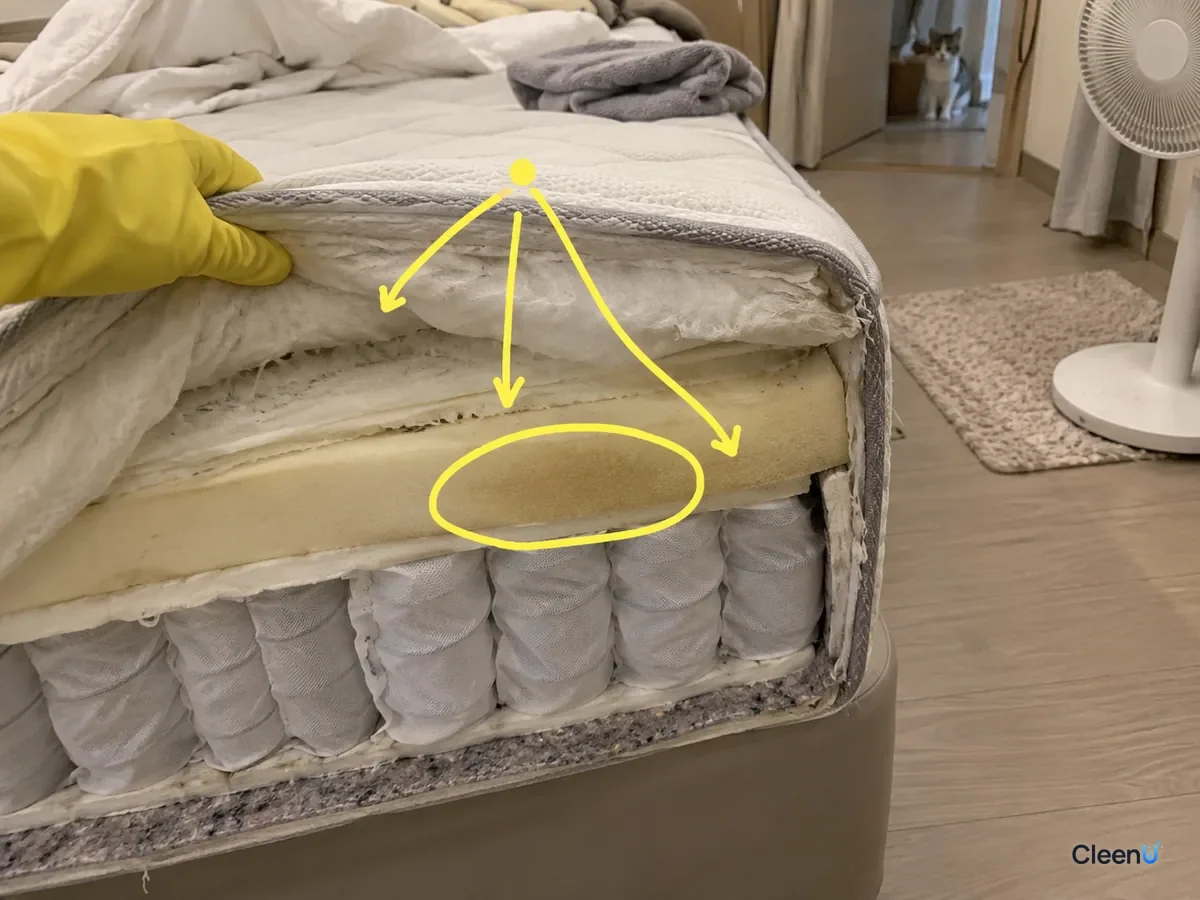
- Quilting: fiberfill or thin foam under the cover, occasionally wool. Gaps between fibers pull liquid sideways by capillary action, so the wet area underneath is often wider than the ring.
- Comfort layer: foam, memory foam, or latex, mostly open-cell like a kitchen sponge. It soaks liquid up and holds it; pressing gets only part back.
- Support layer: pocketed coils wrapped in nonwoven fabric that wicks, or in some firm mattresses a glued coir or palm-fiber layer that dries very slowly.
- Border and bottom: a big volume runs along layer boundaries and can show up on the side or underside.
The typical path of a pet accident through a mattress
- Urine passes through the cover and leaves a ring smaller than the real wet zone
- The quilting pulls it outward
- Gravity carries it into the foam, where open cells trap it, usually in a plume narrow at the top and wider below
- At a glue line or a change in foam density, it spreads sideways
- Water slowly evaporates, leaving urea, salts, proteins, and other residue on fibers and cell walls
That's why a spot can feel dry on top and still smell days later, and why volume, not species, decides the job. Before you grab a cleaner, estimate which layer the urine reached and size every step to that.
Trapped urine keeps smelling because urea breaks down into ammonia when it meets urease, an enzyme made by common environmental bacteria. A warm, humid, poorly ventilated mattress core keeps that reaction running, so a mattress that never fully dries is an odor source in its own right.
Why you shouldn't flood it or use a hair dryer
The harder you try to rinse a mattress clean, the bigger the problem gets.
Lots of water pushes urine deeper and wider. "Dilute and extract" works on carpet because an extractor pulls the water back out. On a mattress, extra water follows the urine's path and keeps going, from the quilting into the foam and from the foam toward the coils. The contaminated zone grows, and nothing you own can pull water from the middle of a foam block. The core stays damp for days, so you end up with urine odor plus mustiness. That's why mattress cleaning sprays usually put "don't soak the mattress" near the top of the directions.
A hair dryer dries the surface and fools you. Hot air dries the cover into a skin while the foam below stays wet, so you lose your best clue about whether it's done. Mattress materials don't like heat either: memory foam is temperature-sensitive, latex is natural rubber that ages faster with heat and UV, and polyester fabric can stiffen near a hot dryer. And enzyme cleaners need to stay damp during their dwell time, so hot air ends their work early.
Use room-temperature air in volume instead: a box fan, an open window or a dehumidifier, and the mattress on its side if you can. It's slower, but the inside dries too.
Common moves that backfire on a mattress
- Pouring water or a vinegar solution straight onto the spot
- Steam cleaning, which drives heat and moisture into the core
- A hair dryer held against the cover, or a heated pad or electric blanket switched on over a damp mattress
- Bleach on urine, which can form irritating chloramine gas
- Cleaners with ammonia or vinegar, which smell like urine and may draw a cat back
The last two points come from the Tennessee Poison Center and the Cornell Feline Health Center (accessed Oct 2026).
Foam, memory foam, latex, and wool: what changes
Check the law tag before you start. It lists the fill materials, and those set your limits.
Foam and memory foam are absorbent polyurethane. Denser memory foam lets liquid in and out slowly, so press harder and longer, expect longer drying, and keep heat away.
Latex has through-holes that spread moisture widely, and it's fragile when wet. Don't twist, scrub, or fold it; press straight down, and keep it out of direct sun.
Coir or palm-fiber layers are glued natural fibers that dry slowly and can mold, so keep liquid minimal.
Innerspring mattresses have absorbent coil pockets, and damp steel can rust; at this depth, extraction and airflow are your main tools.
Wool, camel hair, or silk are animal-protein fibers that protease-containing cleaners can damage, so neither the urine enzyme cleaner nor the mattress mist is for them. Blot, press with a little plain water, and dry, or use a cleaner who handles wool.
A zip-off cover can be washed separately per its care label while you treat the core.
Two kinds of enzyme cleaner, two jobs: depth and surface
A mattress accident sets two goals against each other: the enzyme has to reach wherever the urine went, but the mattress can't take much liquid. That's why it helps to have two forms of enzyme cleaner on hand, one for each end.
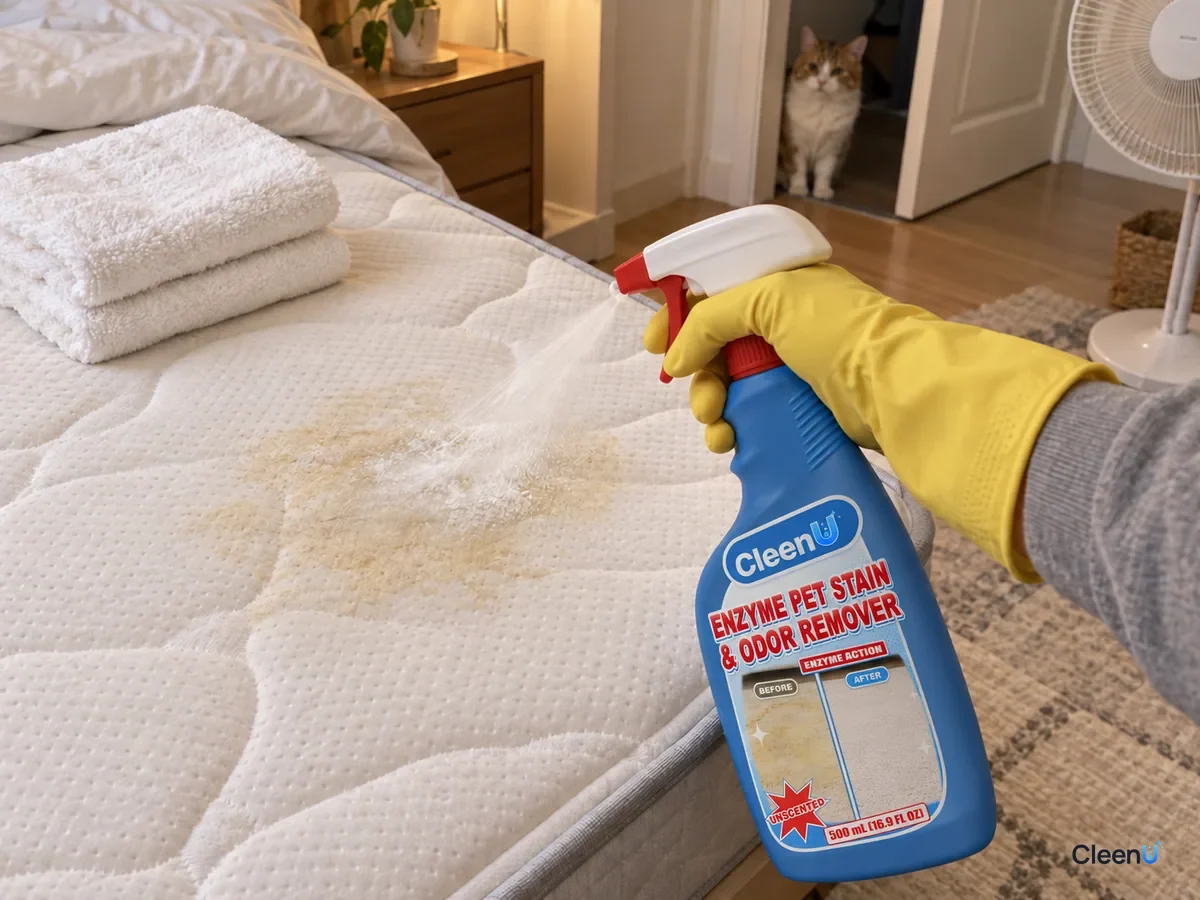
A trigger-spray pet urine enzyme cleaner handles depth: protease, lipase, and amylase enzymes with nonionic surfactants, fragrance-free, delivering enough liquid to follow the urine down. Blot first, spray until it reaches as deep as the urine went, wait 10 to 15 minutes, then blot and air-dry. The enzymes break down protein and oil-based residue that carries odor, and the surfactants help move it into your towel. Use it when a large accident reached the quilting and foam. CleenU Enzyme Pet Stain & Odor Remover is one example: ready to use, close to neutral, with no added fragrance, so what you smell afterward is what's really there.
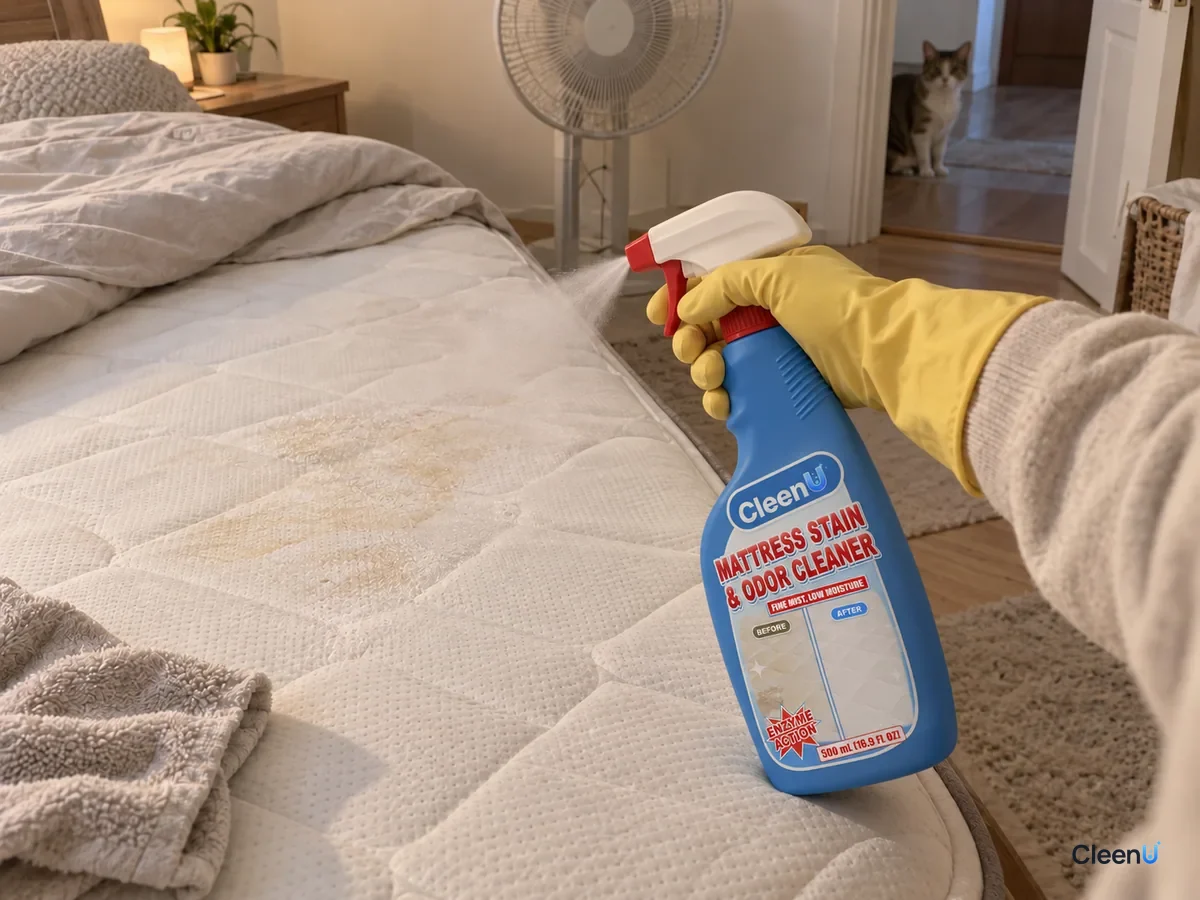
A fine-mist enzyme spray made for mattresses handles the surface. Each pull delivers little liquid: mist until the fabric is just damp, wait a few minutes, press with a damp cloth, then air-dry for a few hours. It wets only the top fabric, so it suits small accidents that stayed in the cover and the faint ring or odor sometimes left after a deep treatment dries.
On a mattress, "spray as deep as the urine went" means follow the urine and don't exceed it: treat the layers it reached, cover an inch or two past the wet edge, and don't double the dose to be safe. Don't spray both kinds on one spot at once either. It's not a chemistry conflict; two loads of liquid just soak the mattress. Deep-treat, dry completely, then decide whether the surface needs a mist.
When a large accident has reached the inner layers, use our fragrance-free Enzyme Pet Stain & Odor Remover.
Fresh accident: step by step
Your cat or dog just peed on the bed: do it in this order
Get the pet out and strip the bed
Close the pet out, pull off the sheets and mattress pad, and wash them. A wet sheet left on top presses urine deeper and blocks airflow.
Blot straight down with thick towels
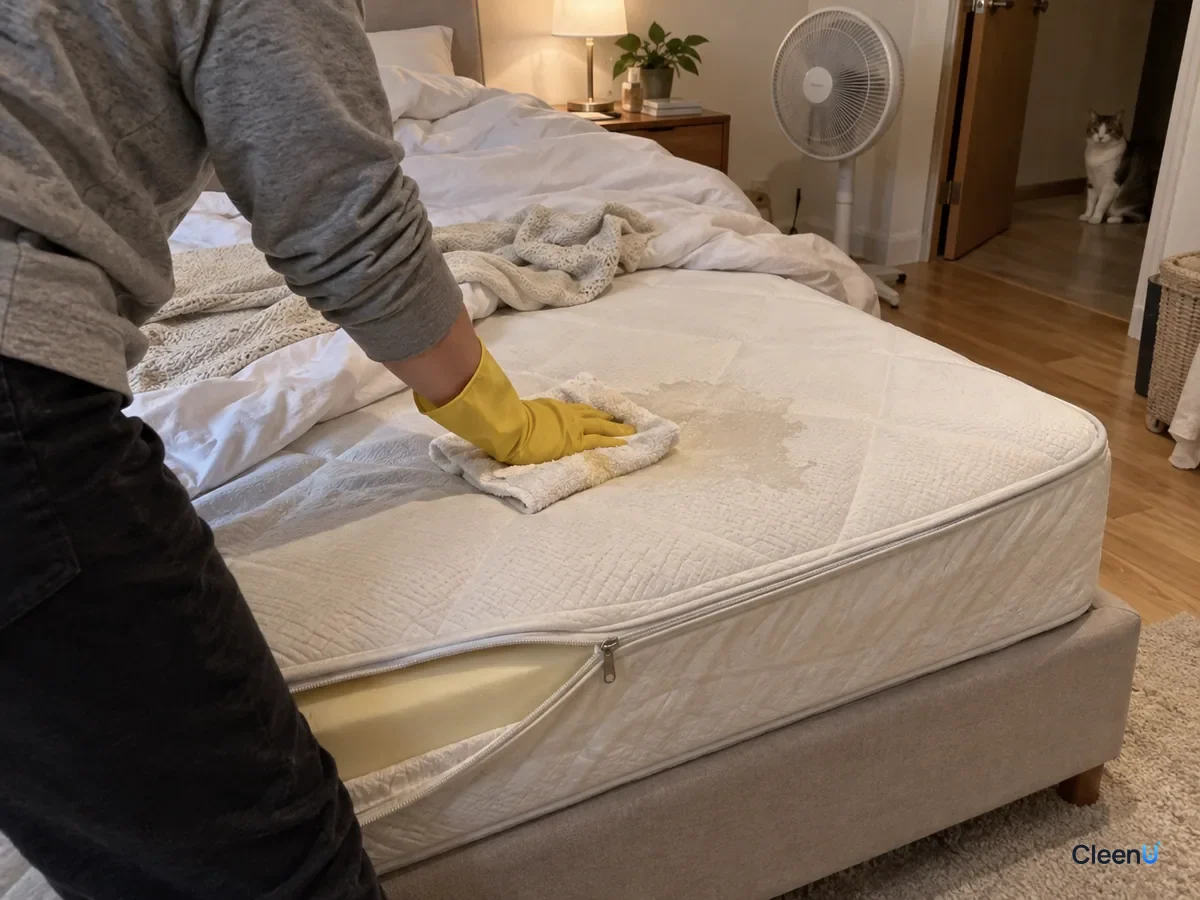
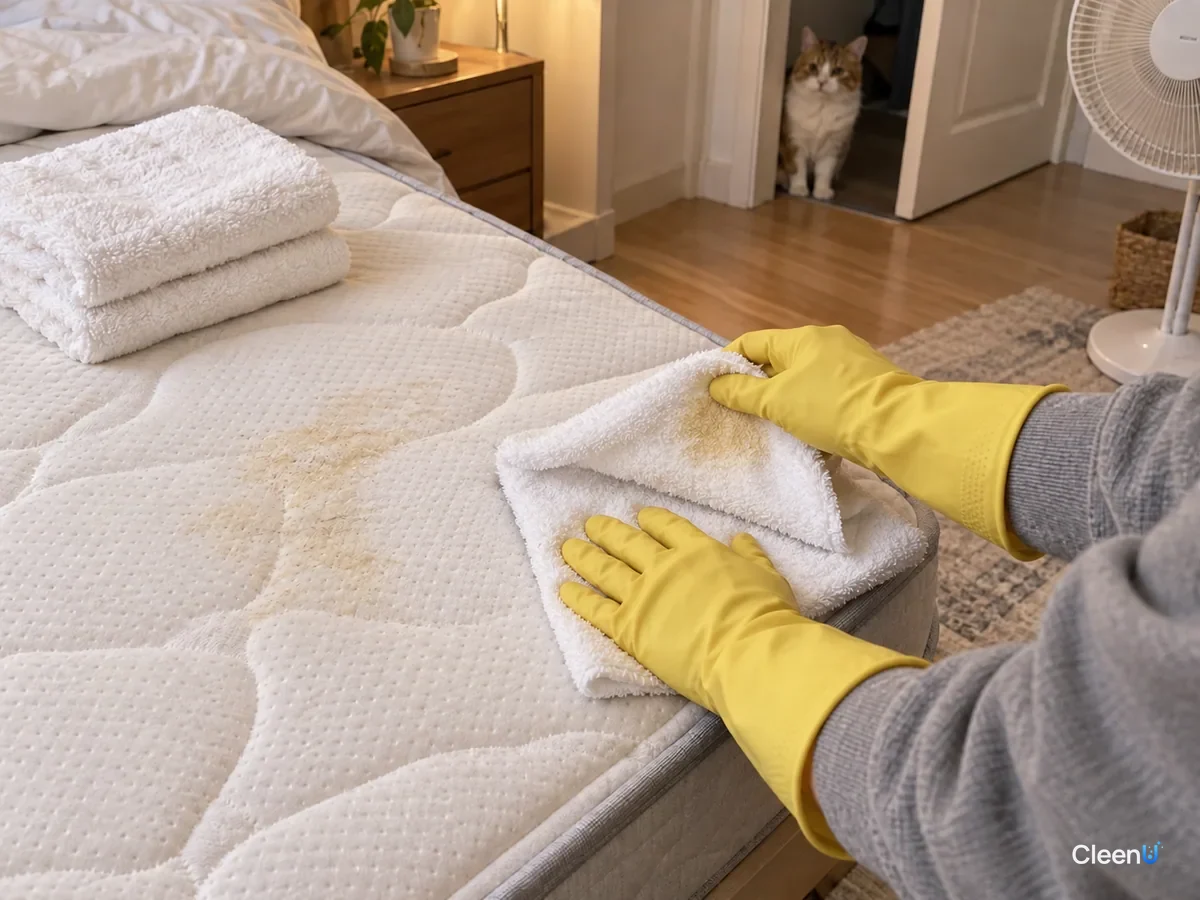
Fold a towel into four to eight layers and press straight down with your palms or a knee for 10 to 15 seconds. Move to a dry section and repeat until almost nothing comes up. Don't rub; it spreads the urine.
Caution:For a big accident, stand on the towel. A wet/dry vac or spot cleaner in suction-only mode helps.
Figure out how deep it went
Press around the ring to find the damp edge. Liquid still squeezing out of the foam means deep treatment; a damp cover only means surface treatment.
Deep treatment that follows the urine
Spray the Enzyme Pet Stain & Odor Remover from just outside the wet edge toward the center until the layer under the cover is damp but not puddled. Leave it 10 to 15 minutes with no fan or heat on it.
Caution:Match the urine's depth. Don't add extra to flush the spot.
Blot it back out
Repeat the towel pressing to lift the cleaner and loosened residue. Stop when the yellow on the towel is clearly fading.
Surface treatment with a light mist
If only the cover got wet, skip the deep steps. Mist the Mattress Stain & Odor Cleaner until the fabric is just damp, wait 5 to 10 minutes, and press with a wrung-out damp cloth.
Dry with room-temperature air
Run a fan and a dehumidifier or open a window, and stand the mattress up if you can. Keep going until it passes the dryness checks below.
Caution:No hair dryer, no heated pad over a damp mattress, no direct sun on latex.
Check, then decide on a finishing pass
Once it's dry, smell it. If a faint ring or odor remains, mist the surface once and dry again. If not, put on a waterproof protector and let your pet back in.
Stop adding liquid if you see any of this
Stop if the foam keeps releasing fluid, the bottom panel is soaked, you see mold or smell mustiness, the cover puckers or loses color, you find wool or silk in the fill, or two or three fully dried rounds haven't touched the odor. More water only keeps the core wet. Dry the mattress thoroughly, then consider a professional cleaner or replacement. If your pet suddenly starts peeing on the bed, it may be a health or behavior signal, so see your veterinarian; cleaning only handles the aftermath.
How to tell a mattress is really dry
"Doesn't feel wet" isn't dry. Passing the third check below is usually enough to make the bed.
- Paper towel press: press three or four dry paper towels on the spot for 30 seconds. Any damp mark means water is still inside.
- Back-of-hand check: touch an untreated area, then the treated one. Damp foam is still evaporating and feels cooler.
- Overnight plastic sheet test: tape plastic wrap over the spot on all four sides overnight. Fog or droplets underneath in the morning mean moisture is still coming out. This catches "dry outside, wet inside."
- Re-smell test: close the room for an hour or two, or set an upturned bowl over the spot, then sniff close. Your nose tunes out smells it's been around.
A UV flashlight in a dark room makes many urine residues glow, which helps confirm coverage, but the glow isn't the final word.
Dried urine and old yellow stains
An old spot has nothing to blot, and the yellow may be oxidized fiber. Find the full area by UV light or by sniffing section by section, lightly re-wet the residue with the Enzyme Pet Stain & Odor Remover, wait 10 to 15 minutes, and blot. Work a big area in sections. Expect two or three rounds, each fully dried before the next.
A years-old yellow mark can be lightened but rarely disappears. Chase the odor, not the color.
Same problem, different situations
- Cat, caught early, small amount
- Mostly blotting, then a surface mist and 2 to 4 hours of fan drying
- Cat, already dry, strong smell
- Find the full area, re-wet with the enzyme remover, two or three rounds
- Small dog, fresh
- Blot, check depth (often the quilting), deep treatment, fan overnight
- Large dog, liquid squeezes out
- Long blotting or a wet/dry vac, deep treatment, mattress on its side, accept the ceiling
- Memory foam or latex
- Smaller doses, press flat, no heat or sun, longer drying
- Topper soaked through
- Machine-wash if the label allows; otherwise replacing it often costs less
- Wool, camel hair, or silk
- Skip both enzyme products; blot, a little water, dry
Still smells? Work down this list
- It isn't fully dry. Most common. Run the plastic sheet test before spraying anything else.
- You missed part of it. The wet zone inside is wider than the ring, or there's a second spot on the edge, side panel, or floor.
- The cleaner didn't go deep enough. Next round, match the urine's depth.
- The smell is somewhere else: slats, a platform base, a rug under the bed, or an upholstered headboard.
- Too much water went in. Stop adding liquid and dry for a day or two before judging what's left.
- Bleach, ammonia, or vinegar went on first. Enzymes are proteins and chlorine damages protein structure, so press with plain water, blot, and dry before the enzyme cleaner.
- The core is saturated from volume or repeat accidents. If two or three rounds haven't fixed it, you've hit the home-cleaning ceiling.
When to call a pro, and when to replace
Treat it as a cost decision:
- A newer mattress with urine only in the quilting or upper foam is worth cleaning yourself.
- If urine reached the coils or the same spot was hit repeatedly, consider a professional mattress cleaner, and ask how they extract water and dry. Cleaning without serious drying isn't worth paying for.
- Mold, sagging foam, or strong odor after two or three rounds point to replacement. Mold means the inside stayed wet too long.
- Soaked toppers and thin foam pads are often cheaper to replace than to rescue.
- During house-training, with a senior dog, or while a urinary issue is being treated, put a protector on first and save the deep cleaning for later.
Accepting the home-cleaning ceiling costs less than soaking the mattress again and again.
A waterproof protector is the cheapest fix
A protector keeps urine outside the mattress and turns the next accident into laundry. Look for a TPU membrane under a knit or terry top, which breathes better and crinkles less than old vinyl. A fitted style covers only the top, so urine near the edge can run down the side; a zippered encasement covers more. Many waterproof layers don't handle high dryer heat, so follow the care label.
With a puppy or senior dog, double layer: protector and sheet, then a second protector and sheet. After a 2 a.m. accident, strip the top two layers and go back to sleep.
Why one sprays to depth and the other mists
The difference isn't strength; it's how liquid reaches the stain and how much water stays behind. A trigger sprayer delivers more liquid, and nonionic surfactants lower its surface tension so it wets fibers and travels down to catch the urine on materials that can take some water, like carpet and sofas. A fine-mist sprayer delivers less per pull; the droplets settle on the fabric and stay there, wetting only the top layer so loosened residue transfers to a damp cloth. On a mattress, liquid per squeeze matters as much as the formula.
When results go wrong, it's usually one of three variables. Too much liquid carries dissolved urine deeper and leaves a yellow ring as it dries. A fabric that can't take it may lose color, which is why you test first on the side of the mattress. And incomplete drying leaves moisture in the foam, so bacteria keep breaking down urea and the odor returns a few days later. The home checks above look at exactly these three things.
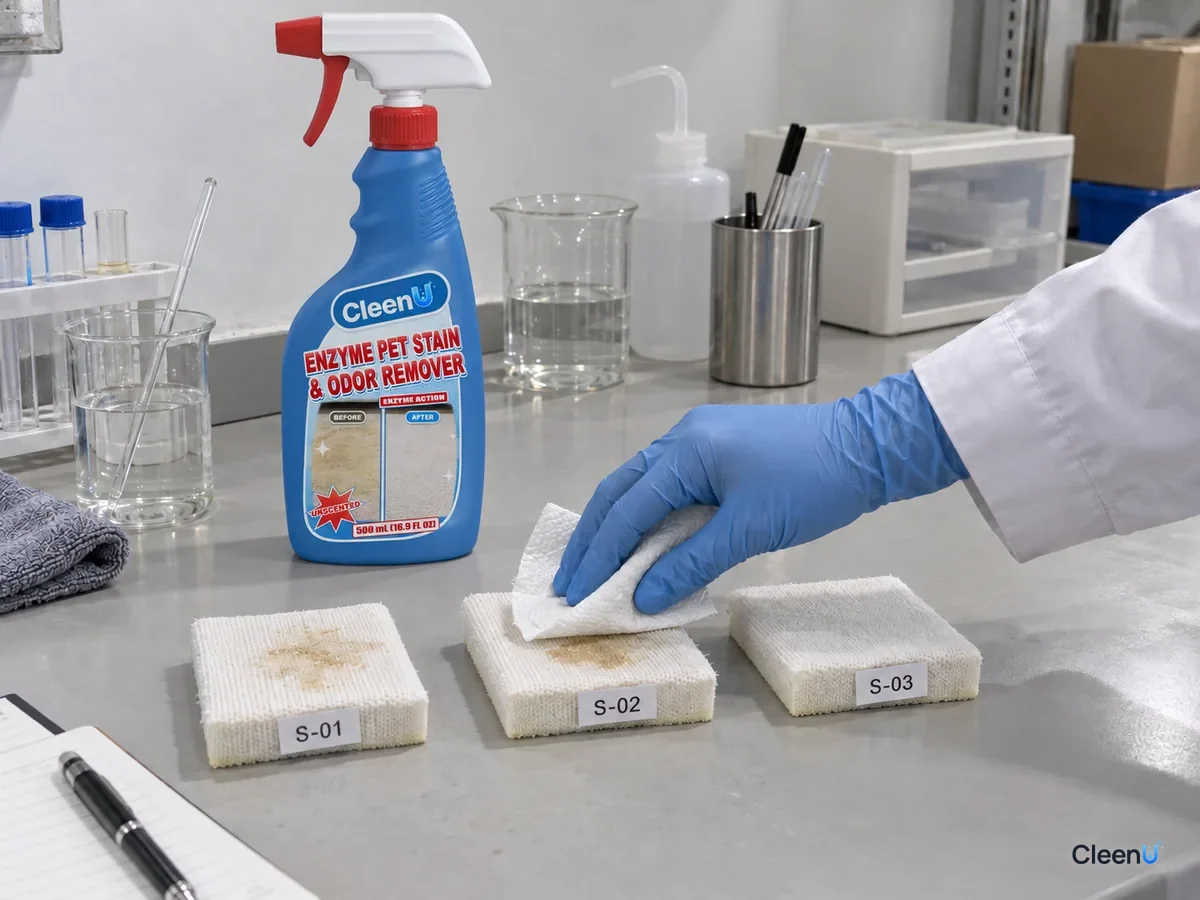
Enzyme cleaners aren't disinfectants and don't claim to kill germs; they handle stains and odor sources. Check the label and choose one without bleach.
Why pets pee on the bed
Cleaning handles the result, not the cause. The Cornell Feline Health Center links cats urinating outside the litter box to possible urinary tract inflammation, kidney disease, diabetes, thyroid problems, or mobility issues and recommends a vet exam first. The ASPCA lists urinary tract infections, age-related sphincter weakness, and bladder stones among possible medical causes of house soiling in dogs (both accessed Oct 2026). If your pet suddenly starts peeing on the bed, see your veterinarian first. The ASPCA also recommends enzymatic cleaners over ammonia-based ones, since lingering scent draws pets back.
If the accident reached the floor, see Can a robot mop clean up pet urine? For the rest of the house, see Cleaning floors in a pet home and our pet home cleaning hub.
Pet urine on a mattress: questions people ask
How do you get urine out of a mattress when it's dry?
Find the full area, re-wet the dried residue lightly with an enzyme cleaner, wait 10 to 15 minutes, blot, and dry completely. Dried cat urine usually takes two or three rounds, each fully dried before the next.
Can you use vinegar to get pee out of a mattress?
Skip it. The Cornell Feline Health Center advises against vinegar- and ammonia-based products on urine spots because they smell like urine and may draw a cat back. Vinegar also adds liquid without breaking down protein residue.
Can you still sleep on a mattress after a pet peed on it?
Yes, if there's no mold or musty smell, the core dries completely, and no obvious urine odor remains. Add a waterproof protector and keep using it. With mold, sagging foam, or odor that survives two or three rounds, replace it.
Does the hydrogen peroxide and baking soda method work on a mattress?
It is not our first choice for a mattress. Peroxide can lighten colored fabric, so test a hidden spot, and the method still puts liquid into the mattress. Don't stack it with an enzyme cleaner on the same spot, because oxidizers are hard on enzymes.
Can I use both enzyme cleaners on the same spot?
One after the other, not together. Do the deep treatment, let it dry completely, and mist the surface only if a ring or faint odor remains.
How do I get pee out of a mattress topper?
Check the care label first. Machine-washable toppers go in the wash; foam toppers get the same blot, treat, and dry routine, though a thin, inexpensive one that's soaked through is often cheaper to replace.
How long before my pet can sleep on the bed again?
Wait until the mattress passes the overnight plastic sheet test. Keep the bedroom door closed while you clean and while it dries so your pet doesn't walk on or lick damp fabric.
Does this work for a child's bed-wetting accident?
Yes, the steps are the same: blot, treat to the depth the urine reached, and dry completely. A fragrance-free option and a double-layered protector make nighttime changes easier.
Can an old yellow urine stain on a mattress be removed?
The odor can be treated, but the color rarely comes all the way back, because the fiber itself has changed. The mattress spray can lighten it; a washable cover or protector is the practical fix.
What if I find mold on the mattress?
Mold means the inside stayed wet too long, and a cleaner won't fix it. Have a professional assess a small, new spot; widespread mold or a strong musty smell means it's time to replace the mattress and improve bedroom ventilation.
Getting pet urine out of a mattress is about controlling liquid, not finding the strongest cleaner. Blot long and hard. For a small surface accident, mist the low-moisture mattress spray until the fabric is just damp; for a large one, use the enzyme pet stain remover to follow the urine's depth, then blot it back out. Skip the flood of water and the hair dryer, dry with fans and a dehumidifier, and confirm with a paper towel, the back of your hand, and an overnight plastic sheet. If two or three rounds don't fix it, or you see mold or sagging foam, you've hit the ceiling of home cleaning. Then put a waterproof protector on so the next accident is just laundry.
Sources
- Cornell Feline Health Center, "Feline Behavior Problems: House Soiling" (accessed Oct 2026)
- ASPCA, "Litter Box Problems" and "Separation Anxiety" (accessed Oct 2026)
- Tennessee Poison Center, Vanderbilt University Medical Center, "Why shouldn't I mix household chemicals with bleach?" (Nov 2018)
- Mobley HL, Hausinger RP, "Microbial ureases," Microbiological Reviews, 1989