
Comparison
How to Stop a Bathroom Mirror from Fogging
Direct answer
Mirror fog is warm steam condensing into tiny droplets on cooler glass. The most effective step is running the exhaust fan and cracking the door during your shower to cut the steam. Anti-fog sprays and coatings reduce fogging for a while and need reapplying; a heated defogging mirror is the long-term fix.
How to choose
-
You want to try something free first
Choose Run the fan, crack the door, and aim the shower away
It also lowers humidity, which helps prevent mold and mirror desilvering.
-
You need a clear mirror right after showering to shave or do makeup
Choose The fan plus an anti-fog spray or coating, reapplied regularly
It's inexpensive and noticeably effective; just reapply per the label.
-
You only need it occasionally and don't want another product
Choose A tiny bit of soap or shaving cream, buffed until invisible
It works in a pinch but tends to leave a white film with regular use.
-
You're remodeling or replacing the mirror anyway
Choose A heated defogging mirror
It's the most reliable fix; have it installed professionally with proper waterproofing and wiring.
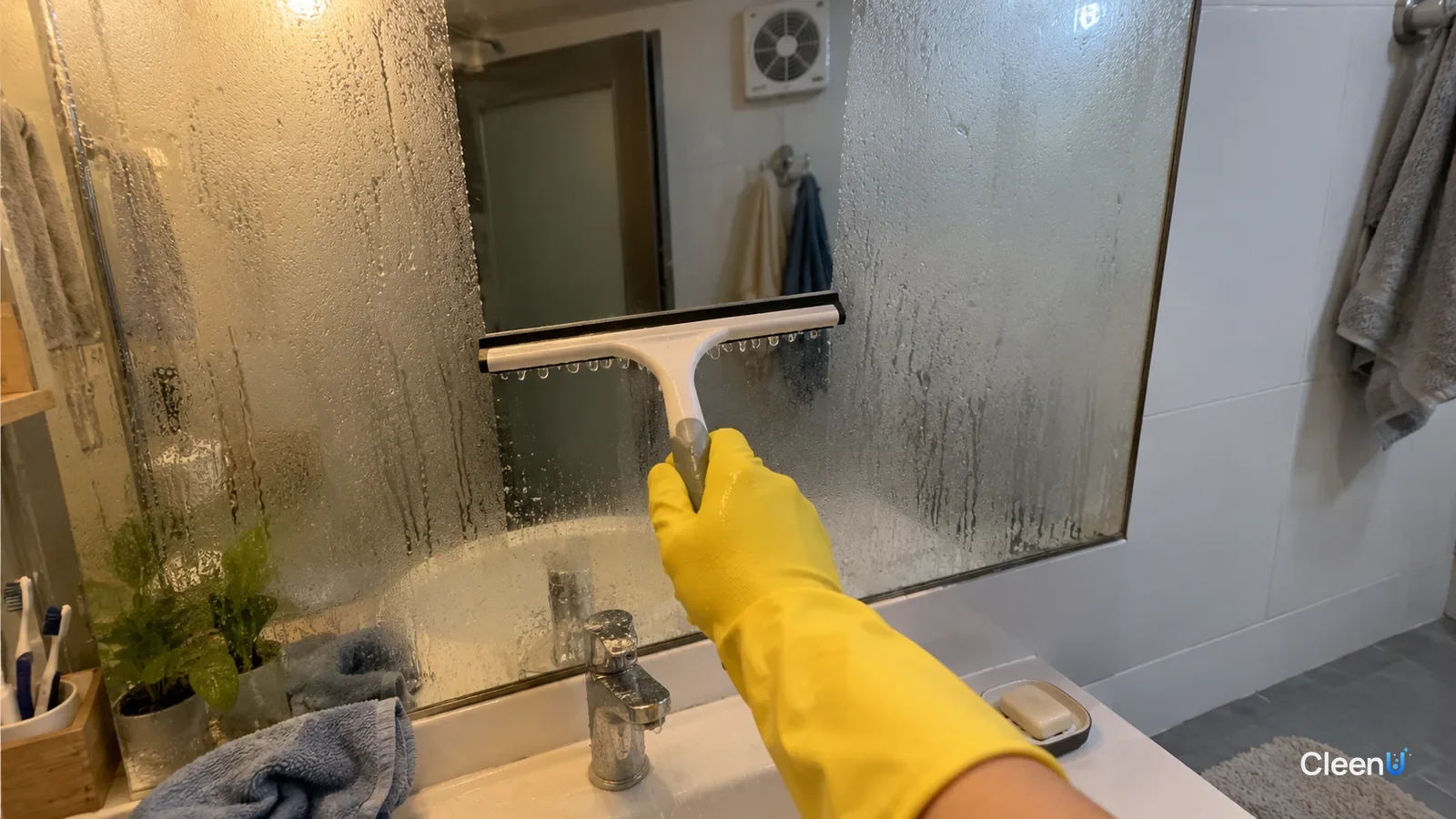
You step out of the shower and the mirror is a white sheet of fog. Swipe it with your hand and you get streaks, and seconds later it's fogged again. It's worst in winter. There's no shortage of advice: soap, dish soap, shaving cream, anti-fog film, anti-fog spray, a heated mirror. They work in different ways and last for very different lengths of time. Here's why mirrors fog, then a side-by-side look at the options.
Why mirrors fog
During a hot shower, the air in the bathroom quickly gets warmer and full of water vapor. The mirror is glass, which conducts heat well and is usually cooler than the air, especially on an exterior wall or in an unheated winter bathroom.
When warm, humid air touches cooler glass, the air right at the surface drops below its dew point, and water vapor condenses into countless tiny, separate droplets. They scatter light in every direction, and that's the white fog you see.
So there are only three ways to stop it: put less water vapor in the air, keep the glass at or above the dew point, or change the glass surface so condensation spreads into a clear, even film instead of beading into droplets.
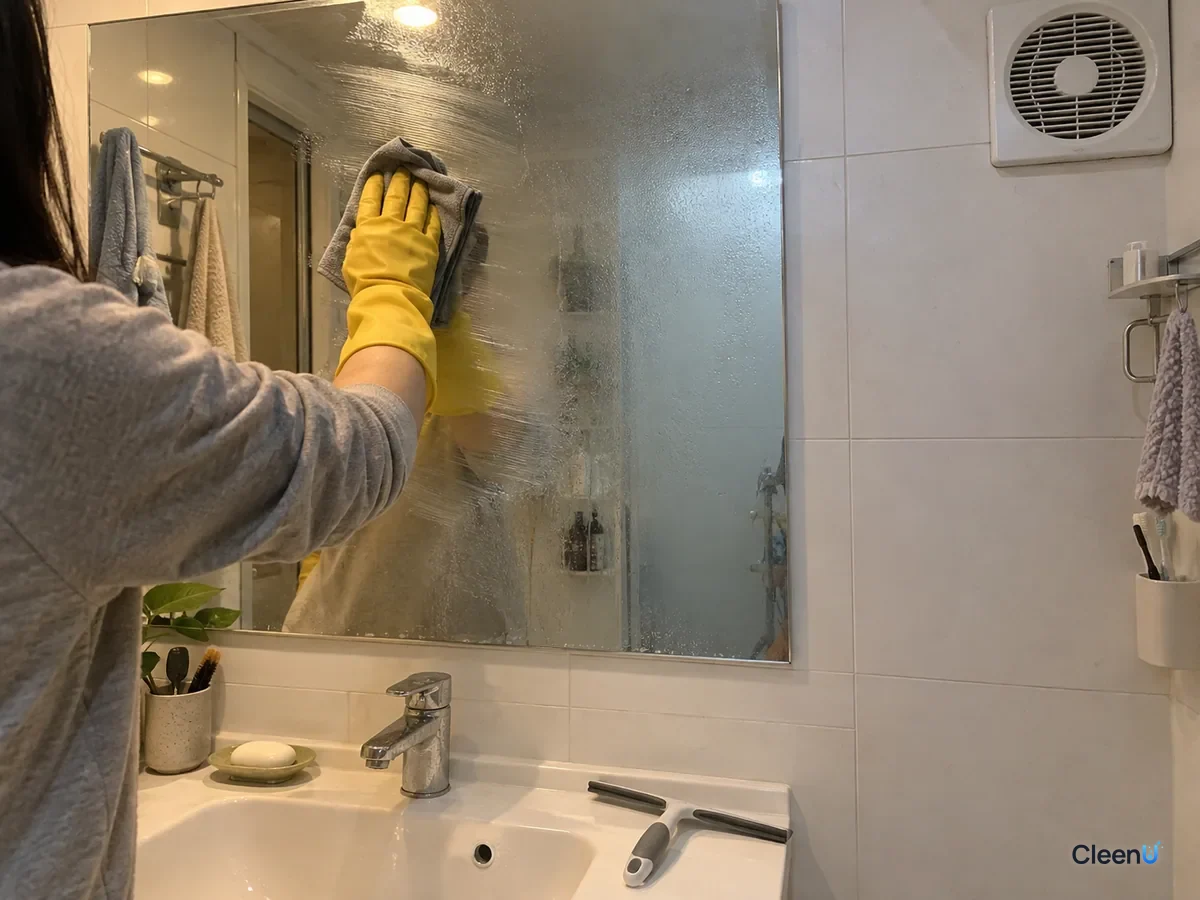
Changing the surface: how anti-fog coatings work
On plain glass, water beads up because the contact angle between water and glass is fairly high. Anti-fog coatings, including sprays and tricks like soap or dish soap, leave a thin hydrophilic layer on the glass, usually a surfactant or water-loving polymer. That layer lowers surface tension and the contact angle, so condensation doesn't bead; it spreads into a thin continuous film. A thin film of water is transparent, light isn't scattered, and the mirror stays clear.
They all have one catch: the coating wears off with wiping, splashing, and time, so you have to reapply it. And if it's uneven, it leaves streaks and haze.
Bar soap, dish soap, and shaving cream are surfactants you already own, and they do work. But they're high in solids and hard to apply thinly and evenly, so they often leave a white film that makes the mirror harder to use the rest of the time.
Side by side
Bathroom mirror anti-fog options compared
| Factor | Fan and cracked door | Anti-fog spray or coating | Soap, dish soap, shaving cream | Heated defogging mirror |
|---|---|---|---|---|
| How it works | Less steam | Water spreads into a clear film | Water spreads into a clear film | Glass heated above dew point |
| Effect | Much less fog, not always zero | Good | Fair; often streaky | Excellent |
| How long it lasts | Every shower | Days to weeks; reapply | A day to a few days | Long term |
| Cost | Nearly free | Low | Nearly free | Higher; needs power |
| Downsides | Less effective in winter | Uneven application streaks | White film, harder to see | Requires a new mirror and wiring |
How to use each method
Run the fan and crack the door. This costs nothing and should be your first step. Turn the fan on when you start the shower, not after the fog forms, and leave the door open an inch so steam has somewhere to go. Results depend on the size of the room and the fan, and on cold days with very hot water you may still get some fog, but it clears much faster. It also lowers bathroom humidity, which helps with mold and mirror desilvering.
Aim the shower away from the mirror. If the mirror faces the shower, angle the showerhead away or add a shower door or panel.
Anti-fog spray or coating. Mist a thin layer on a clean, dry mirror and spread it evenly with a dry microfiber cloth until the glass looks clear with no streaks. It noticeably cuts fogging, but wiping and splashing wear it off, so reapply every few days to few weeks (follow the product label). Always clean the mirror first, or you'll seal toothpaste spots and fingerprints under the coating.
Soap, dish soap, or shaving cream. Fine in a pinch: rub a little onto a dry mirror and buff with a dry cloth until you can't see it. It's hard to get perfectly even, though, and often leaves a white film that gets in the way the rest of the time, so it's not a good long-term solution.
Anti-fog film. A hydrophilic film applied to the glass lasts longer. The edges tend to lift and let water in, and in a bathroom that trapped water can speed up desilvering along the mirror's edge.
Heated defogging mirror. A heating pad on the back warms the glass during your shower so it stays above the dew point and steam never condenses. It's the most reliable option, but it means a new mirror and a power connection, and it should be installed by a pro with attention to waterproofing and electrical safety.
Start with a clean mirror
Whichever method you choose, it works better on a clean mirror. Toothpaste spots, skincare splatter, and oily fingerprints make condensation form unevenly and leave water marks once the fog clears.
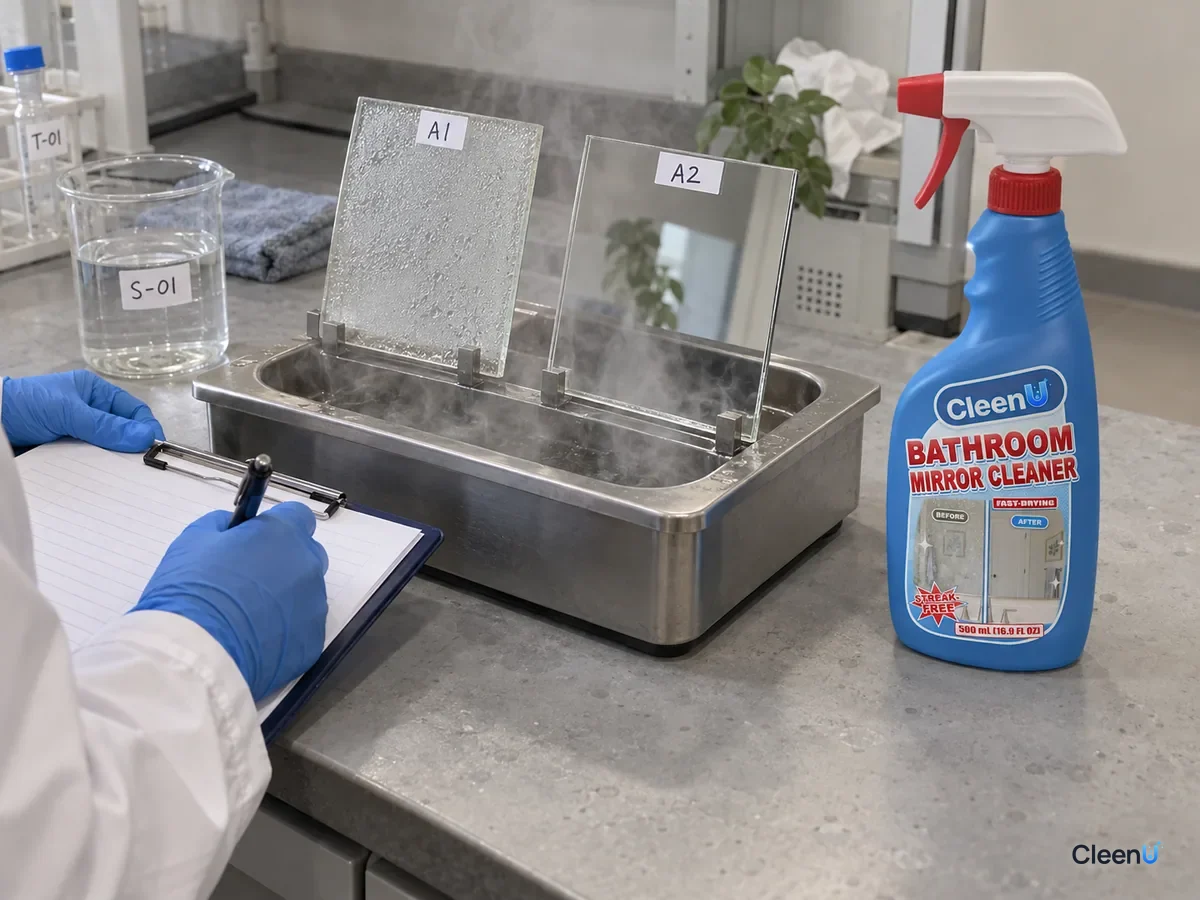
Take CleenU Bathroom Mirror Cleaner as an example. It's a fast-drying mirror and glass spray, pH 6.5 to 8.0 as supplied, made with fast-evaporating alcohols such as isopropyl alcohol and low-residue surfactants, with no ammonia. It's ready to use: spray and wipe. The alcohol dissolves the oily part of skincare and fingerprints and evaporates quickly; the surfactants lift toothpaste spots. It's for getting the mirror clean, not an anti-fog product. Once the glass is clean, any of the methods above works better. Keep it away from the mirror's edges and back to avoid pooling, and descale glass with heavy scale first.
For everyday mirror cleaning, see How to clean a bathroom mirror. For streaky glass, see Why glass streaks after cleaning.
Why some spots fog faster than others
Look closely at a fogged mirror and you'll notice the fog isn't even. The side near an exterior wall and the lower half usually fog first and clear last. Toothpaste spots and fingerprints fog more heavily and leave rings once the fog clears. Two things are going on.
The first is temperature. Dew point depends on air temperature and humidity. During a hot shower the bathroom air is close to saturated, so the dew point is nearly equal to room temperature, and any part of the mirror even slightly cooler than the air fogs first. The area near a cold exterior wall or a window is cooler, so it fogs sooner. Heated mirrors typically warm only a central zone, so the border can still fog. That's normal.
The second is surface condition. Clean glass is naturally hydrophilic, so droplets stay relatively small and dense. Oil films from fingerprints and skin care are hydrophobic, so water beads into larger, rounder drops that scatter more light and look foggier. Dust and dried toothpaste give vapor even more spots to condense on. That's why the same mirror fogs less and clears faster once it's clean. It isn't the anti-fog product working; the surface is just uniform again.
How long an anti-fog layer lasts, and why
The hydrophilic layer an anti-fog spray or coating leaves behind is very thin, and three things wear it away: wiping the mirror, water splashing on it during showers, and hard-water minerals drying on top and sealing it off. The same product can last a long time on a mirror that rarely gets wiped or splashed and fade in days on one that faces the shower and gets wiped every morning.
Knowing when to reapply is simple. If fog starts showing up in patches again after a shower, or the clear sheet of water breaks back into separate drops, the layer is spent. Clean and dry the mirror first, then apply a fresh thin coat. Layering new product over old is how you get streaks.
Common mistakes
Applying anti-fog over a dirty mirror. Toothpaste and oil get sealed underneath, the glass looks blotchy, and the anti-fog effect is patchy. Clean first, then treat.
Using too much soap. The fatty acid salts in soap react with calcium and magnesium in hard water to form insoluble soap scum, which leaves a white film that gets harder to remove each time. If you use soap in a pinch, buff with a dry cloth until no trace is visible.
Wiping fog off with your hand. Skin oil stays on the glass, and next time that patch fogs with larger, more obvious drops. You've basically drawn a fog-prone spot on the mirror.
Blasting the fog with a hair dryer. It clears the glass for a moment, but it heats the mirror unevenly, and using electrical appliances in a steamy bathroom calls for extra care anyway. It's not a good daily habit.
Choosing for your bathroom
Rentals and bathrooms you can't renovate: turn the exhaust fan on before you start the shower, angle the showerhead away from the mirror, and reapply an anti-fog spray on a regular schedule. It's inexpensive and doesn't touch the walls or wiring.
Small bathrooms with no window and a weak fan: moisture lingers, so an anti-fog layer alone works less well, and the bottom and edges of the mirror stay damp longer, which raises the risk of black edges. These are the bathrooms where a heated mirror is most worth considering during a remodel. Either way, keep the mirror's edges dry.
Busy mornings with several people getting ready: what matters is a mirror you can use right after the shower. A fan plus anti-fog spray is the practical combination. If a remodel is coming up, that's a good time to switch to a heated mirror.
Very cold winters or a bathroom on an exterior wall: the mirror runs cold and the gap to dew point is large, so every anti-fog layer has to work harder. Cut down the total moisture with ventilation first and treat anti-fog spray as the supplement.
Whichever you choose, a clean mirror is the foundation. Anti-fog layers need clean glass to bond to, and a heated mirror still needs a clean surface to see through. Spraying the cleaner onto the cloth instead of the glass also keeps liquid away from the edges, which helps prevent black edges. More in How to clean a bathroom mirror.
Which one should you choose?
Mirror fog is warm steam condensing into tiny droplets that scatter light. There are three ways to stop it: reduce the steam (run the fan, crack the door), change the glass so water spreads into a clear film (anti-fog sprays, coatings, or soap in a pinch), or keep the glass warm (a heated mirror). Start with the fan and a cracked door, add an anti-fog spray reapplied as needed, and consider a defogging mirror if you're remodeling. Whatever you choose, start with a clean mirror and keep liquid out of its edges.