
Comparison
Flat Mop vs Spin Mop vs Wet-Dry Vacuum: Choosing a Floor Tool
Direct answer
For smaller homes with wood or laminate, a flat mop gives the best water control. For large tile floors, a spin mop is convenient. If you mop often, a wet-dry floor vacuum saves the most effort but needs a low-foam solution. Whatever you pick, a clean pad and the right amount of water matter most.
Who should choose what
-
Smaller home with mostly hardwood or laminate
Choose A flat mop with two or three microfiber pads in rotation
Easy water control keeps wood safe, and it reaches under beds and into corners.
-
Mostly tile, a larger area, and you'd rather not hand-wash pads
Choose A spin mop, spun fairly dry, with frequent water changes
Rinsing the pad is easy and tile doesn't mind water; just don't leave it too wet.
-
You mop daily, or someone has back trouble and needs it easier
Choose A wet-dry floor vacuum with a low-foam solution, cleaning the tank and roller after each use
Vacuuming and mopping in one pass is the least effort; low foam avoids false alerts and motor trouble.
-
You have a baby or pets and spot-clean constantly
Choose A flat mop for spot cleaning, plus a vacuum or floor vacuum for whole-house cleaning
Grab a flat mop for one spot; it controls water well and leaves little residue.
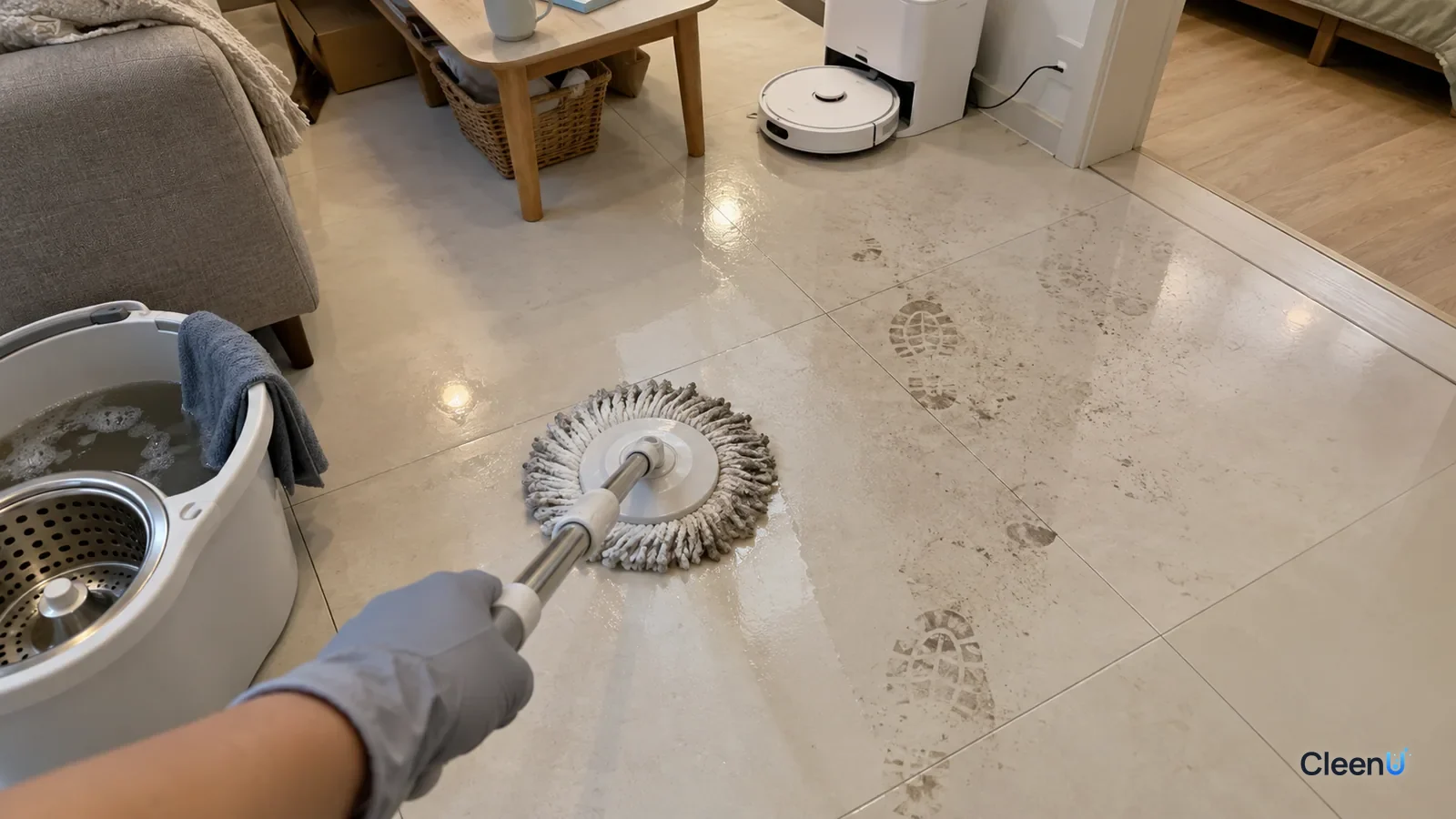
There are more mopping tools than ever: string mops, flat mops, spin mops with a wringer bucket, self-wringing mops, wet-dry floor vacuums, robot mops. Each claims to be the best. Really, there's no best mop, only the one that fits your floors, your square footage, and how you clean. Here's how they work, then recommendations by household.
What mopping actually has to do
Mopping is about using damp fibers to carry dust, skin oil, and greasy footprints away, not push them around. Three things make that work.
A pad that grabs dirt: microfiber picks up dust and oil far better than cotton strings.
The right amount of water: too much and water pools, dries slowly, leaves marks, and can seep into wood; too little and dirt doesn't loosen.
A clean pad: a dirty pad just spreads dirty water around. The more often you rinse it, the cleaner the floor.
Most of the differences between tools come down to those three things.
Side by side
Flat mop vs spin mop vs wet-dry vacuum
| Factor | Flat mop | Spin mop with bucket | Wet-dry floor vacuum |
|---|---|---|---|
| Water control | Good: wring it out or use a spray mop | Fair: depends on how well you spin it | Good: set water levels |
| Cleaning the pad | Hand-wash or rinse in a bucket | Rinse and spin in the bucket | Rinses the roller and collects dirty water as it goes |
| Best floors | Hardwood, laminate, vinyl, tile | Mainly tile and stone | Tile, vinyl, sealed wood (per manual) |
| Corners and under furniture | Thin head fits easily | Round head, so-so in corners | Bulky; harder in corners and low spaces |
| Effort | Moderate | Moderate | Low; vacuums and mops in one pass |
| Cleaner requirements | Regular floor cleaner | Regular floor cleaner | Must be low-foam; follow the manual |
| Cost and upkeep | Low; replace pads | Low; replace heads | Higher; clean the roller and dirty tank |
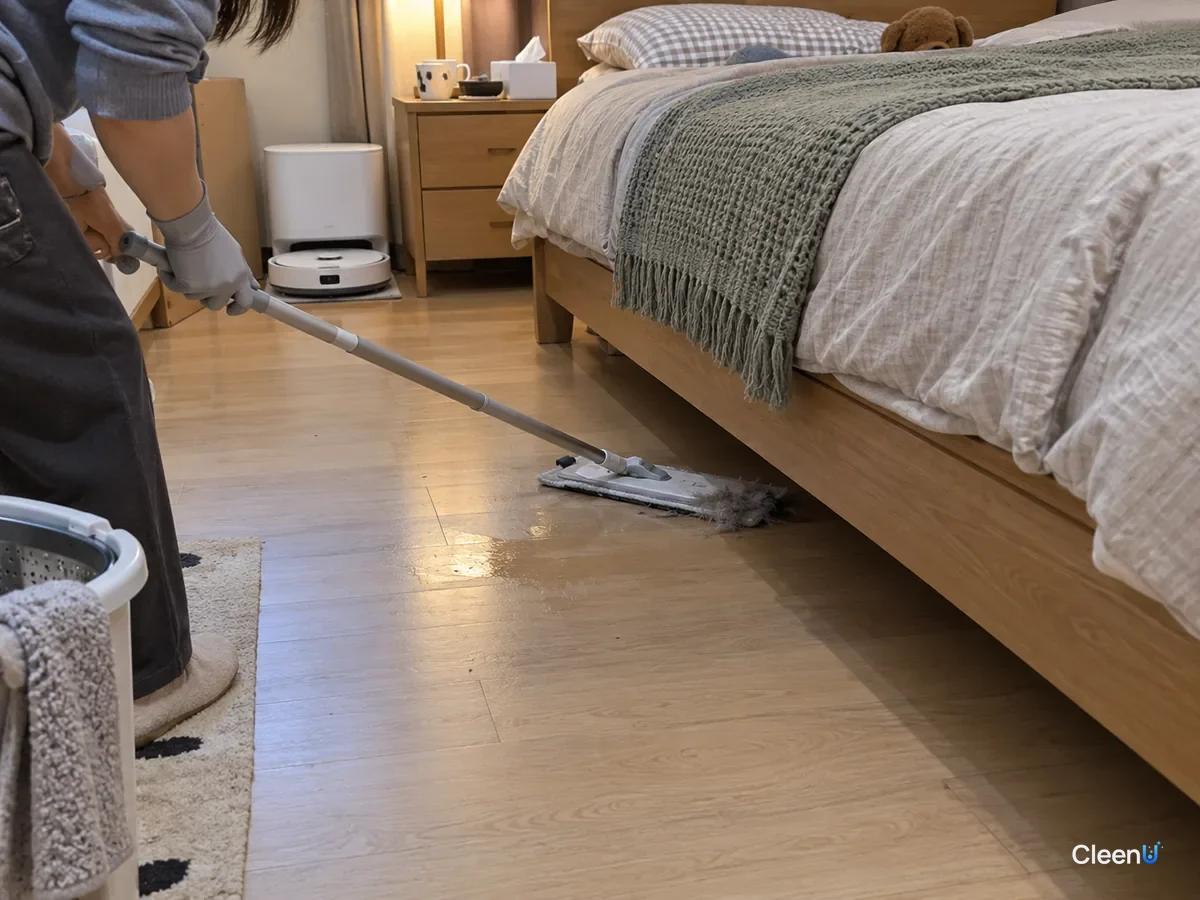
Flat mops: best water control, great for wood and small homes
A flat mop is a thin, flat head with a microfiber pad attached. You can wring the pad and use it damp, or choose a spray mop with a built-in reservoir.
Its strength is water control: a barely damp pad lets floors dry quickly, which is great for water-sensitive hardwood and laminate, and the thin head slides under sofas and beds and into corners. The downside is that you take the pad off to wash it, and for big areas you'll want a few spare pads.
Best for: smaller homes, lots of wood or laminate, and households with babies or pets that need frequent spot cleaning.
Spin mops: easy pad rinsing, good for large tile floors
A spin mop comes with a bucket and a spinning wringer basket. Rinse the head in the bucket, pump or step to spin it dry, and keep going.
The catch is water control: if you don't spin it dry enough, water stays on the floor, and the round head isn't great at edges and corners. Every rinse goes into the same bucket of water, which gets dirty fast, so change it often.
Best for: mostly tile or stone floors, larger areas, and floors that aren't water-sensitive.
Wet-dry floor vacuums: least effort, but picky about cleaner
A wet-dry floor vacuum combines vacuuming and mopping. A rolling brush scrubs the floor with water from a clean tank while suction pulls dirty water and debris into a dirty tank, and many models self-clean the roller.
It's the least effort and most efficient, and floors are left relatively dry, so it's great for large areas and frequent mopping. It costs more, it's bulky, it struggles in corners and under low furniture, and you need to clean the dirty tank and roller after every use or it starts to smell.
It's also pickier about cleaner than a mop. A high-foaming product can fill the dirty tank with suds and trigger a false "tank full" alert, and foam can get into the motor and suction path. Use a low-foam solution allowed by the manual, diluted in the clean tank, and never add dish soap or regular high-foam cleaners. For whether robot mop and floor vacuum solutions are interchangeable, see Robot mop vs. wet-dry vacuum solution.
Different soils play to different tools
The dirt on a home floor falls into roughly three groups, and they explain why each tool shines in some jobs and struggles in others.
The first group is particles: sand, fine dust, hair, and pet fur. They don't dissolve in water, so they have to be either trapped in fibers or sucked up. Flat mops and spin mops can only hold particles on the pad. Once a pad is loaded, it just pushes sand around the floor, and that grit can leave fine scratches on wood and vinyl. A wet-dry vacuum scrubs and suctions at the same time, so it's the best of the three at handling particles, though large debris and long hair can wrap around the roller. If you use a mop, vacuuming first isn't optional.
The second group is footprints and skin oil. Bare feet and slippers leave a thin, oily film mixed with fine dust, and it shows most on glossy tile. It takes the surfactants in a floor cleaner to wet that film and lower the tension between oil and water so the oil moves from the floor onto the fibers. All three tools can do this. The difference is where the dirt goes next. With a flat mop, it stays on the pad, so you need to change pads. With a spin mop, it goes into the bucket, and as the water gets murkier you're effectively mopping with diluted dirty water. A wet-dry vacuum pulls dirty water into a separate tank while the clean tank keeps putting down fresh solution. That's the main reason floors come out cleaner with one.
The third group is grease spots and dried drink marks near the kitchen and under the dining table. They stick harder and need cleaner to sit for a moment before they loosen. For heavy spots like these, a flat mop, or just a cloth and a little kneeling, works better than running a floor vacuum back and forth.
The most common mistake with each tool
Flat mop: using one pad for the whole house. A loaded pad starts putting dirt back down, so the last rooms end up with gray streaks. Change pads room by room, or flip to a fresh side every couple hundred square feet.
Spin mop: not spinning it dry enough and not changing the water. A soaking-wet head leaves a sheet of water that dries into streaks, and stale bucket water means you're mopping with dirty water by the end. A practical fix is two buckets, one with diluted cleaner for mopping and one with plain water for rinsing. At 1:20, that's about 6.5 ounces of cleaner per gallon of water. Measure it instead of eyeballing it.
Wet-dry vacuum: skipping cleanup. Dirty water in the tank and hair and food bits on the roller start to smell after one night in a warm, damp machine. Another common one is pouring regular high-foam cleaner or dish soap into the clean tank. The suds rush into the dirty tank and trigger the full-tank alert.
Questions to answer before you buy
Size and flooring: For a small apartment with mostly wood floors, a flat mop is plenty. For a larger home that's mostly tile, a spin mop or a wet-dry vacuum will save real effort.
How often you mop and how much effort you can put in: If you mop once or twice a week, a mop is the better value. If you mop daily, or someone in the house has a bad back, the effort a floor vacuum saves is worth more.
Storage and upkeep: A wet-dry vacuum needs a charging spot and a place to clean it, plus a few minutes of cleanup after each use. A mop just needs a place for the pad to dry. Whether you'll actually spend those few minutes every time decides whether a floor vacuum gets used or ends up in the closet.
Matching a cleaner
For flat and spin mops, a regular no-rinse floor cleaner works. Take CleenU Floor Cleaner as an example. It's a pH-neutral, no-rinse floor cleaner, pH 7.0 to 8.5 as supplied, made with low-foam nonionic surfactants and a small amount of fast-drying solvent, with low solids. Use it straight as a spray-and-mop (good for spray mops), or dilute 1:20 for larger areas (good for a spin mop bucket). It's made for sealed hard floors like tile, vinyl, laminate, and sealed hardwood, not unsealed or waxed wood or carpet, and not for robot mop tanks.
For wet-dry vacuums and robot mops, choose a low-foam solution recommended by the manufacturer's manual.
Which should you choose?
Whatever you choose, the basics are the same
Vacuum or sweep first. Grit and hair make the pad dirty faster and can scratch the floor.
Keep the pad clean: swap or rinse it as soon as it's dirty, and wash and dry it after mopping instead of leaving it in the bucket.
Less water is better: the floor should be dry within a few minutes.
Measure cleaner per the label. More doesn't clean better; it just leaves residue. For tackiness and streaks, see Sticky floor after mopping and Why floors look streaky after mopping. For different floor types, see How to clean every type of floor.
For a low-foam, no-rinse floor cleaner you can spray straight for a spray mop or dilute 1:20 in a spin mop bucket, take a look at our Floor Cleaner.
There's no single best mop. Flat mops control water well and reach corners, making them ideal for smaller homes and wood floors. Spin mops make rinsing easy and suit larger tile floors, as long as you spin them dry. Wet-dry floor vacuums are the least effort for frequent mopping but cost more, need regular cleaning, and require a low-foam solution. Whatever you choose, vacuum first, keep the pad clean, use less water, and measure your cleaner, and your floors will come out clean and streak-free.