
How-to
How to Get Rid of Pet Odor in Your House: Urine, Litter Box, Pet Beds, and Bowls, Zone by Zone
Direct answer
Find the source before you treat the air. Pet odor in a house almost always comes from five places: urine spots, the litter box, beds and crates, food and water bowls, and the pet itself. Clean each one with the right method and let it dry completely. Fragrance only covers odor for a while.
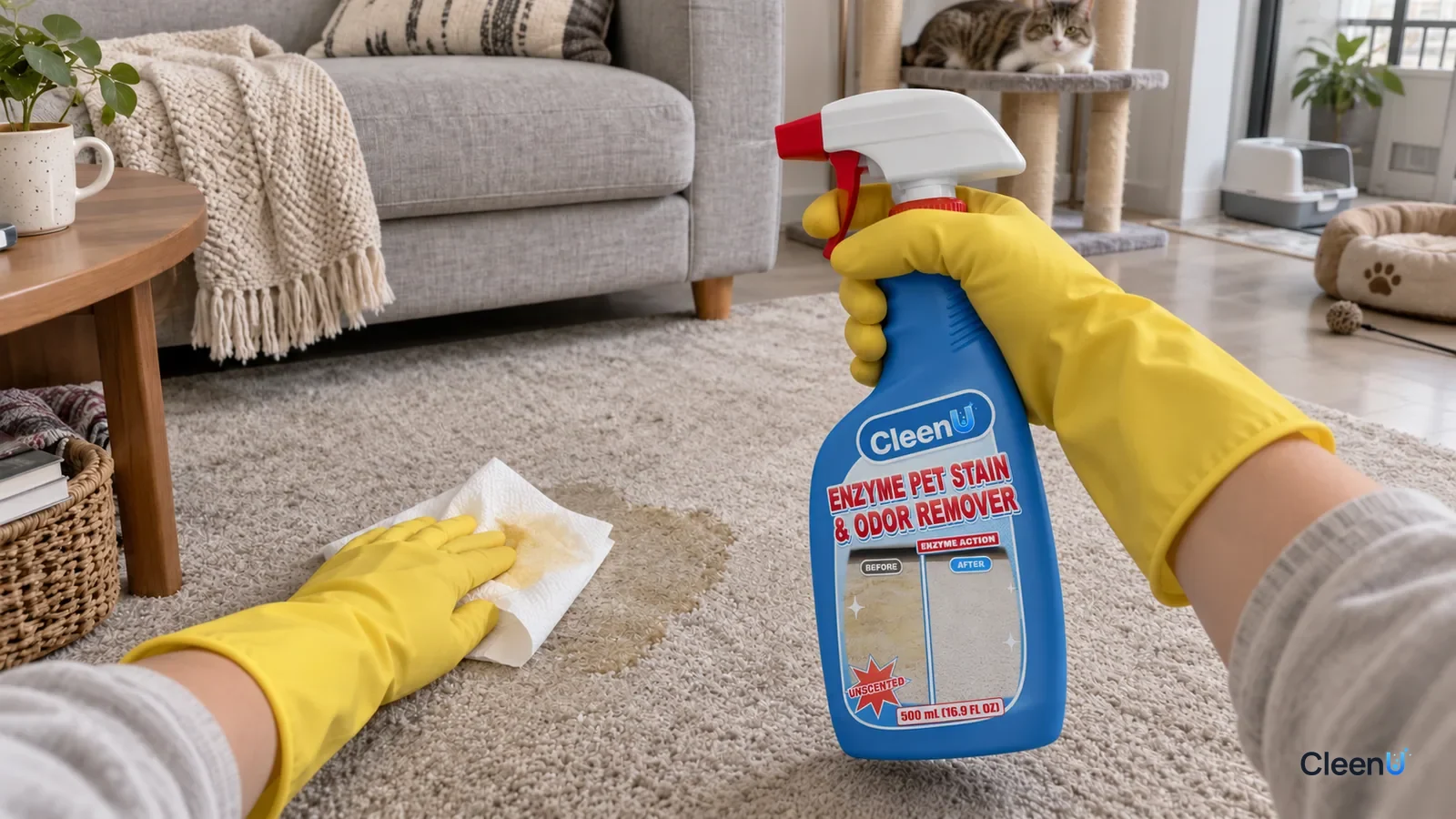
If you're working out how to get rid of pet odor in your house, stop treating it as an air problem. A candle, air freshener, or purifier makes the house smell fine for an hour or two, and by morning the smell is back, because the air isn't where odor starts. It comes from a short, predictable list: urine that was never found or never cleaned deep enough, the litter box and the floor around it, beds and crates, food and water bowls, and the pet's own coat, ears, and mouth.
So the plan is simple: locate each source, clean it with a method that suits the material, and dry it all the way. Below you'll find where each kind of pet smell hides, why odor keeps returning, a room-by-room check, zone-by-zone cleaning steps, a maintenance routine, and a troubleshooting list ranked by likelihood.
The five places pet odor comes from
Pet odor isn't one smell. Sharp, sour, fishy, and stale-greasy notes each point to a different source with a different fix.
1. Urine: sharp ammonia, plus that unmistakable "cat" smell. Fresh urine doesn't smell especially strong. Within hours to days, bacteria produce urease, an enzyme that breaks urea down into ammonia, and the smell sharpens. Cat urine is typically more concentrated than dog urine and carries sulfur compounds unique to cats. The real problem is that urine travels down: under carpet pile there's backing and pad, under a sofa cushion there's foam, and hardwood has seams. The surface dries while the layer underneath keeps releasing odor. Urine is the most common source in a pet home and the one most often missed.
2. The litter box: ammonia and feces, and the problem is often the box itself. When litter isn't scooped often enough or the layer is too thin, urine reaches the bottom and dries into a crust. Older plastic boxes get scratched, and residue settles into the scratches. Kicked-out litter and urine on the rim turn the floor and wall around the box into a second urine spot.
3. Beds, blankets, and crates: stale, greasy "dog smell." Skin oil, dander, saliva, and hair build up in bedding every day. As bacteria break down skin oils and the oils oxidize, they produce short-chain fatty acids and aldehydes that smell like old cooking oil and sweat. Crate trays also collect urine and food scraps. Put a freshly bathed dog back on a dirty bed and it'll smell like the bed within days.
4. Food and water bowls: sour and fishy. Leftover food at room temperature breaks down as bacteria feed on protein and fat, and fish-based foods add amine notes. Water bowls and fountains develop a slippery film that plain water won't rinse away, and spills under the food mat round out a small, steady odor factory.
5. The pet itself: wet-dog smell, and smells that need a vet. A dog that air-dries after rain will smell like it. Long-haired pets can trap waste in the fur around the rear or between the toes. A smell from the ears, mouth, or skin that suddenly gets stronger or changes is usually a health matter that calls for a veterinarian, not a cleaner.
Fabrics act as odor "reservoirs." Upholstery, curtains, rugs, bedding, and car seats don't create pet odor, but they absorb it from the air and release it slowly. Once the sources are handled, wash or air out those fabrics too, or you'll assume the cleanup failed when it didn't.
Why the smell returns after you clean
Most pet odor comes from a handful of volatile compounds. Ammonia comes from urea and smells sharp. Sulfur compounds such as thiols and hydrogen sulfide come from protein breakdown and smell like rotten eggs, onions, or "cat." Short-chain fatty acids such as butyric acid come from broken-down skin oils and smell sour and sweaty. Amines smell fishy, and aldehydes from oxidized fats smell rancid. These molecules are small, evaporate easily, and many are noticeable at very low concentrations.
That's the key point: as long as the source is there, even a little residue is enough to smell. When odor "comes back," the deodorizer usually didn't fail. The source simply kept producing new odor molecules.
Heat and humidity amplify the process. Warm air pulls volatile compounds out faster, and humidity usually makes microbes in residue more active, so dried urine that gets damp again tends to smell stronger. If your home smells worse on hot days or after rain, residue is still sitting somewhere.
Your own nose is the last factor. After enough time around one smell, your sense of smell adapts and stops registering it, which is why residents think the house is fine while guests notice at the door. To judge honestly, step outside for 30 minutes and take your first breath as you walk back in.
How pet odor forms and keeps coming back
- Urine, skin oil, saliva, and food residue land on carpet, fabric, floor seams, litter boxes, and bowls
- Porous materials pull residue below the surface, so the top dries while the layer underneath stays loaded
- Bacteria break down urea, protein, and fat, steadily producing ammonia, sulfur compounds, fatty acids, and amines
- Heat and humidity speed up evaporation and microbial activity
- Once residue is broken down, lifted out, and dried, the raw material for odor is gone
Air fresheners, odor absorbers, and cleaners do different jobs
Products sold for pet odor fall into three broad approaches:
- Masking. Fragrance, candles, and most air fresheners cover odor with a stronger scent. The source is untouched, so the odor returns when the fragrance fades, and the mix can smell worse than either alone.
- Absorbing and trapping. Activated charcoal and cyclodextrins hold on to some odor molecules. They help with light background smell but can't keep up with a source that's still producing.
- Breaking down and removing. Enzyme cleaners, scrubbing and rinsing, and washing bedding break down and carry away the residue that produces odor. This is the only approach that keeps the smell from returning.
Air purifiers catch hair and dander, and carbon-layer models absorb some odor, but they can't reach urine in a carpet pad. Remove the source first, use absorbers for what's left, and treat fragrance as optional.
One mistake is especially common: cleaning urine spots with products that contain ammonia or vinegar. The Cornell Feline Health Center notes these smell like urine to a cat and may encourage it to reuse the spot, and the ASPCA recommends an enzymatic cleaner instead. Pouring bleach on urine is riskier still. The Tennessee Poison Center at Vanderbilt warns that bleach mixed with ammonia, including the ammonia in urine, forms irritating chloramine gas.
Cat owners should go easy on fragrance generally. The Merck Veterinary Manual notes that cats lack a liver enzyme (glucuronyl transferase) used to process certain compounds, which makes them more sensitive to phenols and some essential oils.
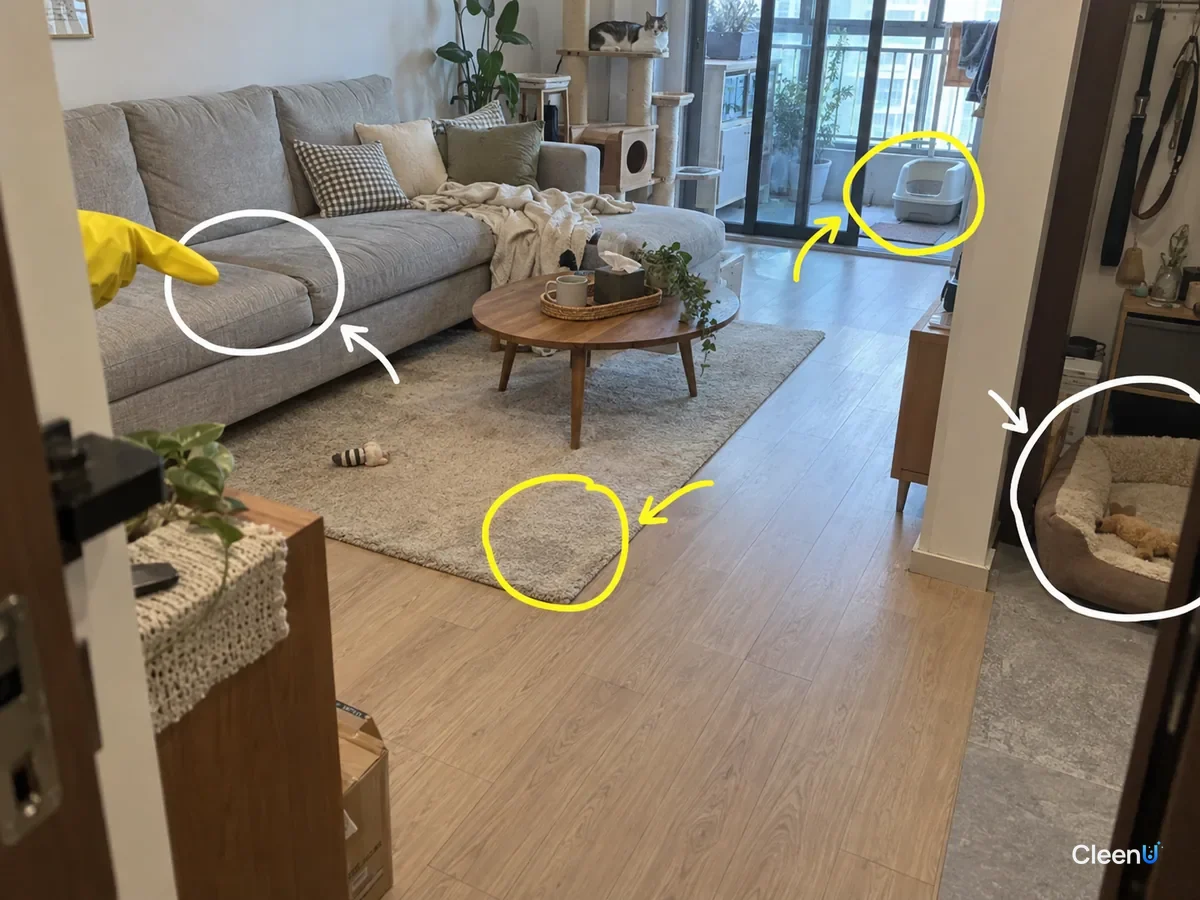
Find the source first: a room-by-room odor check
Spend 30 to 40 minutes walking the house before you clean. Bring a UV flashlight (dried urine often glows under UV, but so do other stains, so treat it as a lead), thick white paper towels, a spray bottle of plain water, and a notepad.
Get low and sniff, because pets live below knee height. Mist a suspicious spot with water and smell again, since damp residue usually smells stronger. Press a white paper towel into the spot and check for yellowing or odor.
| Room | Check first | Common sources |
|---|---|---|
| Entryway | Dog bed, door mat, under the shoe rack | Oily bedding, mud from walks, marking |
| Living room | Sofa cushion gaps and underside, back of the rug, curtain hems, baseboards, cat tree base | Urine, odor held in fabric, urine on sisal |
| Laundry room or porch | Litter box floor and walls, floor and wall around it, litter mat | Urine crust, overspray on the wall, damp mat |
| Bedroom | Foot of the bed, mattress sides, under the bed, the pet's blanket | Urine in the mattress, oily blankets |
| Kitchen | Under the food mat, fountain base and pump, food bin | Spoiled food, slippery film in bowls |
| Bathroom | Second litter box, towels from pet baths, floor drain | Damp towels, urine crust |
Male dogs mark corners, door frames, and furniture legs, so check a foot or more up. Cats favor soft spots like comforters and clothes on the floor. Write every spot down for rechecking.
How to confirm a source: simple checks without tools
At home, what you need is a comparison and a way to bring the smell back on purpose:
- Blot comparison. Press one white towel on the suspect spot and another on a clean area nearby. Compare color and smell.
- Re-wet test. After cleaning and full drying, mist the spot the next day, wait a few minutes, and sniff. If odor returns, residue is still there.
- One zone at a time. Clean one zone, wait a day, and notice whether the whole house improves. It tells you which source was the big one.
Of these checks, the re-wet test tells you the most, and the reason goes back to the chemistry above. Dried urine hasn't gone anywhere; the urea and protein residue simply lack the water bacteria need to keep breaking it down. Once the spot gets damp again, that breakdown restarts and ammonia and sulfur compounds start coming off again. So "no smell right after cleaning" only proves the surface is clean. "No smell after drying and re-wetting" is what tells you the odor source is gone. Use the same spot, the same small amount of water, and the same wait each time so the results compare fairly.
If it helps, stick a small note by each treated spot with the date and how many rounds it has had. Any spot that still comes back after two or three rounds is your priority, and the source is probably one layer down: the carpet pad, a foam core, or a gap between floorboards.
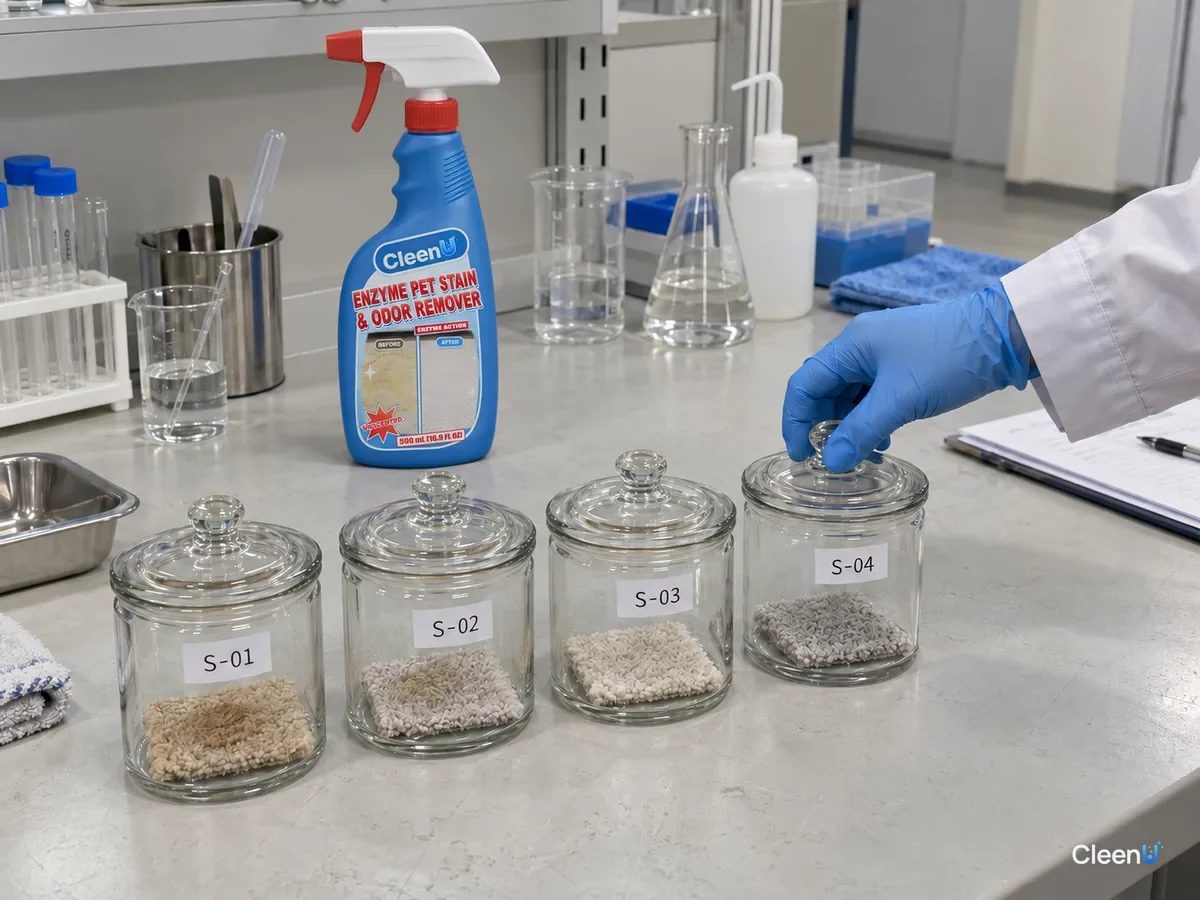
Clean zone by zone
Use the product that matches each zone instead of one spray for the whole house. Keep pets in another room or behind a gate until surfaces are dry, never spray toward a pet, and don't let a pet lick a damp surface.
Urine spots, litter box, beds and crates, bowls, and fabric, zone by zone
Urine spots (carpet, sofa, mattress)
Blot first, then saturate as deep as the urine went
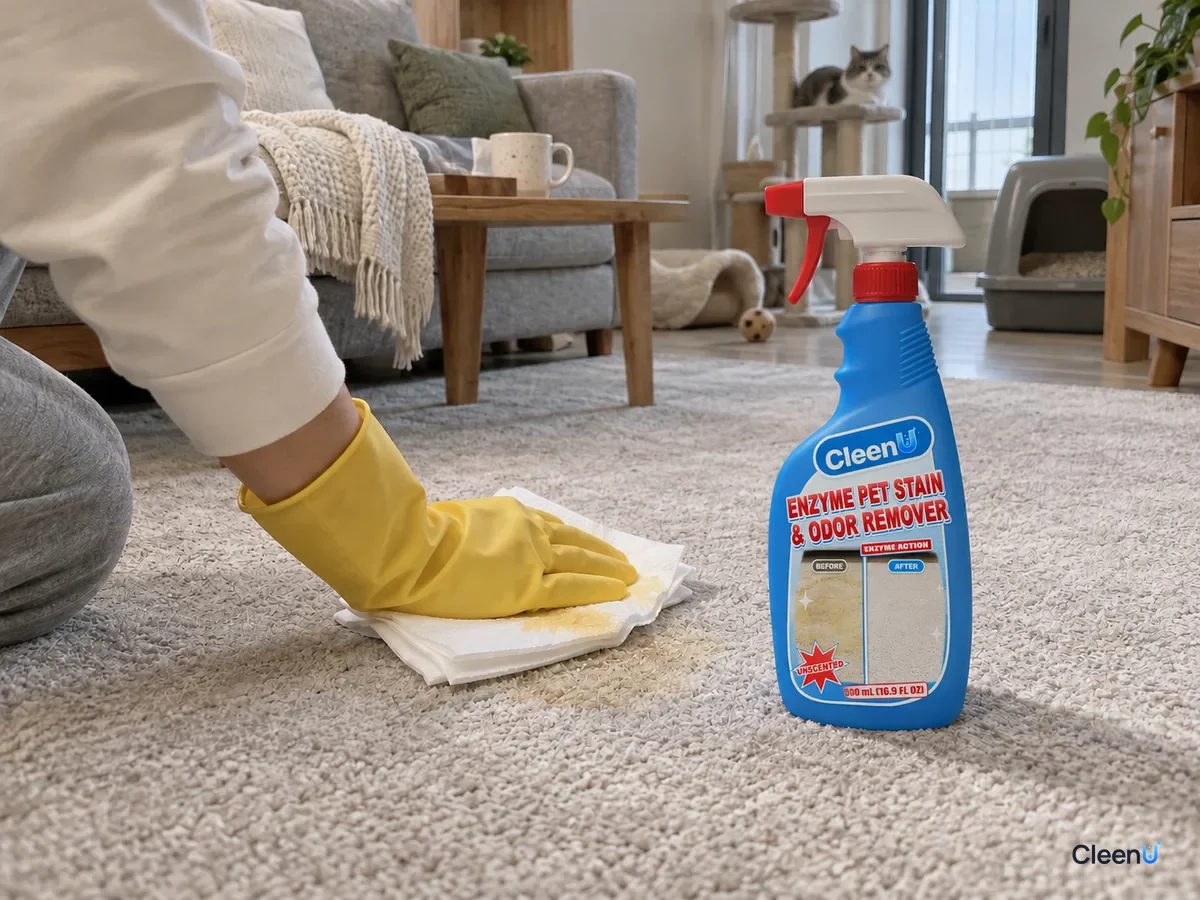
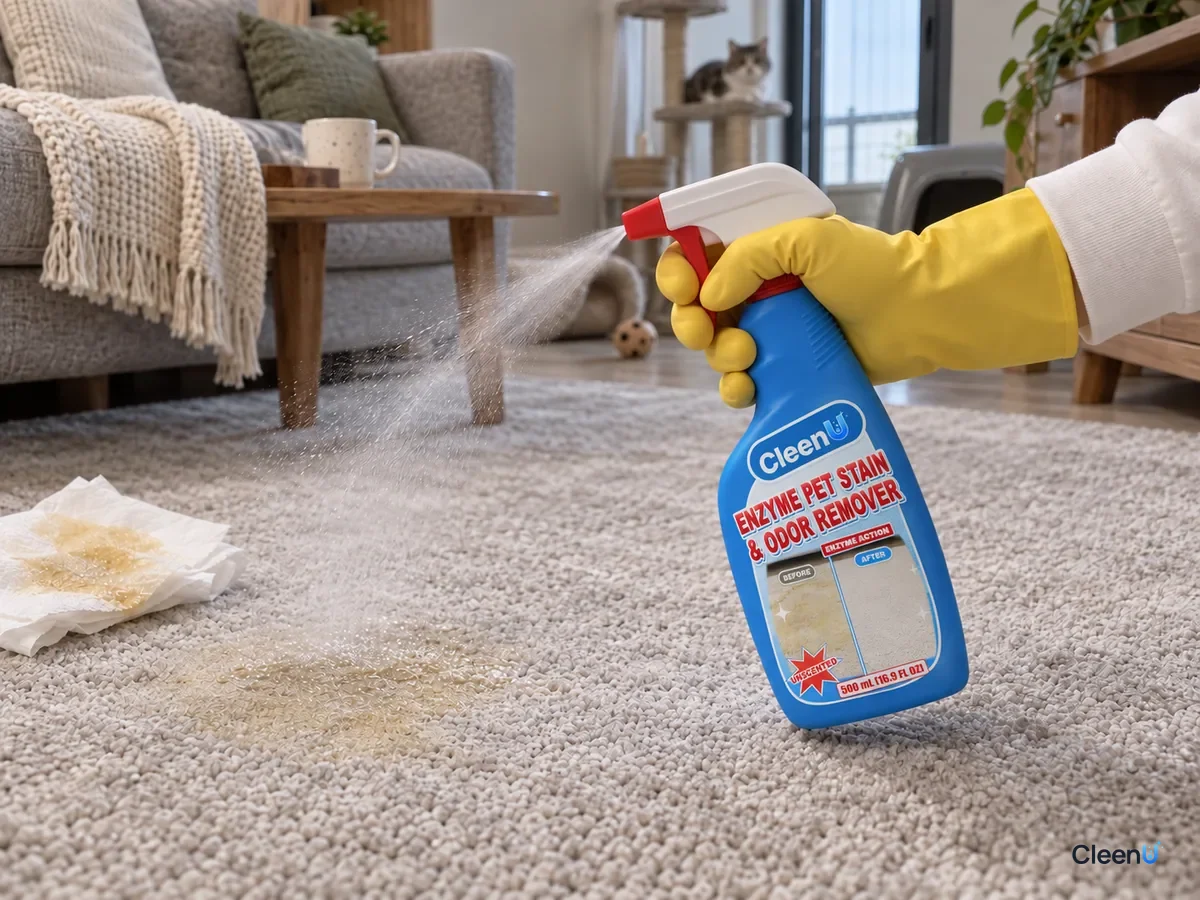
Press several thick paper towels or an old towel hard over a fresh spot, swapping in dry ones until they barely pick up any yellow. Don't scrub, which pushes urine wider and deeper. Spray an enzyme pet stain remover over an area a little larger than the wet ring, soaking as deep as the urine went: down to the backing on low-pile carpet, into the top of the foam on a cushion. Old spots need the same depth.
Caution:Not for wool, silk, leather, suede, or unsealed hardwood. Don't use it at the same time as, or right after, a chlorine disinfectant.
Wait 10 to 15 minutes, blot, and air-dry
Let it sit 10 to 15 minutes so the enzymes can break down protein and fat residue, then press firmly with dry towels to lift the loosened residue. Air-dry with a fan or open window, not a hair dryer. Stand mattresses and thick cushions on edge for airflow.
Litter box
After daily scooping, mist the litter surface
Scoop clumps and waste every day and top up the litter, then mist the surface with 3 to 5 sprays of an unscented litter box odor eliminator. A light mist is enough; don't wet the litter into clumps. Wait until the cat has left the area.
Caution:The spray doesn't replace full litter changes. Don't spray toward the cat or mix it with chlorine disinfectants.
At each full change, coat the empty box and rinse
Dump the old litter and scrub off any crust. Spray the empty interior thoroughly, wait 5 minutes, rinse, and let it dry before refilling. Wipe the floor and wall around the box too.
Beds and crates
Wash the bedding, then spray, scrub, and rinse the crate
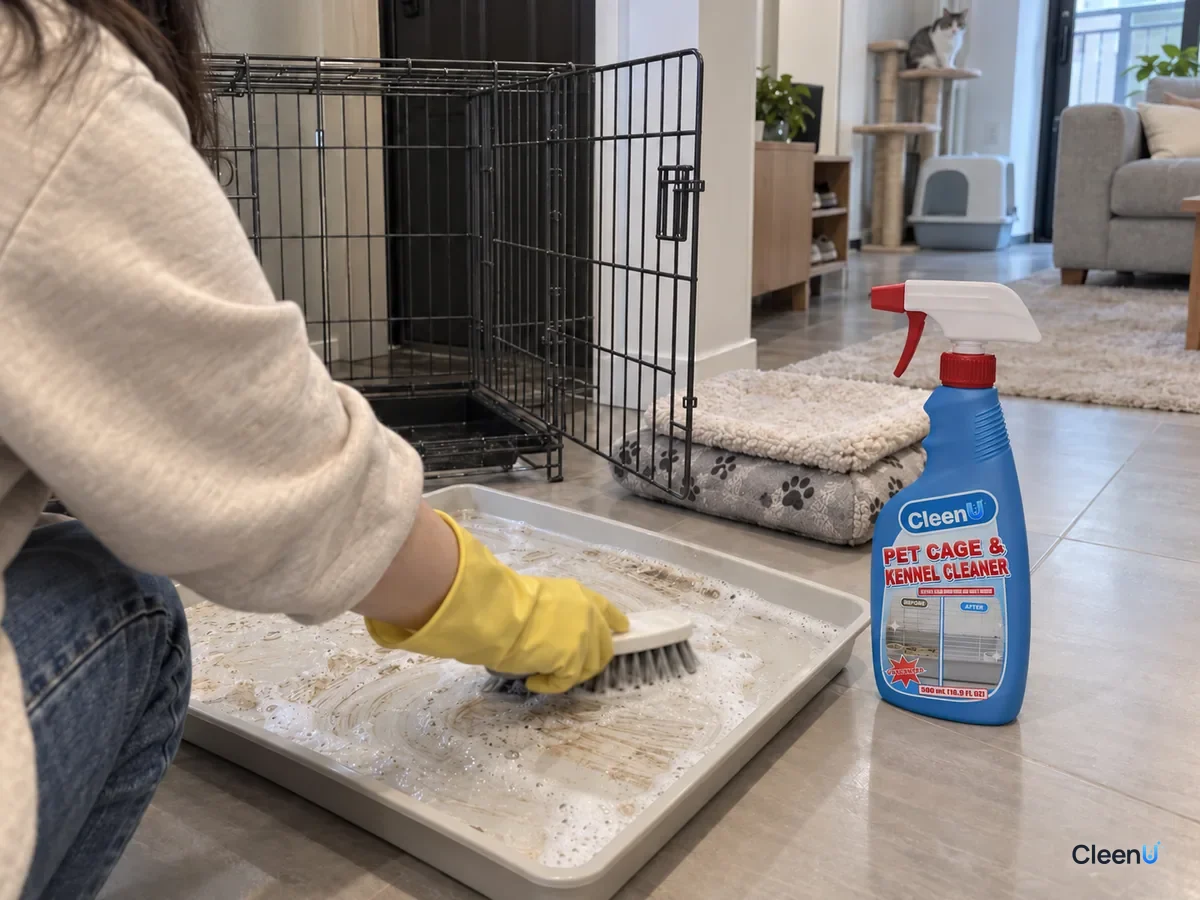
Take out the pet and every pad, blanket, and toy. Machine-wash bedding per its care label and dry it completely. Spray crate trays and plastic carriers with a pet cage and kennel cleaner, wait 3 to 5 minutes, scrub corners and bars, then rinse or wipe clean and towel dry. Return bedding and the pet only when everything is fully dry.
Caution:Never clean a crate with the pet inside, and don't leave wooden crates soaking wet.
Food and water bowls
Wash food bowls after every meal; take fountains apart regularly
Empty the bowl, pump 1 to 2 doses of a pet bowl cleaner onto a sponge, and scrub inside, bottom, and rim, spending extra time anywhere slick. Rinse under running water and let it dry. Take the fountain apart as its manual describes, and wipe under the food mat.
Caution:Don't soak the fountain motor or filter, keep a separate sponge for pet bowls, and rinse fully before refilling.
Fabric and pet hangouts
Saturate sofa cushions, bed covers, and car seats, then air-dry
For fabric that smells like the pet but has no clear urine spot, vacuum up hair and dander first. Saturate it with a pet odor eliminator, wait 10 to 15 minutes, and let it air-dry. Washable slipcovers and curtains are best laundered per their care labels.
Caution:Surface-treat leather only, without soaking. Skip silk and wool. No heat drying, and never spray it at a pet.
Final check
Ventilate, then recheck every spot the next day
Open windows once every zone is done, and let pets back only after surfaces are dry. The next day, re-wet each spot on your list. No odor after a few minutes means it's done. If it still smells, treat it again a little deeper and check nearby for a missed spot.
Stop and rethink in these situations
If your pet suddenly urinates outside the litter box or its usual spot, goes often in small amounts, has blood in its urine, or its body odor changes sharply, those can be health or behavior signals, so see your veterinarian first; a male cat straining with little or nothing coming out is an emergency, and cleaning only deals with the aftermath. If a material loses color, fuzzes, clouds, or warps, stop and blot out the remaining liquid with plain water. If a sharp chemical smell develops, or anyone, people or pets, starts coughing, tearing up, or getting red skin, stop, ventilate, and get medical or veterinary help if it doesn't ease. If a pet licks or swallows a cleaning product, call your veterinarian or the ASPCA Animal Poison Control Center at (888) 426-4435; a consultation fee may apply.
A daily, weekly, and monthly routine for a pet home
Removing residue before it breaks down is what keeps odor away. This schedule assumes one cat or dog; with more pets, move each task up a level.
| How often | What to do | Why |
|---|---|---|
| Daily | Scoop and mist the litter; wash food bowls after meals; refresh and scrub the water bowl; treat new accidents right away; wipe paws after walks | Urea turns to ammonia and food spoils within a day or two; the CDC also advises daily litter box cleaning |
| Weekly | Wash pet beds and blankets; scrub crate trays; wipe around the litter box; vacuum rugs and upholstery; clean the fountain per its manual | Skin oil and dander build up in fabric over about a week |
| Every 1 to 4 weeks | Full litter change; scrub, coat, rinse, and dry the box | Depends on litter type and number of cats; the ASPCA recommends weekly |
| Monthly | UV sweep of the house; check the box for scratches and the fountain filter; wash slipcovers and bed covers; scrub the cat tree and crate | New, hard-to-see spots are easiest to catch monthly |
| Humid weeks | Wash curtains, rugs, and bedding; clear pet hair from AC filters | Residue gives off more odor in humid air |
The FDA advises washing pet food bowls with soap and hot water after each use. There's no official schedule for water bowls, but a daily refresh and scrub is common advice.
Still smells? Work through the causes in order
Don't reach for a stronger fragrance. Work down this list; most cases are solved in the first three:
- A urine spot you haven't found. By far the most common cause. Check mattress sides, the underside of the sofa, the back of the rug, curtain hems, and baseboards, plus higher spots on furniture legs and door frames for male dogs. Go over the house again with the lights off and the UV flashlight.
- Treatment that didn't go deep enough. The surface got wet, but the pad or foam the urine reached is still loaded. Soak deeper, and treat rugs from the back too.
- It never fully dried. Pads, cushions, and mattresses can feel dry on top and stay damp inside, and damp residue keeps smelling. Point a fan at it until pressing brings up no moisture.
- Fabric is releasing stored odor. Curtains, slipcovers, bedding, and car seats are giving off what they absorbed. Wash what you can.
- The litter box setup. A scratched box, too few boxes, too little litter, or a box in a closed cabinet keeps the area smelling. A new box often costs less than more scrubbing.
- The pet. If a freshly bathed dog still smells, or the smell is new, the ears, mouth, or skin may be involved. See your vet.
- Not the pet at all. Drains, trash cans, and the fridge get blamed on pets all the time. Rule them out.
Cat homes, dog homes, and multi-pet homes need different priorities
| Household | Likely main sources | Where to focus |
|---|---|---|
| Cats | Litter box area, urine outside the box, sisal on the cat tree | Frequent box cleaning with unscented products; enzyme cleaner for spots, never ammonia or vinegar |
| Dogs | Beds and blankets, paws and coat, marking spots | Weekly bedding washes; paw wiping at the door; checking marks above floor level |
| Multiple pets | Too few litter boxes, several beds, marking over each other | Cornell recommends one more litter box than cats; bump every task up a level |
| Puppies and kittens | Around potty pads, accident spots | Treat accidents immediately so odor doesn't mark the spot |
| Senior pets | Accidents short of the box or door, sleeping pads | Waterproof bed liners washed often; more accidents mean a vet visit |
When the smell is your pet telling you something
Cleaners deal with residue, not its cause. The Cornell Feline Health Center lists urinating outside the box as a possible sign of urinary inflammation, kidney disease, diabetes, thyroid disease, digestive trouble, or mobility problems, and recommends a veterinary exam first; the ASPCA lists medical causes for house soiling in dogs. If accidents suddenly increase, see your vet, and keep cleaning, because spots that still smell draw pets back.
What to buy: match the product to the source, and skip the fragrance
You don't need one spray for the whole house. Choosing by source works better: for urine, an enzyme cleaner with protease and lipase plus surfactants that lift the residue out; for the litter box, a fragrance-free fine mist you can apply lightly to the litter surface; for crates and beds, something you can spray, scrub, and rinse; for bowls, a cleaner that rinses off fully without leaving perfume behind. Why fragrance-free? The ASPCA advises against scented cleaners for litter boxes because some cats start avoiding the box. And fragrance makes it hard to tell whether you've actually finished: a treated spot should smell like nothing because the source is gone, not because it's covered.
CleenU Enzyme Pet Stain & Odor Remover is one example: protease, lipase, and amylase enzymes with nonionic surfactants, close to neutral, fragrance-free, and ready to use. It breaks down protein- and fat-based odor sources and helps lift urine out. It doesn't break down uric acid crystals, which is why soaking to full depth, blotting, and drying all matter. It isn't a disinfectant, so keep pets away until the surface is completely dry.
If most of the smell traces back to urine in carpet or upholstery, start with our Enzyme Pet Stain & Odor Remover.
Browse the lineup by scenario on our pet home cleaning page.
Clean it yourself, replace it, or call a pro
- Handle it yourself for fresh accidents, shallow older spots, everyday litter box and bedding odor, and bowls. One or two rounds usually make a clear difference.
- Replace it when a plastic litter box is deeply scratched, a cheap carpet pad has been soaked repeatedly, or a pet bed's foam core is saturated. Replacement usually costs less than repeated treatments.
- Call a professional for wall-to-wall carpet, wool or silk rugs, leather furniture, or urine that reached the subfloor.
- Know when to stop. If one spot has been treated correctly three or more times and still smells after drying and re-wetting, the source is somewhere you can't reach. Replace that layer or have a pro assess it.
If a robot vacuum ran through a urine spot, see Can a Robot Mop Clean Up Pet Urine?, and for everyday floors, read Cleaning Floors in a Pet Home.
Questions cat and dog owners ask about pet odor at home
How do I get rid of dog odor in the house?
Wash the dog's bedding weekly, scrub the crate, wipe paws after walks, and find marking spots on corners and furniture legs. Treat urine with an enzyme cleaner soaked to full depth, and dry the dog fully after baths.
How do I get rid of cat odor in the house?
Start with the litter box: scoop daily, change litter every 1 to 4 weeks, and clean the floor and wall around it. Then find urine outside the box with a UV flashlight and treat it with an enzyme cleaner, never ammonia or vinegar.
How can I get rid of pet smell in the house fast?
Remove the biggest source today: refresh the litter box, wash the bedding, and treat any fresh urine, then open windows and run fans. Fragrance is faster but won't last, because the source is still there.
Will an air freshener or candle fix pet odor?
No. Fragrance only covers odor, so the smell returns when the scent fades. Cat owners should be especially careful, since cats are more sensitive to phenols and some essential oils.
Can I pour bleach on a pet urine spot?
Don't. Bleach mixed with urine can form irritating chloramine gas, and it doesn't lift urine out. Clean with an enzyme cleaner first; if you need to disinfect, do it separately on your vet's advice, not alongside the enzyme cleaner.
Why can't I smell it when guests notice right away?
Your nose has adapted. Step outside for 30 minutes and smell the house as you walk back in.
Why does the house smell worse in summer or after rain?
Residue is still there. Heat speeds evaporation and humidity usually makes microbes more active. Recheck for missed urine spots and damp bedding.
How long should pets stay away after I clean?
Until the treated area is completely dry. Keep them in another room while you work, never spray toward them, and don't let them lick damp surfaces.
Do I still need to change the litter if I use a litter box spray?
Yes. The spray supports daily care but doesn't replace scooping or full litter changes every 1 to 4 weeks.
Can a robot vacuum help with pet odor?
Yes for everyday paw prints, drool, and hair, but don't let it mop over urine. Treat urine by hand first, let it dry, then resume robot mopping.
Sources (accessed October 2026): Cornell Feline Health Center, "Feline Behavior Problems: House Soiling"; ASPCA, "Litter Box Problems" and "Separation Anxiety"; Tennessee Poison Center, Vanderbilt University Medical Center, "Why shouldn't I mix household chemicals with bleach?"; Merck Veterinary Manual, "Toxicoses From Essential Oils in Animals"; CDC, "Cats | Healthy Pets, Healthy People"; FDA, "Tips for Safe Handling of Pet Food and Treats"; ASPCA Animal Poison Control.
Getting rid of pet odor in your house isn't about a stronger scent. It's about finding every source, cleaning it properly, and drying it completely. Check room by room, then clean by zone: blot urine and soak it to full depth with an enzyme cleaner, keep up with litter, wash bedding and scrub crates, and wash bowls after meals. Follow a daily, weekly, and monthly routine, work through the likely causes if odor persists, and see your vet first if your pet suddenly starts having accidents.