
How-to
How to Remove Limescale from Faucets and Showerheads
Direct answer
Wrap the faucet in a paper towel soaked with descaler and leave it 5 to 10 minutes. Once the scale softens, wipe it off with a soft cloth, rinse, and dry. Aerators and showerheads can come off for a diluted soak. Spot-test coated finishes and brass, and keep acid off stone vanities.
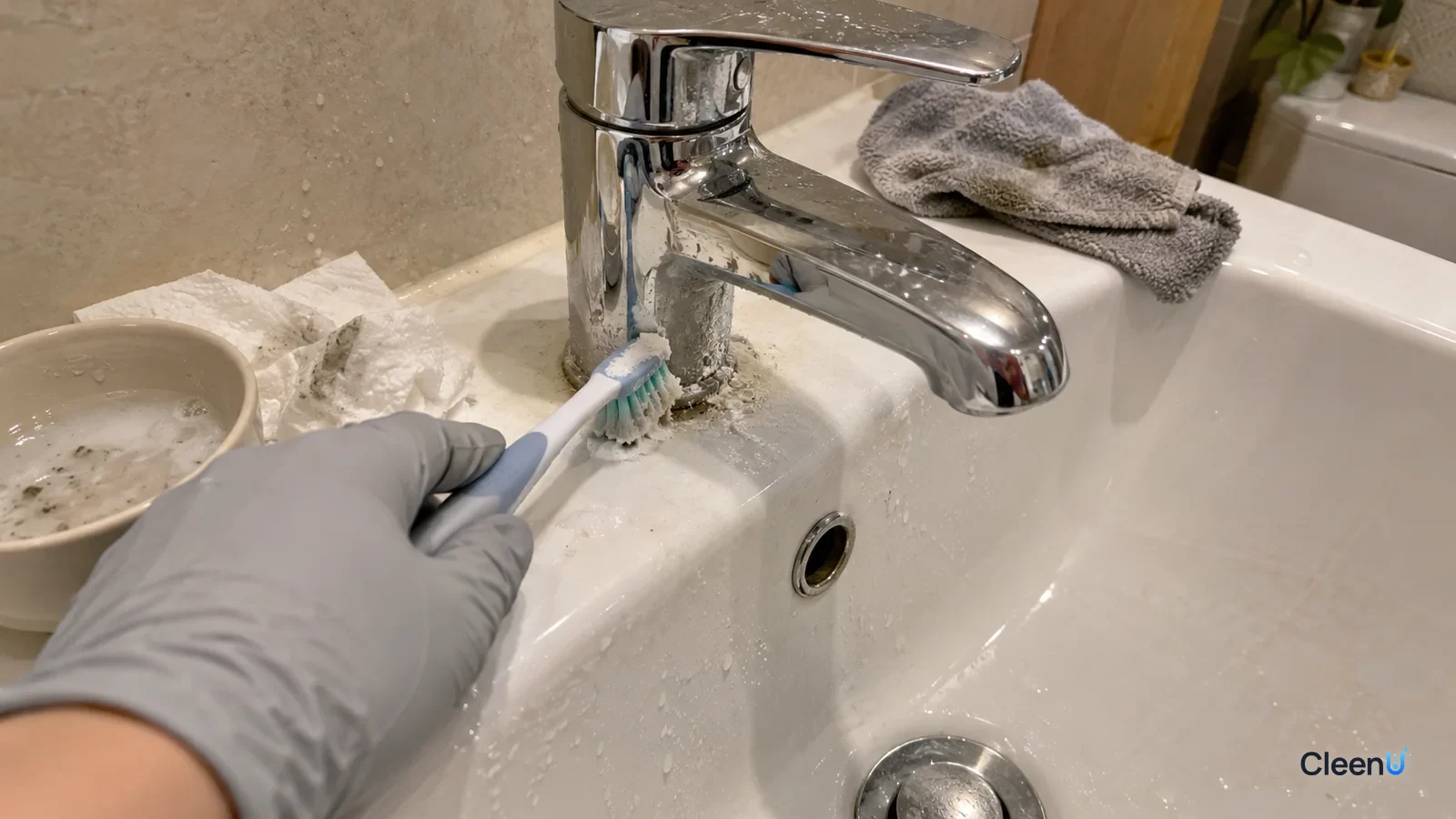
A hard white crust around the base of the faucet, white buildup on the spout, a few clogged showerhead nozzles spraying sideways. In hard-water areas, that's just everyday life. A cloth won't wipe it off, and steel wool risks scratching the chrome.
Limescale is mineral, and minerals have a weakness. Here's what scale is, how to remove it properly with a descaler, and which finishes need extra care.
Where white limescale comes from
Tap water carries dissolved calcium, magnesium, and bicarbonate. The harder the water, the more of them there are. When water sits on a faucet and evaporates, or warms up, calcium bicarbonate breaks down into insoluble calcium carbonate that settles out. Magnesium forms magnesium hydroxide and carbonate. Layer by layer, they build into hard white scale.
The base of the faucet, the spout, the aerator, and showerhead nozzles get the worst of it because they're wet and then dry over and over, leaving minerals behind each time. Hot-water taps and showerheads are worse, because calcium carbonate drops out faster at higher temperatures.
Not every white mark in the bathroom is scale; some is soap scum, and the two need opposite cleaners. To tell them apart, see Soap scum vs. hard water stains.
Why it takes an acidic descaler
Calcium carbonate doesn't dissolve in water and isn't bothered by alkalinity, so water, dish soap, and alkaline cleaners won't remove it. Acid will. Hydrogen ions react with calcium carbonate to form water-soluble calcium salts, water, and carbon dioxide. Those tiny bubbles on the scale are the reaction happening.
Take CleenU Faucet & Sink Scale Remover as an example. It's an acidic descaler, pH 1.5 to 3.0 as supplied, made with mineral and organic acids plus a corrosion inhibitor and wetting agent, and it's unscented.
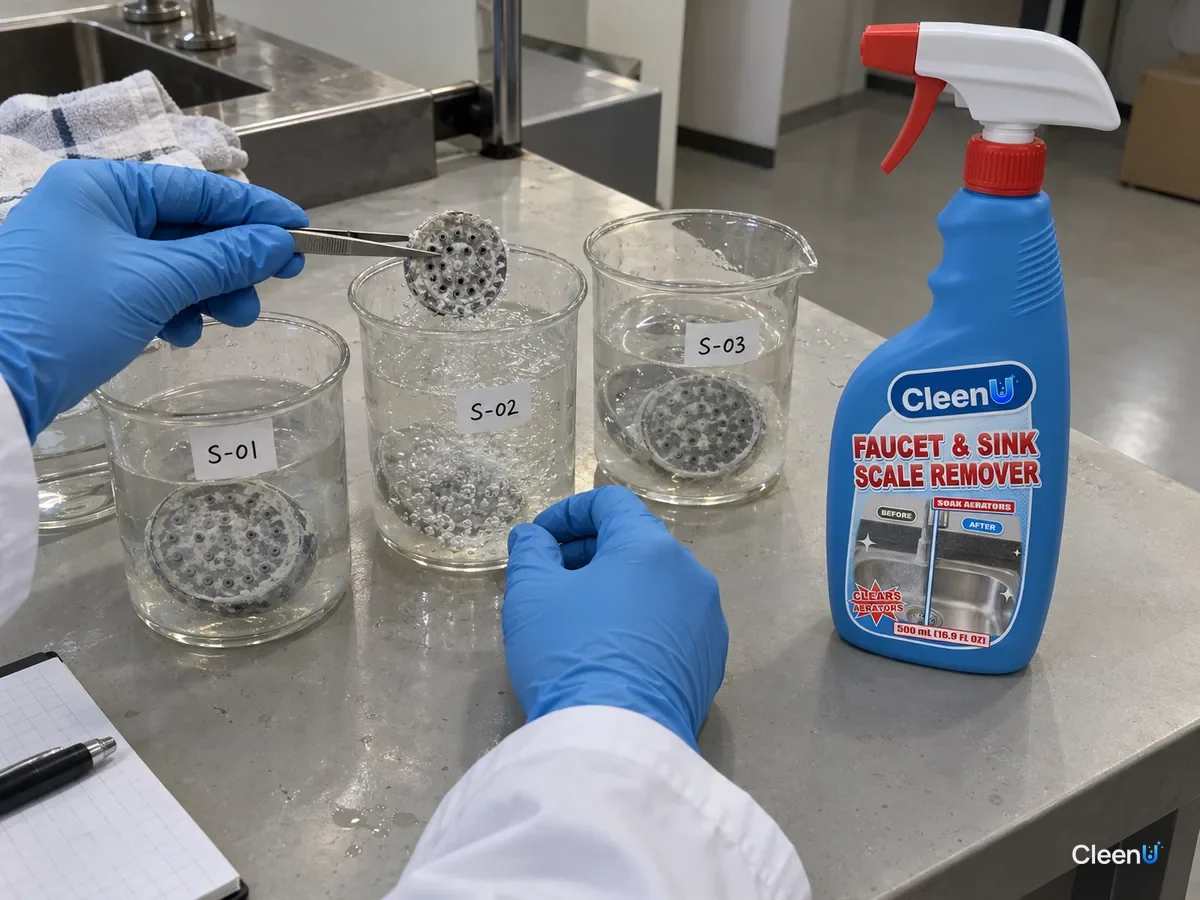
The acids dissolve the scale. The wetting agent helps the liquid soak into cracks in the scale so the reaction goes deeper than the surface. The corrosion inhibitor forms a protective layer on metal, reducing the acid's effect on faucet plating and stainless steel. Use it straight: spray, wait 5 minutes, or 10 for heavy scale. Aerators and showerheads can soak in a 1:1 mix with water for 15 to 30 minutes.
It's made for faucet spouts, aerators, ceramic sinks, stainless sinks, and showerheads. It isn't for marble, limestone, or cultured marble vanities, soaking coated hardware or brass, or aluminum, and it must never be used together with chlorine bleach.
Six steps to descale faucets and showerheads
From faucet to showerhead in six steps
Check the finish and spot-test
Is the faucet chrome, stainless, brushed, matte black or gold-tone coated, or bare brass? Chrome and stainless generally handle descaler fine. Test colored finishes, PVD coatings, and brass on a hidden spot first and watch for color change or dulling. If the vanity top is marble or cultured marble, be especially careful not to drip on it.
Caution:Natural stone and cultured marble etch on contact with acid, and that damage can't be undone.
Glove up and ventilate
Descaler is acidic, so wear nitrile gloves and run the fan or open a window. Clear everything out of the sink.
Wrap the faucet and wait 5 to 10 minutes
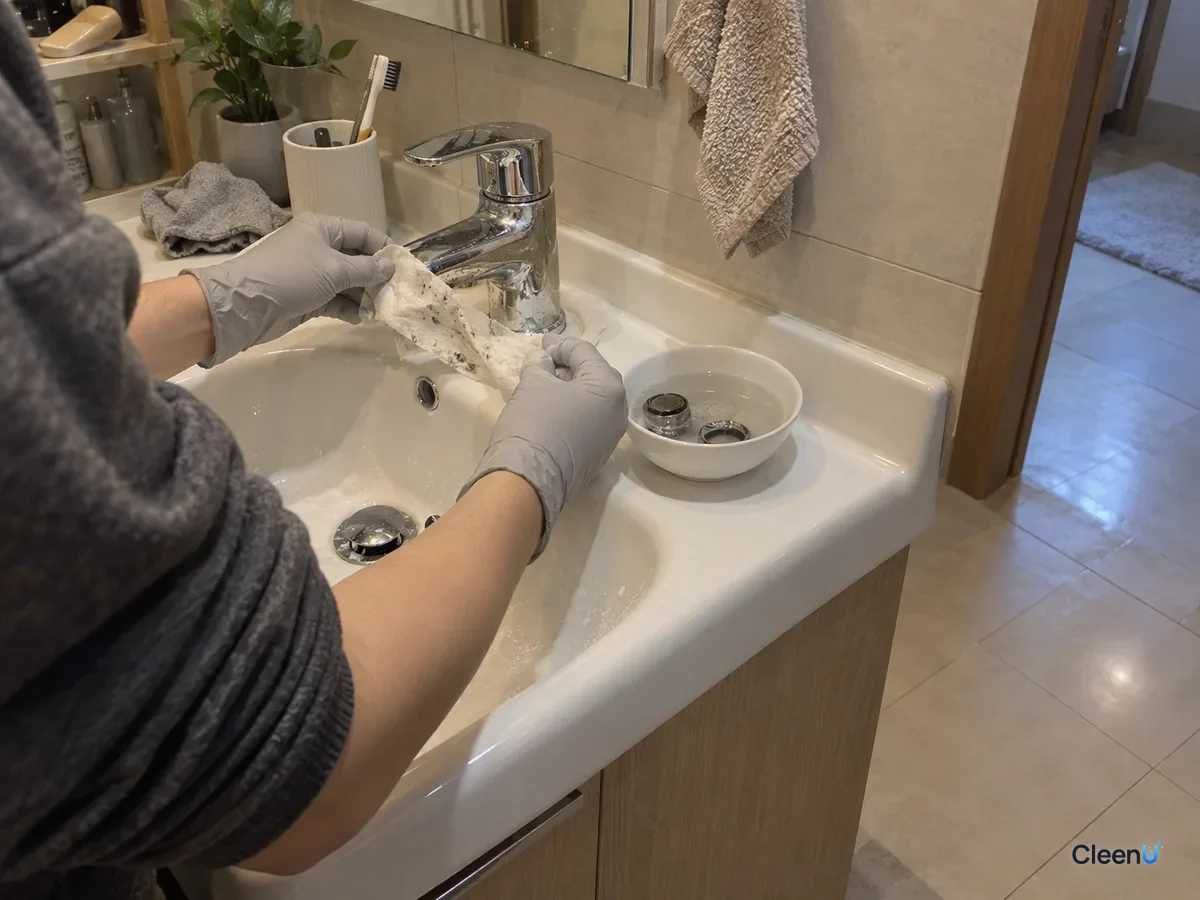
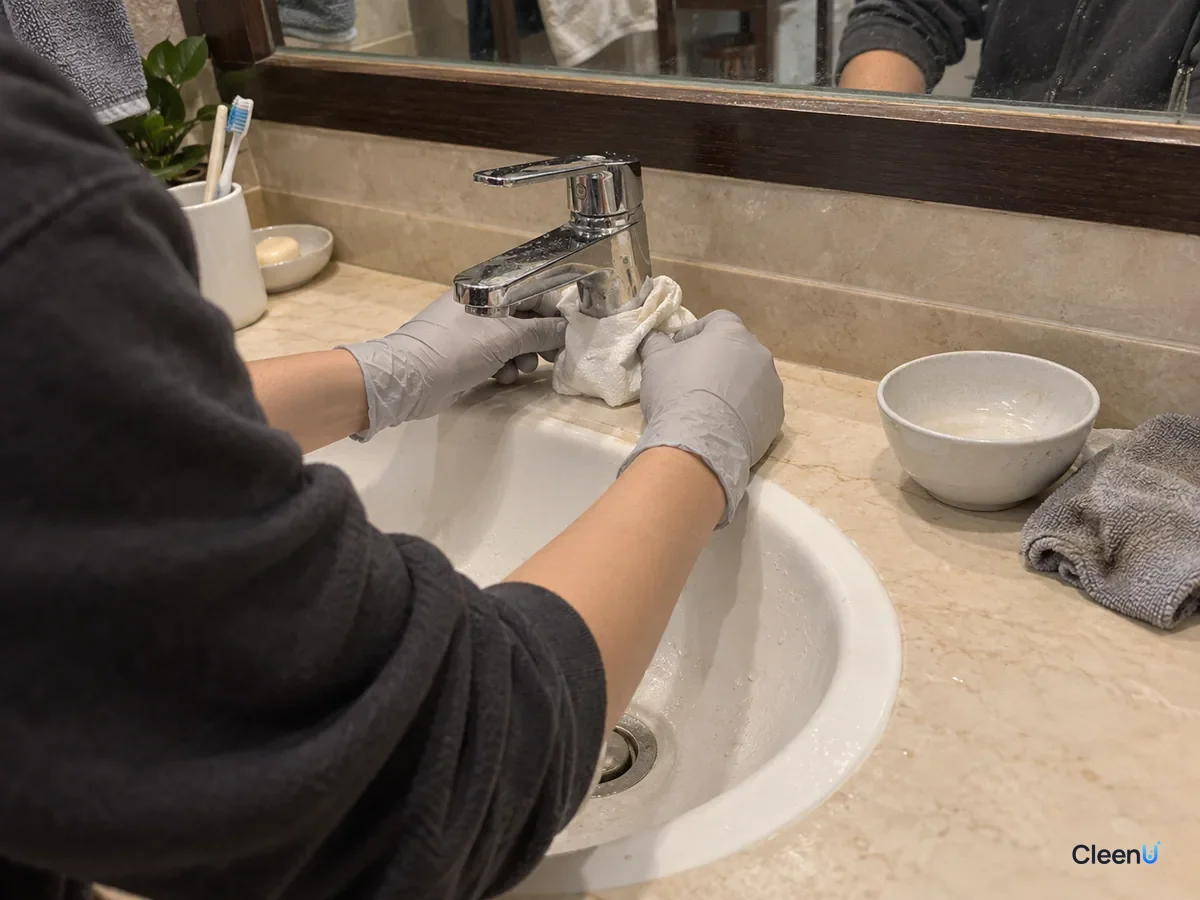
Spray descaler onto a paper towel or nonwoven cloth until it's soaked, then wrap it around the faucet base and spout where the scale is so the liquid stays in contact. Sprayed directly, it runs off fast; a wrap holds it in place. Give light scale 5 minutes and heavy scale 10.
Soak aerators and showerheads
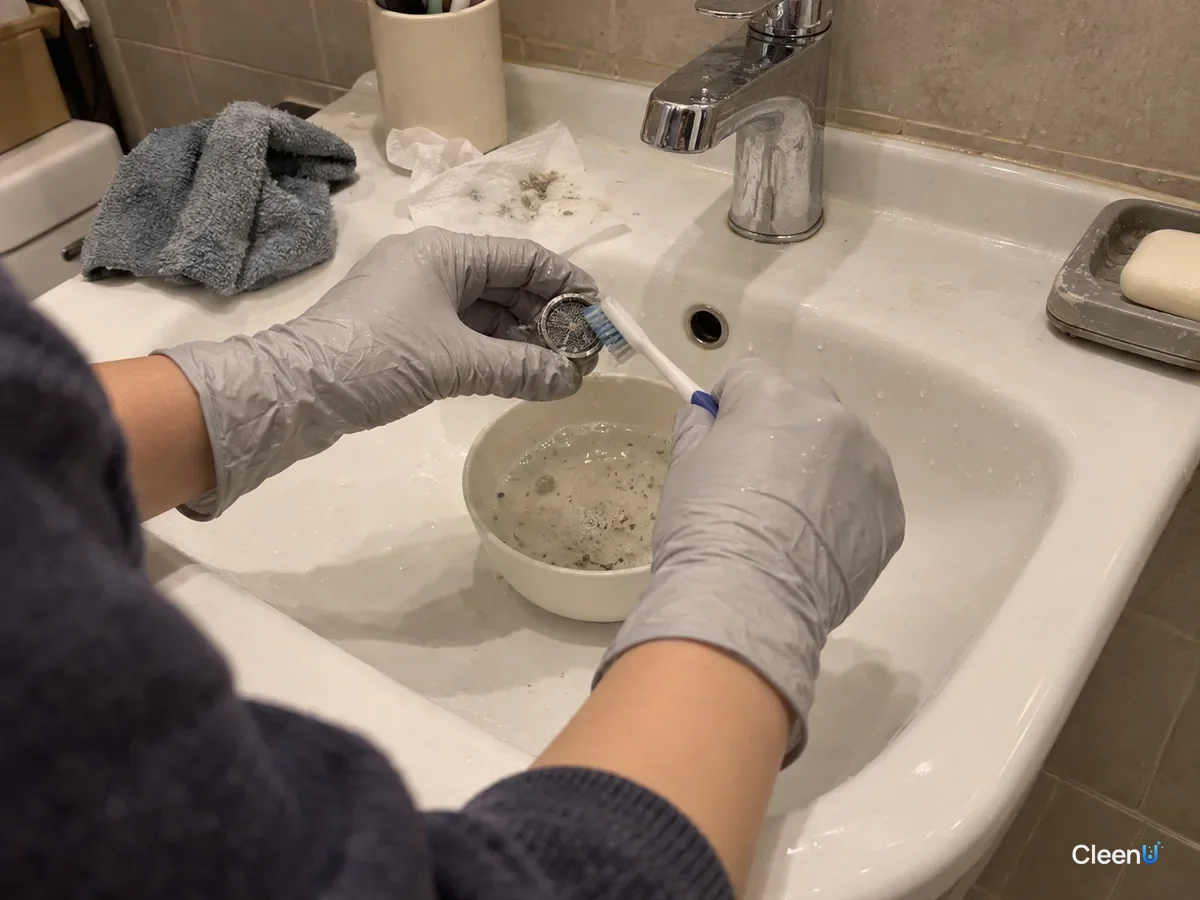
Aerators usually unscrew by hand or with a wrench, and showerheads unscrew from the hose or arm. Put them in a container with descaler mixed 1:1 with water for 15 to 30 minutes. For a showerhead that won't come off, fill a plastic bag with the mix, slip it over the head, and secure it with a rubber band so the nozzles sit in the liquid.
Caution:Don't soak coated showerheads or brass parts for long.
Wipe, brush, and rinse
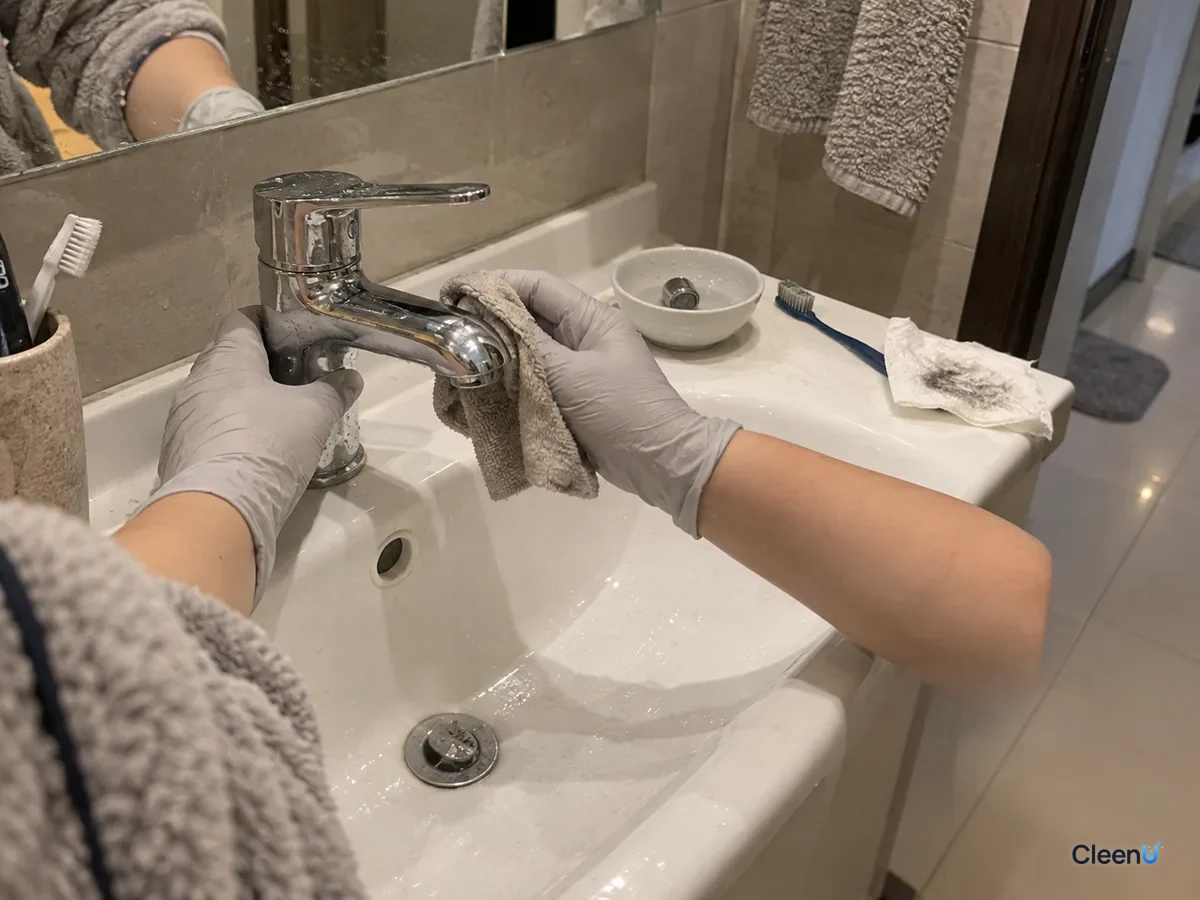
Remove the wrap and wipe the softened scale away with a soft cloth. Use an old toothbrush on crevices and nozzles. Brush the soaked aerator and showerhead and rinse them under running water. Rinse the faucet and sink thoroughly so no descaler is left. If heavy scale didn't all come off, repeat once.
Dry and reassemble
Dry the faucet with a soft cloth, and the metal shine comes right back. Put the aerator and showerhead back on and run water for a bit to check the spray is even.
Why drying matters so much
Limescale is what's left when water evaporates on a surface. Every time you use the faucet or shower, the droplets that dry there leave a little mineral behind. So after descaling, a quick wipe to dry the faucet after use is the most effective way to keep scale from coming back, more effective than any product.
The same goes for shower glass and walls: squeegee after every shower and you'll see far less scale. For water spots on glass doors, see How to remove water spots from glass shower doors.
Habits that damage faucets
Scraping with steel wool or a rough scrub pad scratches chrome, scratches collect scale faster, and you can wear through the plating.
Long soaks in strong acid can dull or darken plating, especially on coated hardware and brass.
Using descaler with or right after chlorine bleach: acid plus sodium hypochlorite releases harmful chlorine gas.
Skipping the rinse: leftover acid keeps working on the metal and the sink.
How often to descale
Hard-water areas: treat faucets and showerheads monthly, while the scale is thin and comes off after 5 minutes.
Softer water: check every two or three months and treat when you see a white edge.
Day to day: dry the faucet after use and wipe the showerhead face with a soft cloth weekly.
For the rest of the shower area, see How to clean a bathroom.
How to tell the scale is gone, and when to stop
While the wrap sits, watch the surface of the deposit. Tiny bubbles mean the acid is still reacting with the calcium carbonate. When the bubbling slows and the edges of the crust turn soft and chalky, and a gloved fingernail can push it, it's time to wipe. After you rinse, chrome should reflect a clean, sharp image and feel smooth, with no grit. Put the showerhead back and run the water. If every nozzle flows and the streams come out straight, the holes are clear.
If a gray-white haze is still there after two rounds, and it feels smooth but won't wipe off, stop and look again. It may not be scale at all. The plating could be worn or dulled, and a descaler can't fix that kind of change. More contact time will only make the damage bigger.
Sinks, basins and showerheads need slightly different handling
Stainless steel sinks are big, and spray runs off fast. Spray the descaler onto a nonwoven cloth instead and lay it over the white edges. After 5 minutes, wipe along the grain of the brushed finish, not in circles, which leave visible swirl marks. Ceramic basin glaze handles acid well. Focus on the overflow and around the drain, where scale is usually mixed with toothpaste and soap residue. Wipe off that soap film first with warm water and a little mild dish soap, then treat the white scale that's left, so the acid can reach the mineral layer directly.
If your showerhead has soft silicone nozzles, rub each one with your fingertip after soaking and the scale will pop out of the holes. On a metal faceplate, work the holes gently with an old toothbrush and a fine pin. Don't jab hard, or you can widen a hole and end up with spray going sideways.
Stop if you see this
If a faucet or sink starts to discolor, darken, or lose its shine, rinse immediately with water and stop. If descaler gets on skin or in your eyes, rinse with plenty of water and see a doctor if your eyes stay irritated. Never use it with or right after chlorine products. Keep it off marble, cultured marble, and aluminum, and run the fan in a small bathroom.
Descaling faucets and showerheads: common questions
Can I use descaler on a chrome faucet?
Generally yes. Chrome holds up to standard descalers if you follow the label time, wipe with a soft cloth, and rinse and dry thoroughly. Spot-test the first time.
Does vinegar remove limescale from faucets?
It handles light scale, but vinegar is weak and slow, so heavy scale needs a long soak. A dedicated descaler adds a wetting agent and corrosion inhibitor, so it works faster and is gentler on metal.
How do I unclog showerhead nozzles?
Take the showerhead off and soak it in descaler mixed 1:1 with water for 15 to 30 minutes, then brush the nozzles with an old toothbrush and rinse. If it won't come off, use a plastic bag over the head.
Can I use it on gold or matte black faucets?
Check the manual and test a hidden spot first. Colored and PVD finishes are more sensitive to acid, so don't soak them, and rinse right after wiping.
How do I descale a faucet on a marble vanity?
Put a towel underneath while the wrap is on so nothing drips onto the stone. If any does, rinse it off immediately with plenty of water.
How soon will scale come back?
That depends on your water and habits. In hard-water areas, a faucet that's never dried shows a white edge within weeks; dry it after each use and it stays clean much longer.
For an acidic descaler that quickly dissolves scale at the faucet base and in showerheads, with a corrosion inhibitor that's gentler on chrome, take a look at our Faucet & Sink Scale Remover.
White scale on faucets and showerheads is calcium carbonate and other minerals, and water and alkaline cleaners can't remove it. It takes an acidic descaler. Wrap the faucet in a descaler-soaked paper towel for 5 to 10 minutes, soak aerators and showerheads in a 1:1 mix, then wipe and brush the softened scale off, rinse, and dry. Test coated finishes and brass first, keep acid off stone vanities, and never mix with chlorine products. Drying the faucet after each use is the best way to keep scale from coming back.