
Troubleshooting
Sticky Kitchen Cabinets: How to Remove Greasy Film
Direct answer
Most sticky cabinets have a film of cooking grease and hand oil. Test in a hidden spot, wipe with degreaser sprayed onto a cloth, then wipe again with a damp cloth and dry. If the finish itself is soft, losing color, or peeling, that's a failing finish, not dirt, and it needs repair rather than cleaning.
What you see
The upper and lower cabinets near the stove feel tacky, like there's an invisible layer of glue. The area around the handles looks darker and shinier. The edges near the range hood have a yellowish film. A damp cloth makes it stickier, and dish soap only helps for a little while.
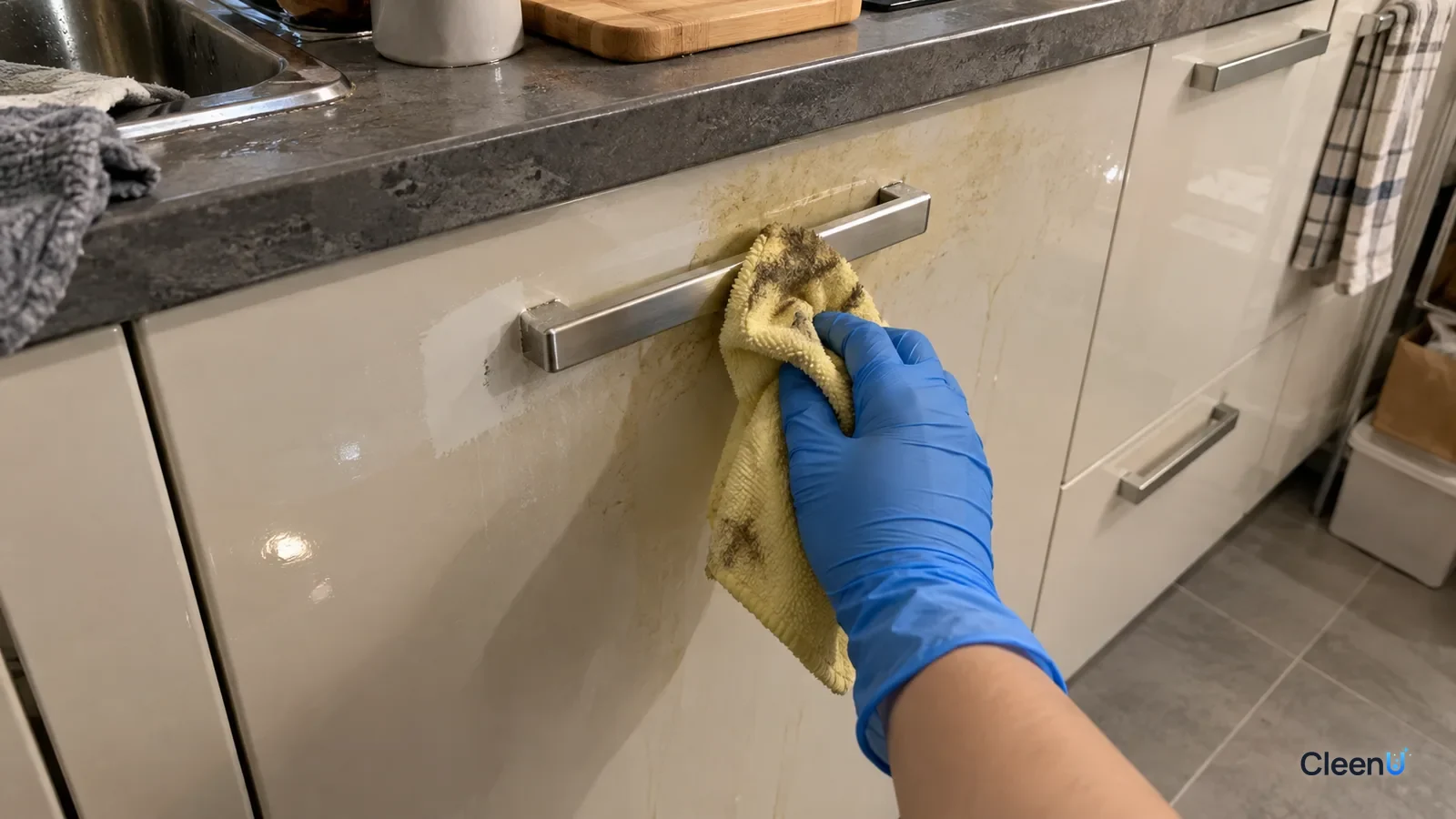
Sticky cabinets are a common complaint a couple of years into living in a home. Most of the time it's grease, but sometimes the cabinet finish itself is the problem. They look similar, but the fixes are opposite: cleaning solves the first and makes the second worse. Figure out which one you have before you start.
Where that sticky film comes from
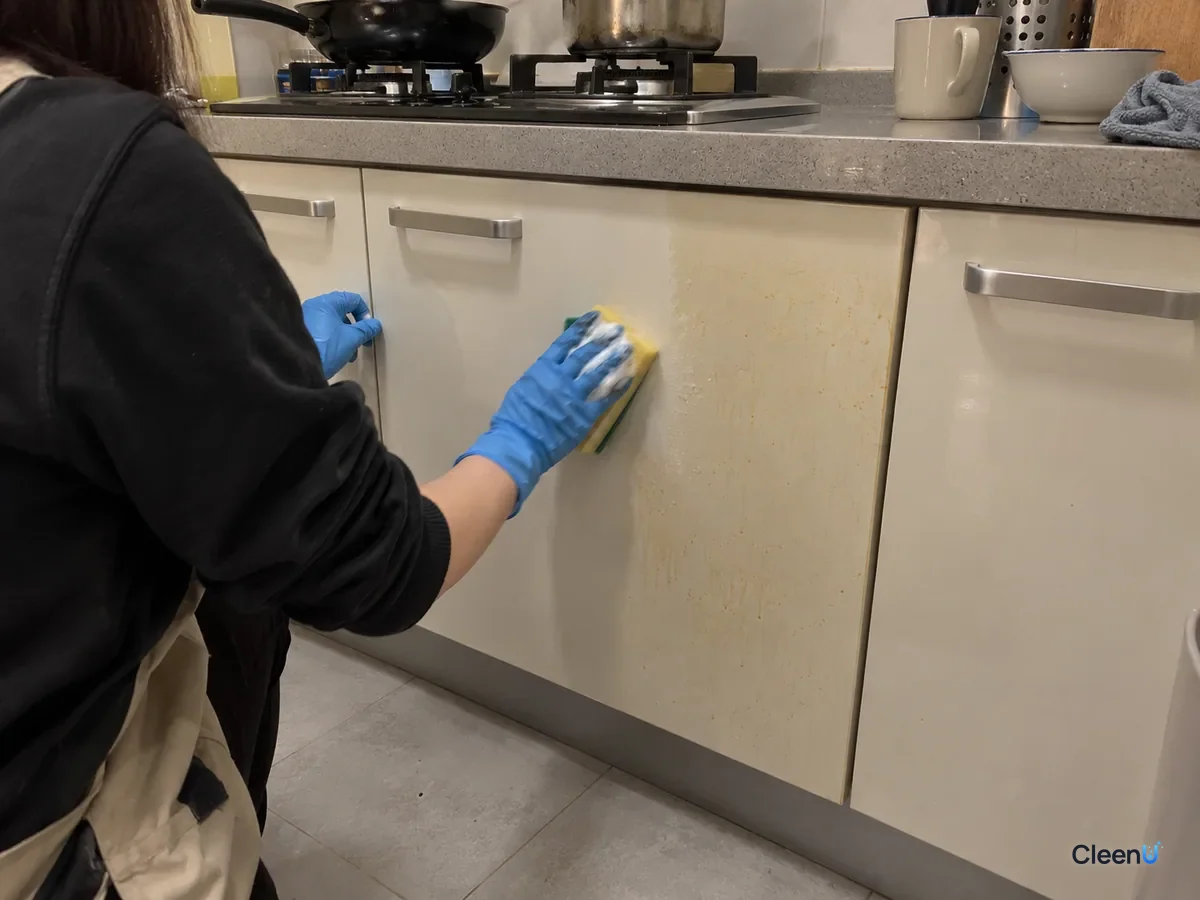
When you cook, some oil turns to smoke and tiny droplets float in the air. Whatever the range hood doesn't catch settles on nearby walls and cabinet doors.
Fresh grease is liquid and wipes right off. But the unsaturated fatty acids in cooking oil slowly react with oxygen: they form peroxides, which break down and cross-link into larger networks. That's oxidative polymerization, and it turns liquid oil into a tacky semi-solid, which is exactly what you feel on the door. Over time it yellows and hardens.
Handprints add to it. Skin oil and cooking grease on your hands end up around the handles every time you open a door, layering on top of the airborne grease.
The film also traps dust, which makes it look dingy and thickens the layer.
When it's the finish, not the dirt
Cabinet doors are usually painted lacquer, thermofoil (a PVC film over MDF), wood veneer, melamine, stainless steel, or glass. Some of these break down with long-term heat, moisture, or the wrong cleaner.
Aging painted finishes: with years of heat, cooking fumes, and UV, some coatings degrade and turn soft and tacky. That stickiness is the material itself.
Thermofoil bubbling or turning sticky: on doors next to the stove or oven, heat can soften the adhesive between the film and the board, so the surface gets tacky, bubbles, or lifts at the edges.
The wrong cleaner: repeated strong alkalis or solvents can swell, dull, or soften some finishes and films.
The test below helps you tell. If it's one of these, no cleaner will restore it, and more scrubbing makes it worse.
Five steps to diagnose and fix it
Find out why your cabinets are sticky in five steps
-
Step 1 Dab a little degreaser on a paper towel and wipe a hidden spot inside a door. Does yellow or gray grease come off?
- Yes
- There's a grease film. Next, check that the finish tolerates the cleaner.
- No
- Go to the next check
-
Step 2 Did the test spot whiten, dull, change color, or soften?
- Yes
- This finish doesn't tolerate that cleaner. Stop, and switch to a neutral cleaner or warm water with a little dish soap and a gentle wipe.
- No
- The finish tolerates it. Spray degreaser onto a cloth, wipe the doors in sections, let it sit a minute or two to soften the film, then wipe with a damp cloth and dry.
-
Step 3 After cleaning, is it still sticky, and does a light fingernail scratch leave a mark or lift something off?
- Yes
- The finish or film itself is softening. That's material breakdown; contact your cabinet maker about repair or replacement doors.
- No
- Go to the next check
-
Step 4 Is the stickiness concentrated next to the stove or oven, with bubbles or lifted edges?
- Yes
- Heat has softened thermofoil or its adhesive. Cleaning won't fix it; it needs repair. Also check the clearance and heat shielding between the cooktop and cabinets.
- No
- Go to the next check
-
Step 5 Did it clean up fine but get sticky again within a few weeks?
- Yes
- Grease is still settling. Run the range hood earlier and longer on a higher setting, and clean more often.
- No
- Problem solved.
Why spray the cloth, not the door
Cabinet doors don't tolerate soaking the way tile does. Edges, edge banding, and hinge areas can take on liquid. Spraying a whole door can push cleaner into edges and gaps, and over time the board can swell or the edge banding can come loose.
Take CleenU Kitchen Cleaner & Degreaser as an example. It's an alkaline kitchen degreasing spray, pH 10.0 to 11.5 as supplied, made with alkaline builders, nonionic surfactants, and glycol ether solvent, with no chlorine and no abrasives. The builders partly saponify and loosen polymerized grease, the solvent swells the tacky layer, and the surfactants emulsify what's loosened so the cloth can carry it away. Sticky grease can sit 1 to 3 minutes, heavier buildup about 5, and you follow with a clean-water wipe.
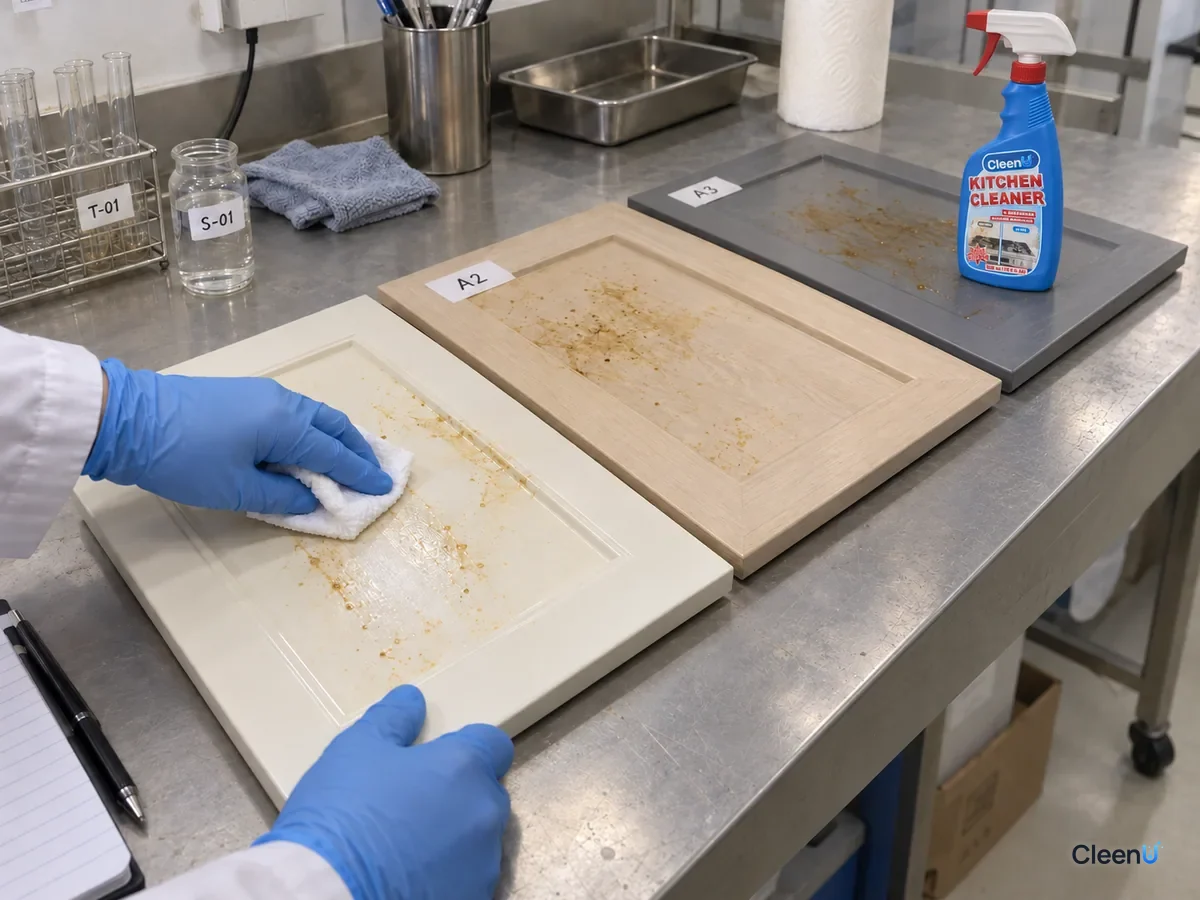
It's made for stovetops, range hood exteriors, backsplashes, cabinet doors, and counters. It isn't for aluminum, unsealed raw wood cabinets, or natural marble. Test it first on wood veneer, high-gloss lacquer, and thermofoil; if you see dulling or whitening, switch to a neutral cleaner.
Step by step
Turn on the range hood or open a window and put on gloves. Take any towels or hooks off the doors.
Test a small spot inside a door and wait two or three minutes for any change.
Spray degreaser onto a microfiber cloth until it's damp but not dripping, then wipe top to bottom, one door at a time. For thick film, hold the sprayed cloth against the door for a minute or two before wiping.
Use an old toothbrush or cotton swab around handles and in grooves along the edges.
Switch to a wrung-out damp cloth and go over everything to remove dissolved grease and cleaner, then dry with a towel. Leftover alkali can leave a white haze and makes new grease stick faster.
Wipe the inside edges of the doors and cabinet frames too; that's where handprints collect. For the rest of the kitchen, see How to clean a kitchen and How to clean grease off a backsplash.
Keeping cabinets from getting sticky again
Turn the range hood on before you start cooking and leave it running three to five minutes after. Use the highest setting for high-heat stir-frying.
Wipe the doors closest to the stove with a damp cloth weekly, while grease is still fresh, and do a full degreasing monthly.
Wash your hands after cooking before you open cabinets, and the handle areas stay much cleaner.
Keep enough distance between the cooktop and cabinet doors, and don't let oven or steam oven vents blow directly on a door.
Adjusting pressure and dwell time to the door material
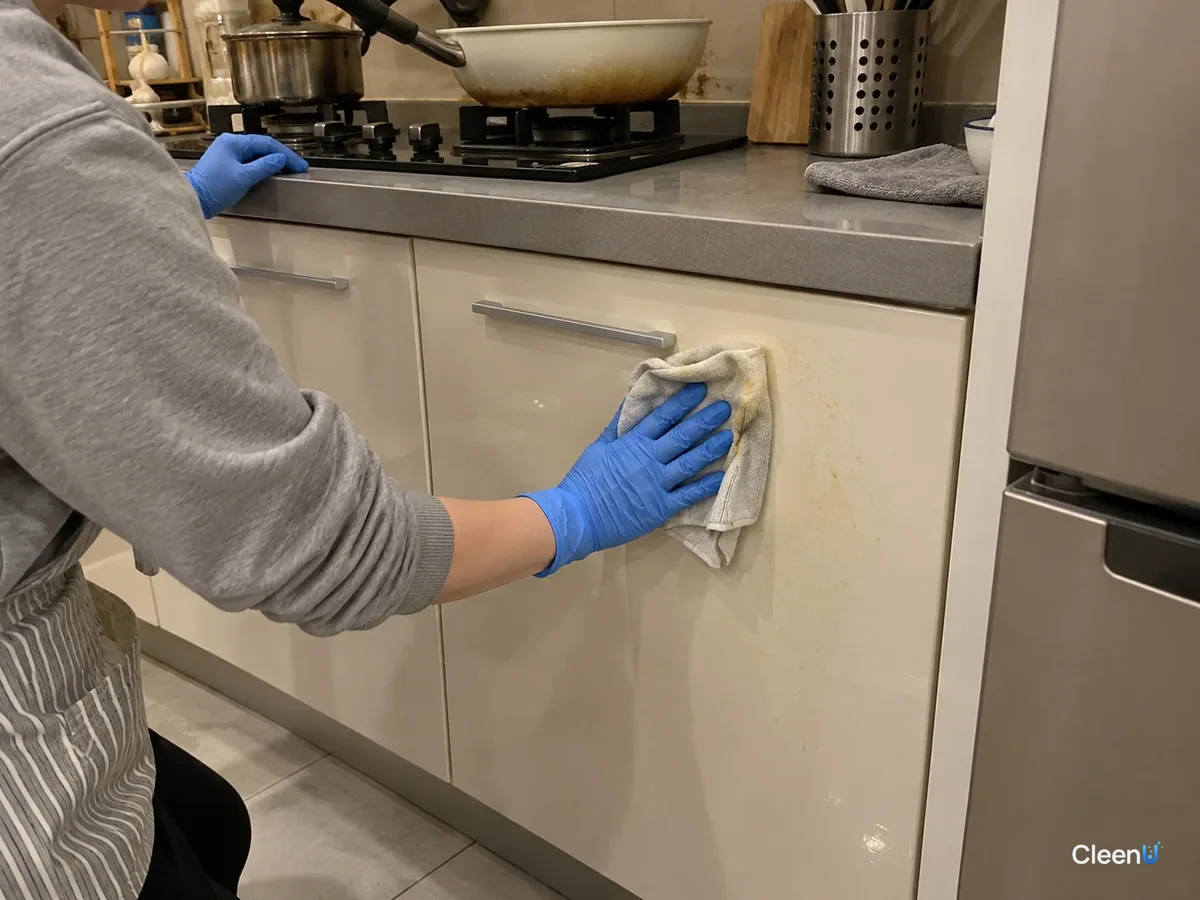
Melamine, stainless steel and tempered glass doors have hard, dense surfaces. The grease film just sits on top, so the routine above works fine: spray the cloth, let it sit on the film for a minute or two, then wipe clean. On stainless, wipe along the grain. On glass, finish by buffing with a dry cloth so you don't leave water marks.
High-gloss lacquer and thermofoil doors are softer, and how well they tolerate solvents and alkaline cleaners varies by manufacturer. On these, two light passes beat one long soak or hard scrubbing. The first pass lifts the sticky top layer, and the second takes care of the thin film left behind. Use a sponge or microfiber cloth, never the rough side of a scrub pad. Fine scratches on a gloss finish stand out more than the grease ever did.
Wood veneer doesn't like water. Wring the cloth out more, and blot the door dry right after wiping, especially along the edge banding and in the grain. If your handles are aluminum, don't use an alkaline degreaser on them, since aluminum can darken and lose its shine. Clean them separately with a neutral cleaner or warm water and a little dish soap.
How clean is clean enough?
Let the door dry all the way, then press a fingertip on it and lift. You shouldn't feel any stringy tack, and a clean white paper towel pressed against it shouldn't pick up yellow. In raking light, the color looks even and the dull ring around the handle is gone. At that point, stop. If one spot still feels sticky after several passes but the towel no longer picks up any oil color, what's left isn't grease. Go back to the diagnosis steps and treat it as a finish or film problem. Don't keep adding more product or longer dwell time.
Stop if you see this
If the finish whitens, dulls, peels, bubbles, or a fingernail lifts anything, stop using the degreaser. Dry any liquid that gets into edges or hinges right away. Keep degreaser off aluminum, unsealed wood, and natural marble, don't use it on a hot stovetop, and never mix it with acidic or chlorine cleaners. If your skin stings, rinse with water.
Sticky kitchen cabinets: common questions
What should I use to clean sticky cabinets?
Test a hidden spot first, then wipe with kitchen degreaser sprayed onto a cloth and follow with a clean-water wipe and dry. Test high-gloss, thermofoil, and veneer first and switch to a neutral cleaner if anything changes.
Why are they still sticky after dish soap?
Dish soap works on fresh grease but is slow on polymerized film, and if you don't rinse-wipe, the soap leaves its own tacky residue.
How can I tell grease from a failing finish?
After cleaning, scratch lightly with a fingernail. If it leaves a mark, lifts material, or the surface is bubbling or peeling, it's the finish. If it's just tacky and yellow grease wipes off, it's grease.
Can bubbling, sticky thermofoil doors be fixed?
Not with cleaning. Contact your cabinet maker about re-wrapping or replacing the doors.
How often should I clean cabinets so they don't get sticky?
Wipe doors near the stove with a damp cloth weekly and degrease them fully once a month, more often if you cook with a lot of oil.
Can I use steel wool or a scrub pad on cabinets?
No. They scratch paint and film, and scratches hold more grease. Use microfiber and a soft brush.
For a kitchen degreasing spray that softens tacky, oxidized grease when used on a cloth and finishes with a simple water wipe, take a look at our Kitchen Cleaner & Degreaser.
Sticky kitchen cabinets usually have a film of cooking grease that's oxidized and polymerized, plus hand oil and dust; occasionally the finish or thermofoil itself has broken down from heat. Test degreaser in a hidden spot. If yellow grease comes off and the finish looks fine, spray it on a cloth, wipe the doors in sections, then wipe with water and dry. If a fingernail still leaves a mark or the surface is bubbling or peeling, it's the material, and it needs repair, not more scrubbing. Run the hood early and late, wipe near-stove doors weekly, and the film won't come back.