
Troubleshooting
Kitchen Grease Won’t Come Off? Why Your Degreaser Isn’t Working
Direct answer
Old kitchen grease has oxidized and polymerized, and spraying and wiping right away doesn't give the degreaser time to work. Soak it, let it sit 3 to 5 minutes, scrub, then wipe with clean water. If it still won't budge with the right method, the formula isn't built for that buildup, or it isn't grease.
Check these five things first
- How old is the grease? This week's splatter, or months old, yellow-brown, tacky or hard?
- How long did you wait after spraying? Wiped immediately, or let it sit a few minutes?
- How much did you use? A light mist, or enough to fully soak the buildup?
- What did you wipe with? Only a cloth, or a brush, scrub pad, or scraper too?
- Is it actually grease, or is it carbonized residue, hard-water scale, or discolored finish?
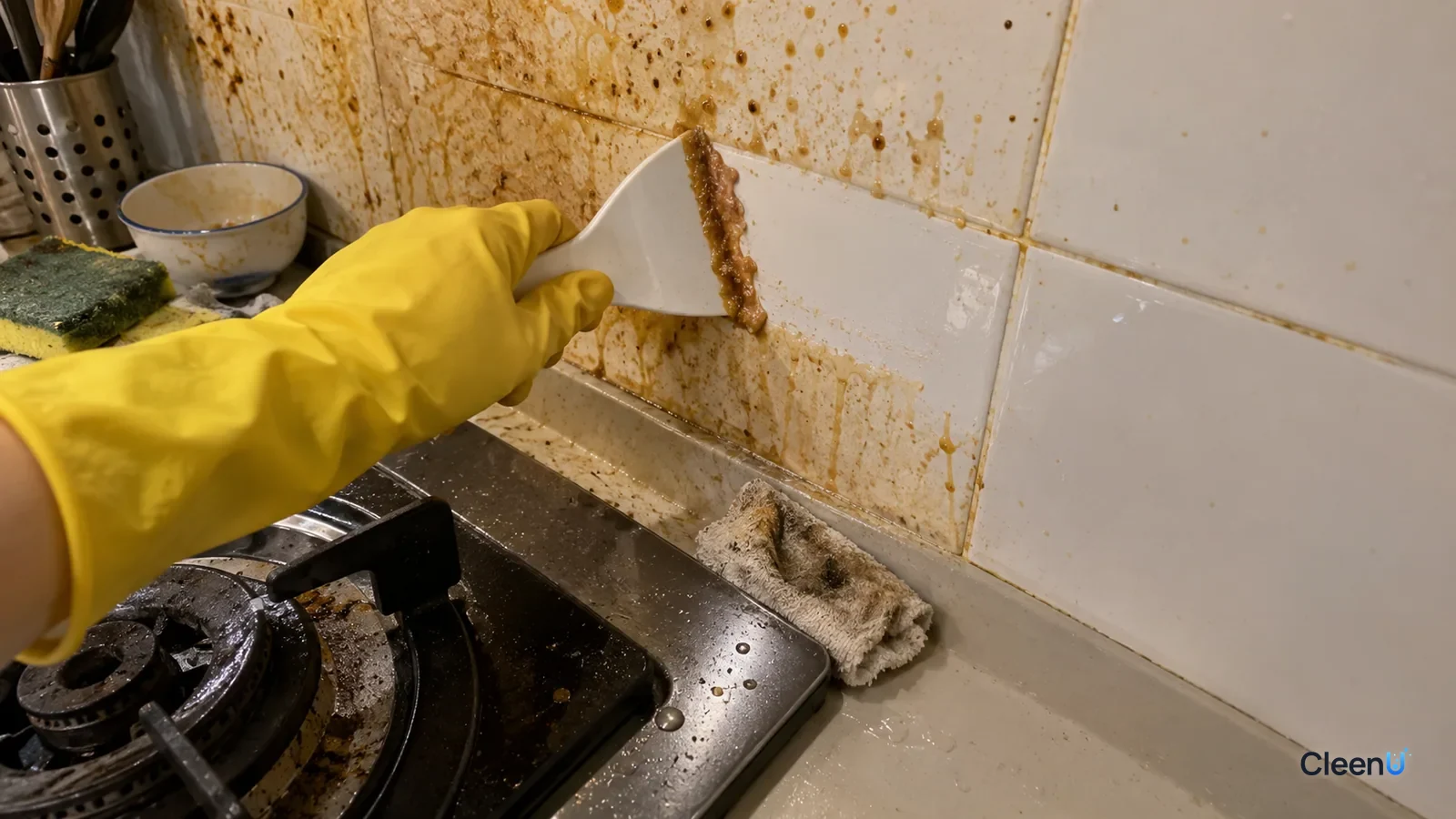
You bought a "heavy-duty" kitchen degreaser, sprayed the range hood and the backsplash by the stove, and wiped. The shiny top layer came off, but the yellow-brown underneath stayed. Spray again, wipe again: the cloth is full of grease and the wall looks streakier than before.
When a degreaser "doesn't work," it's usually not the product. Most of the time the method doesn't match the state of the grease. Run through the likely causes first.
Fresh grease and old grease are different materials
Fresh splatter is liquid triglyceride. Surfactants emulsify it into tiny droplets that water carries away, so almost any degreaser wipes it off easily.
Kitchen grease doesn't stay that way, though. Once cooking grease lands on the wall, range hood, or cabinet doors, it reacts with oxygen in the air. Oxygen attacks the double bonds in unsaturated fatty acids and forms peroxides, which break down and cross-link. The molecules join into bigger and bigger networks. That's oxidative polymerization, the same process that makes oil paint and linseed oil dry and harden over time.
Polymerized grease turns from clear to yellow to brown, from a liquid to a tacky film to a hard one, and no longer dissolves in ordinary surfactant solutions. Near the stove, heat speeds all of this up, and the film also traps dust, soot, and burnt food bits, making it even more complex.
So the same degreaser that wipes fresh grease right off seems to "not work" on old buildup. The product didn't change. The grease turned into something else.
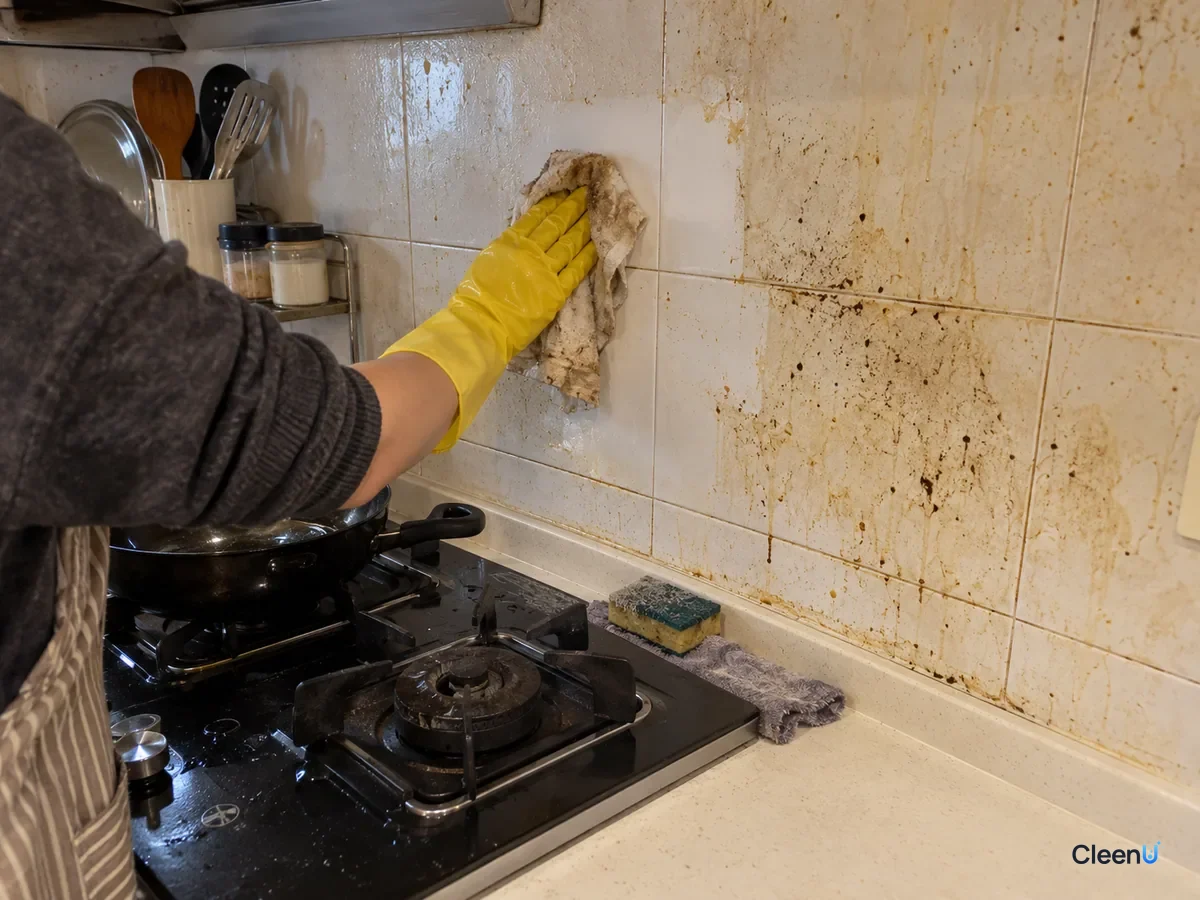
How a degreaser handles old grease
Take CleenU Kitchen Cleaner & Degreaser as an example. It's an alkaline kitchen degreasing spray, pH 10.0 to 11.5 as supplied, made with alkaline builders, nonionic surfactants, and glycol ether solvent, with no chlorine and no abrasive particles. It's ready to use.
The alkaline builders saponify: in alkaline conditions, the ester bonds in fat break apart into water-soluble fatty acid salts (soap) and glycerin. With polymerized film, the alkali needs time to work its way in and cut through it.
The glycol ether solvent swells the film: it penetrates the polymerized grease, softens it, expands it, and loosens its grip on the surface, which also lets the alkali in faster.
The nonionic surfactants emulsify and carry it away: they break the softened, saponified grime into small particles that a cloth and water can remove.
All three steps take time. When the label says "let sit 1 to 3 minutes, 5 minutes for sticky grease," that's reaction time. Spray and wipe immediately and you only get the top layer that hasn't polymerized yet.
Why it gets streakier as you wipe
Once the degreaser dissolves and emulsifies the grease, it's still on the wall, just in a form water can remove. Keep wiping with the same cloth and it fills with grease fast, so you're spreading dissolved grease back across the surface with a greasy rag. When it dries, it's a streaky, tacky mess.
Alkaline degreaser that isn't wiped off also leaves a white residue on tile and stainless. So the last step of degreasing is always a wipe with a clean damp cloth to remove the dissolved grease and the cleaner.
Common causes: what you see, fix, prevention
| Cause | What you see | Fix | Prevent it |
|---|---|---|---|
| Wiping right after spraying | Shiny layer gone, yellow-brown still there | Soak it and wait 3 to 5 minutes before wiping | Follow the label's dwell time |
| Too little product | Some spots clean, others unchanged | Fully wet the buildup; mist again if needed | Spray until the grease is completely soaked |
| Cloth only | Wiped forever, film still there | After dwell, use a brush, the soft side of a scrub pad, or a plastic scraper | Add elbow grease for thick buildup |
| Cloth saturated with grease | Streakier and stickier as you go | Switch to a clean damp cloth and finish with a water wipe | Have several cloths ready and swap often |
| It isn't grease | No reaction to alkaline cleaner at all | Figure out whether it's carbon, scale, or discolored finish and switch methods | Identify the stain first |
| Formula not suited | Still stuck with the right method | Switch to a kitchen degreaser with solvent and enough alkalinity | Choose a product labeled for heavy kitchen grease |
Order of operations for old grease
Put on gloves and open a window or run the range hood. Wait until the stovetop is completely cool.
Scrape off any thick, gummy deposits with a paper towel or plastic scraper first so the cleaner has less to cut through.
Spray generously until the grease is fully wet. On vertical surfaces, spray from the bottom up so drips don't streak untreated areas.
Wait 3 to 5 minutes, the full 5 for heavy buildup. Don't let it dry; mist again if it starts to.
Scrub in one direction with a brush, the soft side of a scrub pad, or a plastic scraper to lift the softened film. Use an old toothbrush on grooves and seams.
Switch to a clean damp cloth and wipe the surface once or twice to remove dissolved grease and cleaner, then dry with a towel.
Very thick, years-old buildup usually won't come off in one go. Do it in two or three rounds, each one: soak, wait, scrub, wipe with water.
When it isn't a degreaser problem
Carbonized residue: black, hard, brittle buildup on stovetops, ovens, and pan bottoms that crumbles to powder when scraped. It's food and grease carbonized by high heat, and alkaline degreasers have limited effect. It needs a scraper or a dedicated oven cleaner.
Hard-water scale: hard white crust around sinks and faucets is mineral and needs an acidic descaler.
Discolored material: old cabinet doors and plastic parts can yellow from years of heat and cooking fumes. No cleaner can restore the original color.
Aluminum and unsealed wood: alkaline degreasers darken aluminum and raise the grain or discolor raw wood. Keep them off these surfaces.
For a room-wide routine, see How to clean a kitchen. For backsplash grease specifically, see How to clean grease off a backsplash.
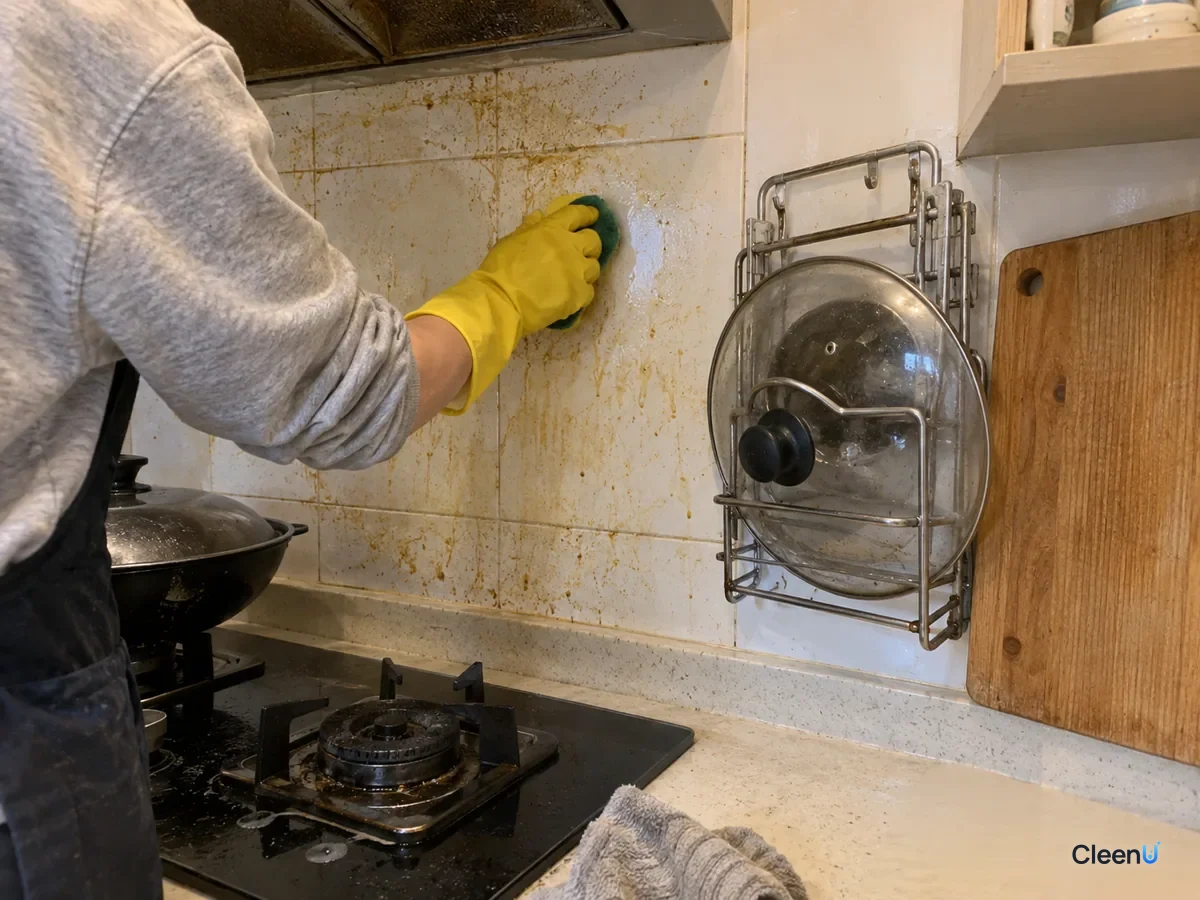
When conditions change, so should your approach
If a degreaser seems weak in winter, you're not imagining it. Saponification and swelling are chemical and physical processes, and both slow down as it gets colder. In an unheated kitchen, the same contact time does less work. Run the range hood or a space heater for a while to bring the room up, or let the product sit toward the upper end of the label range. Don't pour hot water over the cleaner, and don't work on a cooktop that's still warm.
On vertical tile and the sides of a range hood, the liquid runs down, so the real contact time is shorter than you think. After spraying, press a sheet of plastic wrap over the area, or cover it with a damp paper towel. That holds the cleaner against the grease film and slows drying, which makes a big difference on old buildup. When you peel the wrap off, sweep it downward. The softened film often comes away in one big sheet.
Different surfaces can take different amounts of scrubbing. Glazed tile and stainless hoods are fine with the soft side of a scrub pad; on stainless, wipe along the grain. Painted hood shells, lacquered cabinet doors and tempered glass panels get only a soft cloth or sponge. Make up for the lighter touch with longer contact time and extra rounds. A stiff brush leaves hazy scratches, and those can look like grease you didn't get off.
When you're done, touch the surface with the back of your hand. It shouldn't feel tacky, and a cloth should glide instead of dragging. Water should spread out evenly instead of beading up like it's sitting on oil. When you see that, the film is gone and you can stop.
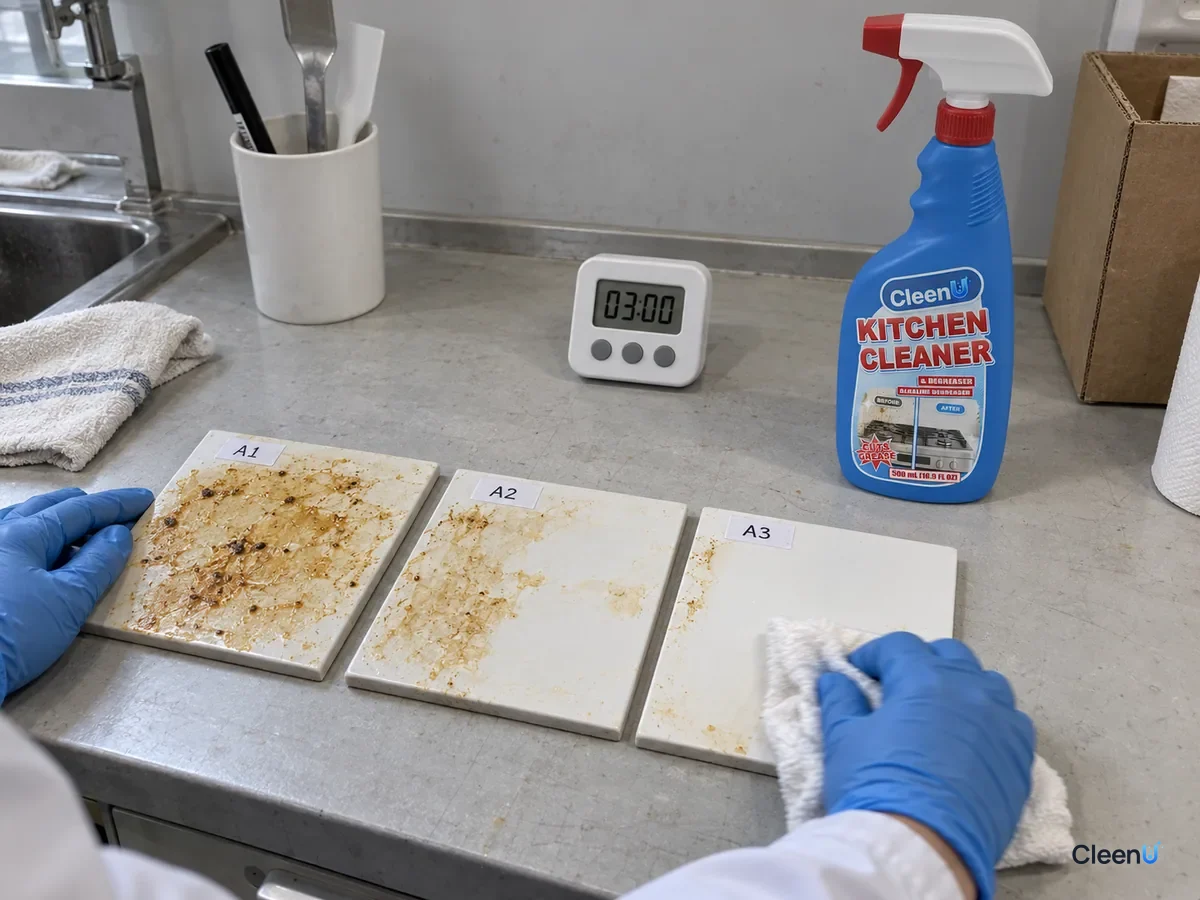
Stop if you see this
If your skin turns red or stings, rinse right away with plenty of water. If a surface whitens, dulls, or fades, stop and wipe it with water. Keep it off aluminum cookware and trim, unsealed wood cabinets, natural marble, and stovetops that are still warm. Don't mix with acidic or chlorine cleaners, and keep the kitchen ventilated.
When a degreaser isn't working: common questions
How long should degreaser sit before wiping?
Usually 1 to 3 minutes, around 5 for sticky or old grease; follow the label. Don't let it dry in the meantime.
Why is the wall streaky after I degrease it?
Usually the cloth was full of grease and spread dissolved grease back, or the degreaser wasn't wiped off. Wipe again with a clean damp cloth, then dry.
Is it normal for old grease not to come off in one try?
Yes. Years of polymerized film can take two or three rounds of soak, wait, scrub, and wipe with water.
Can I use degreaser on aluminum?
No. Alkaline degreasers darken and dull aluminum. Use a neutral cleaner on aluminum pans and trim.
Do baking soda or vinegar remove old kitchen grease?
Baking soda is weakly alkaline and mostly abrasive, so it helps on thin grease but is slow on polymerized buildup. Vinegar is an acid and does very little to grease.
Do I need to rinse after using a degreaser?
Yes. Wipe with a damp cloth to remove dissolved grease and cleaner residue, or it'll haze, feel tacky, and attract grease faster next time.
For an alkaline, solvent-boosted kitchen degreasing spray that softens sticky grease after a few minutes of dwell time, take a look at our Kitchen Cleaner & Degreaser.
When a kitchen degreaser seems useless, the usual cause is grease that has oxidized and polymerized into a hard film, combined with wiping too soon, using too little, or relying on a cloth alone. The fix: soak it, wait 3 to 5 minutes so the alkali and solvent can soften the film, scrub with a brush or pad, then wipe with a clean damp cloth and dry. Tackle thick buildup in rounds. Carbonized residue, hard-water scale, and discolored materials aren't degreaser jobs and need a different approach.