
Q&A
What Household Cleaners Are Toxic to Cats? Essential Oils, Phenols, Quats, Bleach, and Alcohol Explained
Direct answer
It depends on the ingredient, its strength, and how your cat is exposed. Most household cleaners used as labeled and allowed to dry are low concern. Concentrated essential oils, phenols, quats, bleach, and alcohol need care, and cats are more sensitive to several. Keep cats out until surfaces dry.
In a home with pets: do, don't, and it depends
Yes
- Dilute as labeled, keep pets out of the room, and let surfaces dry before they return
- For everyday cleaning, choose products with clear ingredient lists, no or low fragrance, and no phenols or quats
- Toss used wipes and rags in a lidded trash can and empty mop buckets right away
No
- Spray cleaners or odor eliminators directly on a cat or dog
- Run a diffuser for long periods in the room your cat is in, or put essential oils on your pet
- Use phenolic disinfectants for routine cleaning in a home with cats
- Mix bleach with ammonia, vinegar, or any other cleaner
It depends
- Quat disinfectants: when you truly need to disinfect, follow the label, wipe surfaces down, and keep cats off until dry
- Alcohol: fine for small spot wipes once it has evaporated; keep bottles and alcohol wipes out of reach
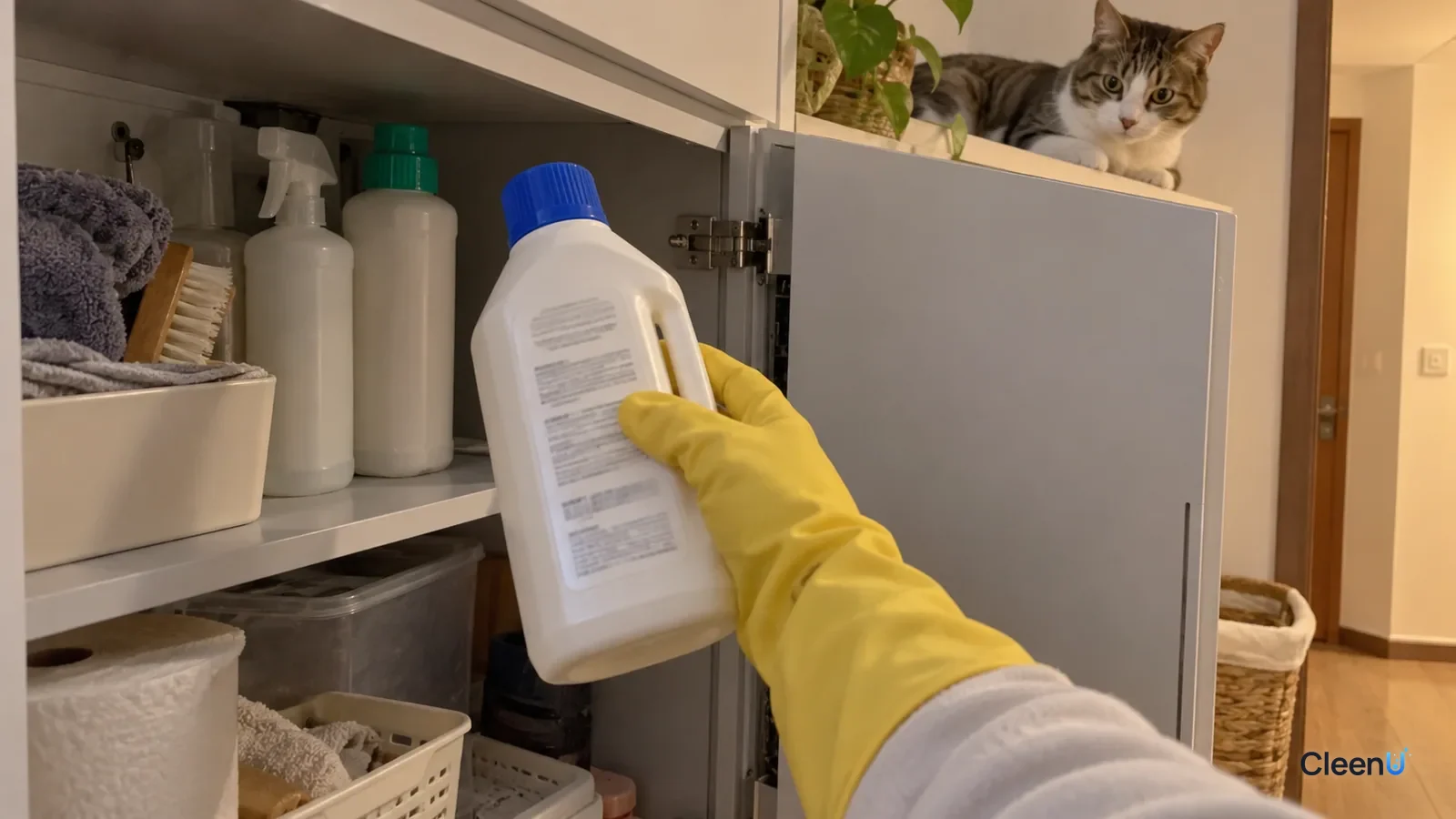
What household cleaners are toxic to cats? The honest answer is that "toxic" depends on three things: what the ingredient is, how concentrated it is, and how your cat comes into contact with it. A floor mopped with a properly diluted cleaner and left to dry completely is a very different situation from a drop of undiluted tea tree oil on a cat's coat. Veterinary references are measured about this. The Merck Veterinary Manual notes that many poisonings from household cleaners cause only mild signs, and that the serious cases usually involve corrosive or concentrated products (accessed Oct 2026).
Cats do need more caution. A cat's liver is short on a key detoxifying enzyme, so it handles phenols and some essential-oil compounds poorly, and grooming carries residue from paws and fur into the mouth. Five ingredient groups are worth knowing: essential oils (especially tea tree oil), phenolic disinfectants, quaternary ammonium compounds (quats), bleach, and alcohol. More useful than any label is the routine: pets out while you clean, back only when surfaces are dry, concentrates stored where they can't get in.
Why cats need more caution than dogs with the same cleaner
The liver processes foreign chemicals roughly in two stages: first it modifies them, then it attaches ("conjugates") a molecule that makes them more water-soluble so they can leave in urine or bile. Glucuronidation is one of the main conjugation routes. The Merck Veterinary Manual and Pet Poison Helpline both note that cats lack glucuronyl transferase activity, which makes them especially sensitive to phenols and to essential oils that contain phenolic compounds (accessed Oct 2026). The same compound clears a cat's body more slowly and can build up.
Behavior is the second reason. Cats groom constantly, and Merck's entries on essential oils and cationic detergents both note that grooming gives cats skin and oral exposure at once. Dogs are more often exposed by licking floors or drinking from the mop bucket. Size is the third: for cats and small dogs, the same lick is a bigger dose per pound.
So "cats are more sensitive" doesn't mean a cleaner harms a cat on contact. It means that with the same use, a cat has less margin, and controlling exposure matters more.
A few terms to know before reading a label
- Glucuronidation
- A liver pathway that attaches glucuronic acid to foreign molecules so they can be excreted. Cats are low in a key enzyme for it.
- Phenols
- Compounds with a hydroxyl group on a benzene ring, found in some disinfectants and essential oils; names often contain "phenol" or "cresol."
- Quats
- Quaternary ammonium compounds, positively charged (cationic) surfactants found in disinfecting wipes and sprays and fabric softeners. Look for names ending in "ammonium chloride," such as benzalkonium chloride.
- Sodium hypochlorite
- The active ingredient in household chlorine bleach. It's a strong oxidizer and alkaline as sold; diluting per the label reduces its corrosiveness.
- Essential oils
- Volatile aromatic plant oils; some contain phenols or terpenes, and risk rises with concentration.
Essential oils in cleaning products and cats: concentration and contact decide the risk
Concentrated essential oils carry clearly higher risk for cats, while low-concentration products used as labeled carry much less. The published sources agree on that.
The Merck Veterinary Manual says dogs and cats can both be poisoned by essential oils but cats are more sensitive, that tea tree oil is the essential oil most often involved in reported pet poisonings, and that oils are absorbed through the gut, skin, airways, and mucous membranes. Pet Poison Helpline lists oils linked to problems in cats, including wintergreen, sweet birch, citrus oils (d-limonene), pine, ylang ylang, peppermint, cinnamon, pennyroyal, clove, eucalyptus, and tea tree. Its tea tree page shows why concentration matters: pet shampoos with less than about 1–2% tea tree oil generally aren't considered toxic when used as labeled, while concentrated oil applied to the skin or swallowed can cause drooling, wobbliness, tremors, and low body temperature, and in cats, liver damage (accessed Oct 2026).
The ASPCA agrees: pure, undiluted oils can be dangerous, and pets that step in oils or get them on their coat can develop problems. Brief diffusing in a room your pet can't enter is unlikely to cause trouble, but pets with breathing problems should avoid diffusers, birds should avoid them entirely, and oils should never be applied to a pet.
In cleaning, the usual concern isn't a lightly scented finished cleaner but habits like adding pure oil to mop water, DIY "vinegar and tea tree" sprays, or running an ultrasonic diffuser with the cat in the room. Merck notes active diffusers release microdroplets that settle on fur and get groomed off, and suggests keeping pets out while diffusing, airing the room afterward, and keeping sessions under 30 minutes. For essential oils in a robot mop tank specifically, see Can you add essential oils or pet odor eliminator to a robot mop tank?
Phenol toxicity in cats: why phenolic disinfectants are best avoided
Of these groups, phenolic disinfectants are the clearest one to avoid. The Merck Veterinary Manual says phenols are highly toxic to cats because cats lack the UDP-glucuronosyltransferase needed to metabolize them, and that they are best avoided in feline environments, including homes, shelters, and clinics (accessed Oct 2026). Pet Poison Helpline adds where they show up at home: some toilet bowl cleaners and multipurpose sprays contain phenols, which can be corrosive to skin, eyes, and the digestive tract and can injure the lungs if inhaled.
On a label, look for phenol, o-phenylphenol (also called 2-phenylphenol), chloroxylenol (PCMX), and cresols. In a home with cats, skip these for routine disinfecting and floor cleaning. If someone in the house insists on using one, keep it off the surfaces the cat walks, lies, or licks.
Quaternary ammonium and cats: low concentrations can still burn the mouth
Quats are cationic surfactants, the active ingredient in many disinfecting wipes and sprays. The Merck Veterinary Manual groups them with cationic detergents, found in algaecides, germicides, disinfectants, fabric softeners including dryer sheets, and liquid potpourri. Cats face more oral exposure because they groom. Merck notes that concentrations of 2% or less have caused oral ulcers in cats, with signs typically appearing 6 to 12 hours after ingestion: mouth ulcers, drooling, a swollen tongue, and vomiting (accessed Oct 2026). The ASPCA says cats appear especially sensitive and can show serious signs after relatively small amounts, and that signs may be delayed.
That doesn't mean every quat product will ulcerate a cat's mouth. The risk is a cat licking residue that wasn't wiped or hadn't dried, or touching the concentrate. So keep disinfecting wipes and sprays off bowls, cat tree platforms, and windowsills; when you must disinfect, follow the label, wipe down with water, and let it dry; and store fabric softener, dryer sheets, and liquid potpourri out of reach. For quats in robot mop solution, see Is robot mop solution safe for cats? Quats, phenols, and what to check.
Is bleach safe for cats when dry? Dilute, rinse, and never mix
Concentrated bleach is corrosive, but properly diluted bleach that's been rinsed and allowed to dry is a much lower concern. Merck puts household bleach at typically 3–10% sodium hypochlorite with a pH of about 9 to above 11, and notes that diluting per the label reduces corrosiveness. The ASPCA says diluted bleach usually causes only mild stomach upset, while concentrated products can severely damage the mouth, throat, esophagus, and stomach (accessed Oct 2026).
Paws are where problems often start. Pet Poison Helpline notes that pets walking through bleach water can get skin irritation and coat damage, then swallow it when they lick their feet, leading to vomiting and stomach irritation; that bleach can linger between toes and pads, so feet should be rinsed thoroughly; and that bleach in the eyes can be an emergency.
The other rule is never mix. Bleach plus ammonia makes chloramine gas, which Merck notes can cause breathing distress 12 to 24 hours later, and bleach plus acids such as vinegar releases chlorine gas. See Why you should never mix bleach and acidic toilet cleaners.
Alcohol: it evaporates fast, so the bottle is the bigger risk
Alcohol evaporates quickly from hard surfaces, so a dried spot wipe is low concern; the risk is liquid that hasn't evaporated. Pet Poison Helpline says pets that swallow rubbing alcohol (isopropyl) can show drunk-like behavior, low blood sugar (especially small or young pets), stomach upset, slowed heart rate, low blood pressure, and breathing trouble, and that isopropyl alcohol is about twice as toxic to dogs as ethanol (accessed Oct 2026). Don't spray alcohol on a pet, don't leave open bottles on counters or floors, put alcohol wipes in a lidded can, and let hand sanitizer dry before you pet your cat.
Here are the five groups side by side:
| Ingredient | Where it shows up at home | What published sources say | What to do with pets around |
|---|---|---|---|
| Essential oils (tea tree, citrus, pine) | Diffusers, "natural" cleaners, DIY mop water | Cats more sensitive; risk rises with concentration, skin contact, or grooming | No pure oil in mop water; diffuse only with the cat elsewhere |
| Phenols | Some disinfectants, toilet cleaners, multipurpose sprays | Best avoided in feline environments | Don't use for routine cleaning in cat homes |
| Quats | Disinfecting wipes and sprays, fabric softener, dryer sheets, liquid potpourri | Low concentrations have caused oral ulcers in cats; signs can be delayed | Keep off surfaces cats lick or lie on; wipe down and let dry |
| Bleach | Disinfectants, some bathroom cleaners | Diluted: mostly mild stomach upset; concentrated: serious injury; makes chloramine with ammonia | Dilute per label, rinse, never mix |
| Alcohol | Rubbing alcohol, alcohol wipes, hand sanitizer | Swallowing can cause drunk-like signs and low blood sugar | Let it evaporate first; store bottles and wipes away |
"Natural," "plant-based," and "non-toxic" labels: what they actually tell you
First, a counterintuitive point: natural doesn't mean low risk. Essential oils are natural, and tea tree oil is the oil most often involved in reported pet poisonings. "Plant-based" usually describes where one ingredient came from, not how the whole formula affects a cat.
U.S. regulators' positions are a useful reference (checked October 2026; confirm against the official text; not legal advice):
- The FTC's Green Guides say a "non-toxic" claim is likely to be understood as meaning the product is non-toxic to both people and the environment, and requires competent and reliable scientific evidence. The Guides' own cleaning-product example specifically includes household pets.
- In a 2016 settlement, the FTC said "all natural" claims mean a product contains no artificial or synthetic ingredients.
- CPSC labeling rules (16 CFR 1500.122) say that for a product that counts as a hazardous substance, statements that contradict the required warnings, such as calling the product harmless or fine to use around pets (both examples from the regulation itself), mean the label doesn't meet the warning requirements.
For shoppers, those words are claims, not specifications. The ingredient list, dilution directions, warnings, and "keep pets away until dry" instructions tell you far more.
A second counterintuitive point: a stronger scent doesn't mean a cleaner floor. Heavy fragrance often masks odors and is an extra load for sensitive noses, and it stays on floors and fur to be licked.
How to keep pets away while you clean and while it dries
Turning isolation into a routine is more reliable than memorizing every ingredient:
- Before cleaning: shut pets in another room or behind a gate, and pick up bowls, toys, and beds.
- While cleaning: open a window, spray onto the cloth rather than into the air, and keep the mop bucket where pets can't drink from it, then empty it. Pet Poison Helpline specifically calls out open mop buckets.
- After cleaning: wipe surfaces pets lick or lie on, like the floor around bowls and cat tree platforms, with plain water.
- Check that it's dry: no wet sheen, a pressed white paper towel comes up dry and not tacky, no strong smell. Carpet and upholstery take longer.
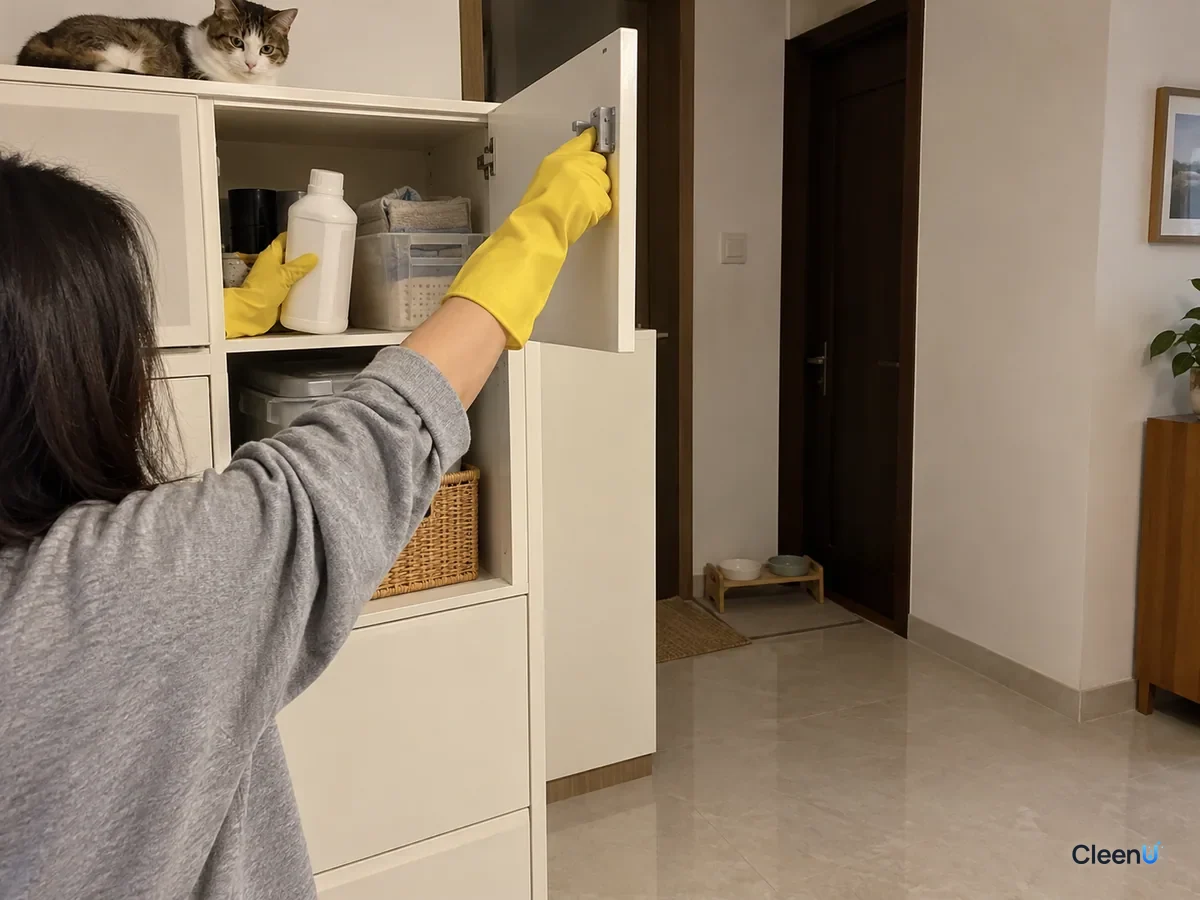
- Storage: original containers, capped, in a cabinet that latches. Cats jump, so high isn't out of reach.
- Cleanup: used wipes and rags go in a lidded can. If something spills, confine your pet first.
My cat licked a cleaning product: what to do, in order
After a lick, a spill, or paws in a wet cleaner
- Move your pet away from the area, put on gloves, and grab the product container so you can read the ingredients and strength
- Call your veterinarian right away, or the ASPCA Animal Poison Control Center at (888) 426-4435 or Pet Poison Helpline at (855) 764-7661 (fees may apply); say what product, roughly how much, and when
- Don't induce vomiting at home, and never use hydrogen peroxide to make a cat vomit
- If it's on fur or paws, rinse with plenty of water, dry, and keep your pet from licking
- Call even if your pet seems fine; some ingredients cause signs hours later
Why not induce vomiting? Merck notes that vomiting essential oils risks inhaling them, and corrosive products damage the esophagus again on the way up, so the sources agree: don't induce vomiting unless a vet tells you to (accessed Oct 2026). The vet will need the exact ingredients from the container.
Go straight to an emergency vet if you see these signs
Drooling, a red or ulcerated mouth, repeated vomiting, wobbliness, lethargy, rapid breathing, seizures, or squinting and tearing after a splash to the eye. Cornell Feline Health Center lists lethargy, wobbliness, drooling, rapid breathing, diarrhea, seizures, and sudden vomiting among signs that need emergency care. Don't wait for signs to fade; bring the product container and go.
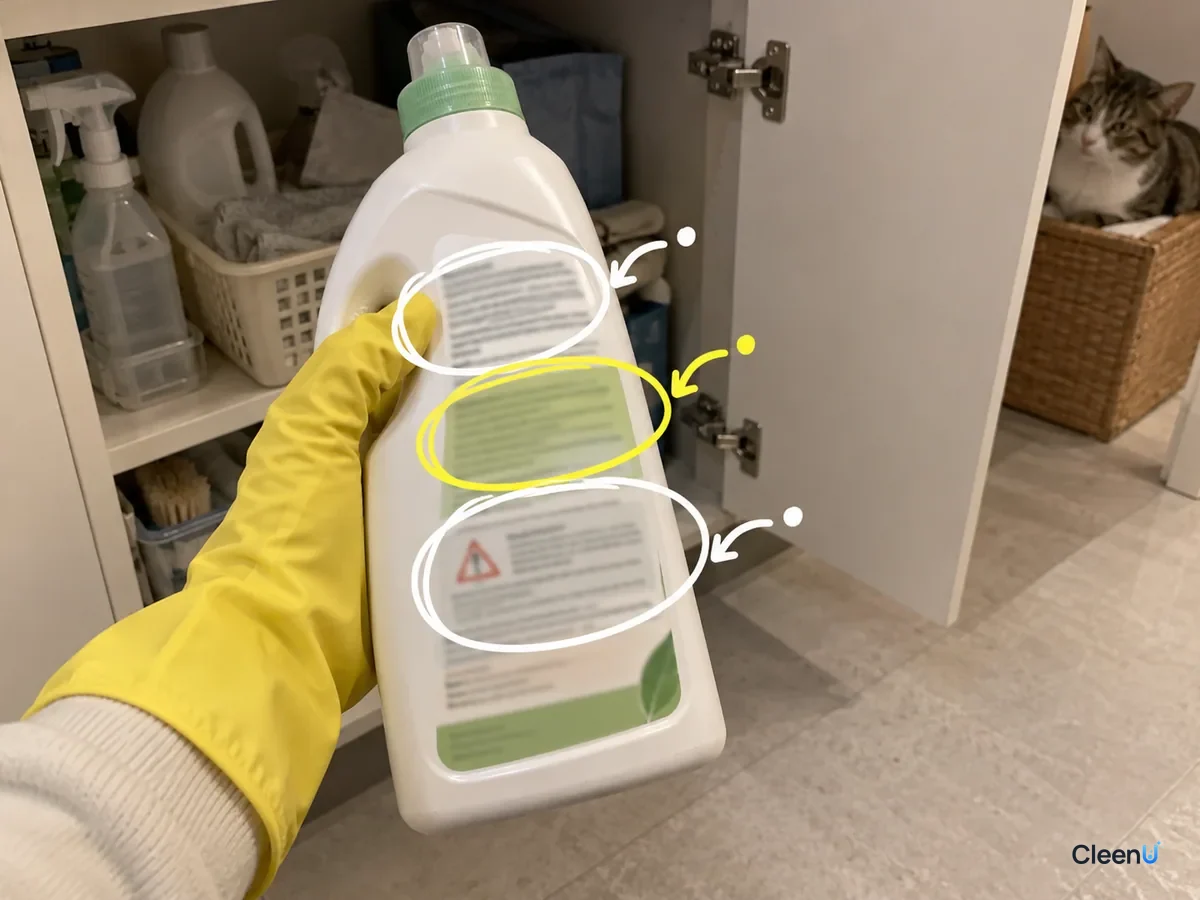
How to read a cleaner's label in three steps
- Ingredients: look for quats (benzalkonium chloride, didecyl dimethyl ammonium chloride, alkyl dimethyl benzyl ammonium chloride), phenols (phenol, o-phenylphenol, chloroxylenol, cresols), sodium hypochlorite, ethanol or isopropyl alcohol, and fragrance or essential oils such as tea tree oil or limonene.
- Product type: products labeled to disinfect or sanitize usually carry stronger actives than daily cleaning needs; those labeled to clean or remove odors fit pet areas better.
- Directions: look for a dilution rate, a rinse step, and a warning to keep children and pets away.
After use, press a white paper towel on the dried surface; not damp, tacky, or slick means little residue.
What a pet-friendly cleaner looks like on paper
Once you can read a label, turn it around and ask what a cleaner suited to a pet home should look like. The answer starts with what's left out:
A quick check for an everyday cleaner in a pet home
- Ingredients: no quats or phenols, no added fragrance by default, and no high-strength essential oils sold as a feature
- pH: near-neutral for everyday floor cleaning, gentle on floor materials and easy to wipe clean
- Residue: once the mopped floor is dry, the back of your hand finds nothing tacky, hazy, or slick
- Odor control: odor is broken down or trapped, not covered with a stronger scent
- Label directions: a clear dilution rate and "keep pets away until dry"
Why is scent the trade-off people argue about most? A fragrance we enjoy can be a lot for an animal with a far stronger nose, and whatever stays on floors and fur gets licked. As covered above, tea tree and citrus oils, common sources of "natural" scent, are exactly the kind that carry more risk for cats, so a natural essential-oil scent isn't a plus in a pet home. Fragrance-free has a side benefit too: with no perfume in the air after mopping, it's easier to tell whether the source of an odor is really gone.
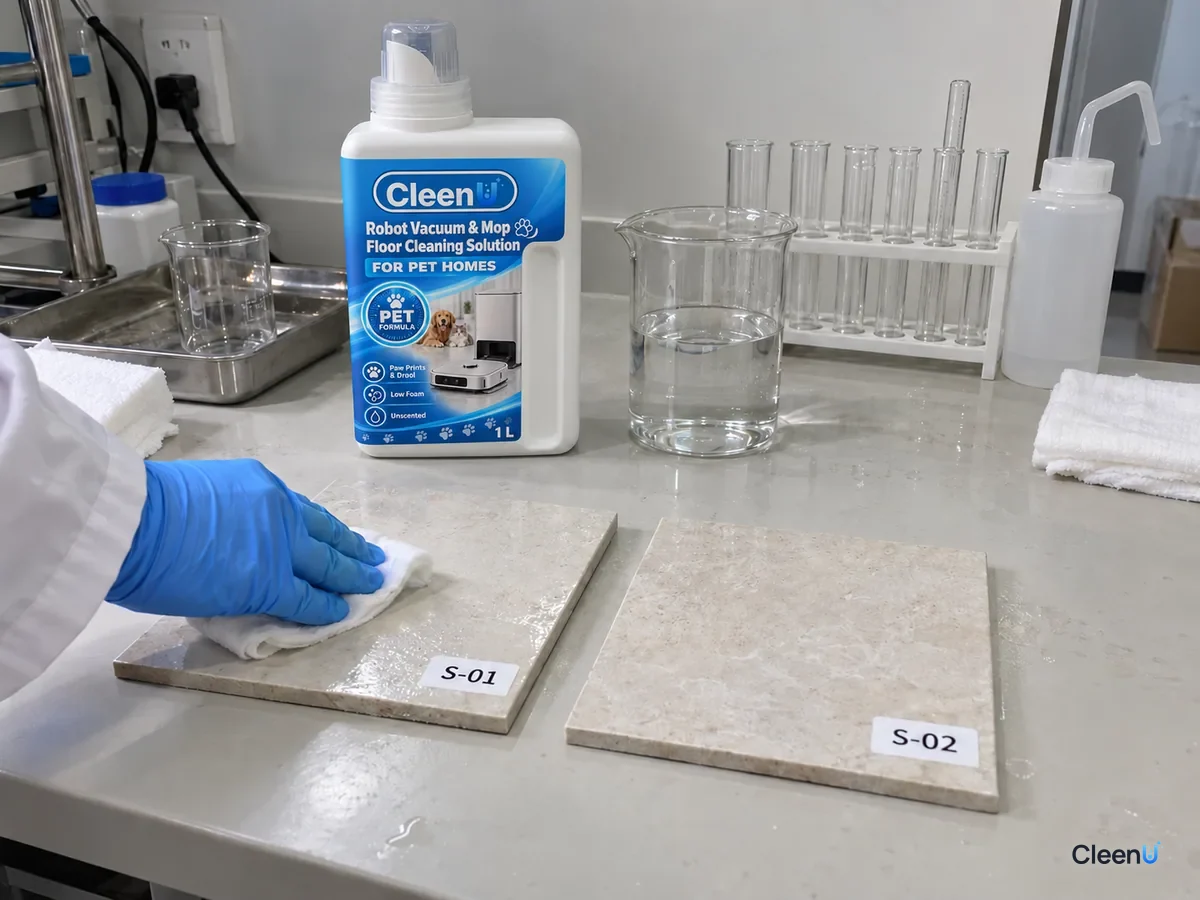
Why care so much about residue? Pets lick floors and lie on them, so part of whatever film is left on a dry floor ends up in their mouths. The more surfactant you leave and the harder it is to wipe off, the more noticeable that film. Dosing to the label and letting the floor dry fully matters more than going stronger. You can check at home with a dark tile or a mirror: wipe one half with your diluted cleaner and the other with plain water, then look at it in side light and run a finger across once dry. If the two halves look and feel the same, residue at that dose is minimal.
Different pets and households, different extra steps
| Situation | Extra caution |
|---|---|
| Cats | Avoid phenols and concentrated essential oils first; keep quat products off surfaces cats lick, and wipe down after |
| Dogs | Dogs more often drink from mop buckets and lick wet floors; keep them out until floors dry |
| Birds | The ASPCA says birds should avoid diffusers entirely; it's sensible to avoid spray cleaners in the bird's room too |
| Young, senior, or pets with breathing, liver, or kidney issues | Less margin; the ASPCA advises pets with breathing problems to avoid diffusers; ask your vet before switching cleaners |
| Multi-pet homes | Isolation has to cover every animal; cats jump, so cabinets need latches |
CleenU's pet-home formula as an example: clear about what's left out
Take CleenU Robot Vacuum & Mop Floor Cleaning Solution for Pet Homes as an example. It contains no quats and no phenols, has no added fragrance, handles pet odor with a cyclodextrin-based odor neutralizer, runs pH 6.5–7.5 as a concentrate, and is solvent-free with no optical brighteners and no chlorine. Dilute about 1:50 to 1:100 in the clean water tank, typically 10–20 mL (about 0.3–0.7 fl oz) per fill, try it in one room first, and let floors dry before pets walk on them. If your model's manual says otherwise, follow the manual. Handle urine and vomit by hand first: blot, spray a fragrance-free enzyme cleaner until it reaches as deep as the urine went, let it dwell, blot, and air-dry, keeping pets away until dry.
These are facts about what the product leaves out, not a promise that a product can't affect your pet. Keep the routine: isolate, use the labeled amount, let it dry.
For a fragrance-free robot mop solution with no quats or phenols, take a look at our Robot Vacuum & Mop Floor Cleaning Solution for Pet Homes.
For more, see our pet home cleaning guide.
Cleaning ingredients in homes with pets: common questions
Are enzyme cleaners safe for pets?
Enzyme cleaners are a reasonable choice in pet homes when used as directed: soak the stain, wait, blot, and keep pets off until it's dry. No cleaner is risk-free in every exposure, and enzyme cleaners shouldn't be combined with bleach or other chlorine disinfectants.
My cat licked a cleaning product. What should I do?
Move your cat away, grab the container, and call your vet or a pet poison hotline right away with the product name, amount, and time. Don't induce vomiting, and rinse any product off the fur with plenty of water. Call even if your cat seems fine.
Is bleach safe for cats when dry?
Diluted bleach that has been rinsed and allowed to dry is a much lower concern than wet or concentrated bleach. Dilute per the label, keep your cat out while you work, rinse surfaces your cat walks or licks, and let them dry before your cat returns.
Are essential oils toxic to cats?
Concentrated essential oils carry clearly higher risk for cats, whose livers handle some of their compounds poorly. Don't put oils on your cat or in mop water, and diffuse only with your cat out of the room, airing it out afterward.
Can I spray pet odor eliminator directly on my pet?
No. Odor eliminators are for surfaces and rooms, not fur, faces, or eyes. If your pet smells, use pet wipes or a bath; a sudden change in body odor can be a health sign worth a vet visit.
Are "natural" cleaners better for homes with pets?
Not automatically. Essential oils are natural, and tea tree oil is the oil most often involved in reported pet poisonings. Judge a cleaner by its ingredients, strength, and directions, not the word natural.
Can I use disinfecting wipes on my cat's bowl or cat tree?
We don't recommend it. Many disinfecting wipes contain quats, and bowls and cat tree platforms are surfaces your cat licks and lies on. Wash bowls with dish soap and rinse; if you must disinfect, follow the label, wipe with water, and let it dry.
How long after cleaning can my cat come back in?
Wait until surfaces are completely dry. Hard floors dry fairly quickly with airflow, while carpet and upholstery take longer. When a pressed paper towel comes up dry and not tacky and there's no strong smell, your cat can return.
Can I use a diffuser in a home with cats?
Avoid it if you can. If you do, use it in a room your cat can't enter, keep sessions short, and air the room out; Merck suggests under 30 minutes. Skip diffusers entirely if your cat has breathing problems or you keep birds.
Is a fragrance-free cleaner automatically fine for cat homes?
Fragrance-free handles only one ingredient group. Also check for phenols, quats, and high-strength alcohol, and follow the directions. Fragrance-free plus a clean ingredient list, the labeled amount, and dry surfaces is the full routine.
Sources
- Merck Veterinary Manual: "Toxicoses From Essential Oils in Animals"; "Phenols and Related Compounds as Antiseptics and Disinfectants for Use With Animals"; "Toxicoses From Corrosive Agents in Animals"; "Toxicoses From Household Cleaners and Personal Care Products in Animals"
- Pet Poison Helpline: "Essential Oils and Cats"; "Tea Tree Oil"; "Tips for Keeping Pets Safe While Disinfecting Your Home"; "#StopBleachingFido"
- ASPCA: "Is the Latest Home Trend Harmful to Your Pets?"; "What Pet Parents Need To Know About Corrosive Household Products"; Animal Poison Control
- Cornell Feline Health Center: "Poisons"
- FTC: 16 CFR 260.10, Non-toxic claims; April 12, 2016 press release on "All Natural" claims. CPSC: 16 CFR 1500.122
All sources accessed October 2026. This article isn't veterinary or legal advice. If your pet shows any symptoms, contact your veterinarian right away.
Whether a cleaner is a problem for your cat depends on the ingredient, its strength, and the exposure. Most cleaners used as labeled and allowed to dry are low concern; concentrated essential oils, phenols, quats, bleach, and alcohol need more care, and cats are more sensitive to several. Treat "natural" as a claim and read the ingredients and directions. Make isolation a habit: pets out while you clean, back only when surfaces are dry, concentrates locked away, used wipes in a lidded can. If your pet licks or steps in something, bring the container and call your vet; don't induce vomiting.