
How-to
How to Clean Dull, Dingy Tile Floors
Direct answer
Dull, dingy tile is usually cleaner residue, grease film, and dust built up in layers. Scrub section by section with a floor cleaner to lift it, rinse with plain water, and dry. Dark grout needs separate treatment, and glaze that's worn dull can't be restored by cleaning.
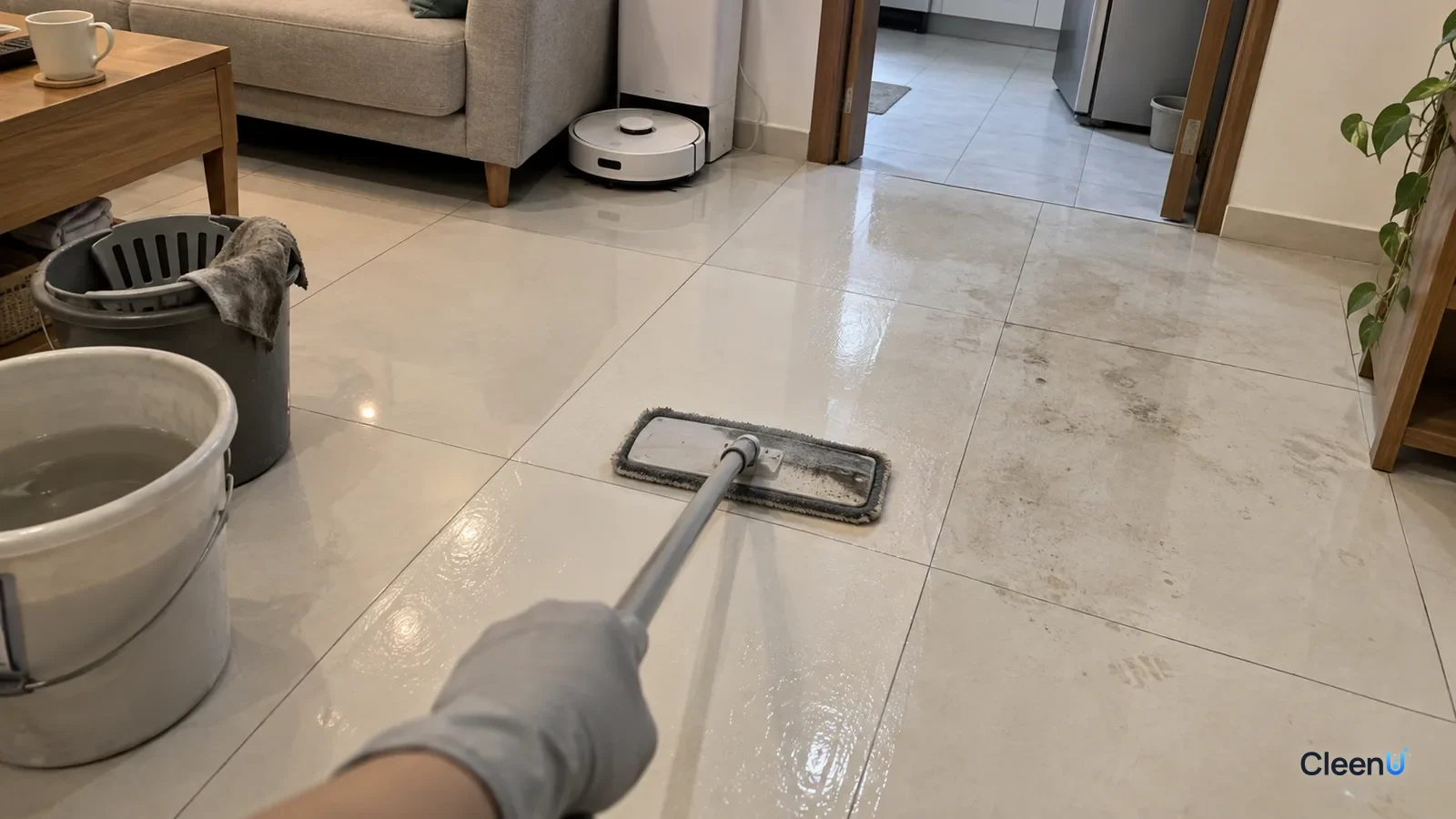
Newly installed tile is bright and clean. Two or three years later the whole floor looks gray, the hallway and kitchen doorway look yellowish, and you can see hazy patches in the light. You mop every day and it keeps getting dingier.
That gray or yellow cast is rarely the tile itself changing color. Almost always, there's an invisible layer sitting on top. Find it and remove it, and most of the original look comes back.
Why tile turns gray or yellow
Ceramic and porcelain tile have a glaze on top that's dense and doesn't absorb water, so dirt usually sits on the glaze. What makes it look gray or yellow is several layers stacked together.
Cleaner residue. Using too much cleaner, or dish soap or "care" products, without a rinse leaves a thin film of surfactants and other ingredients. One time you can't see it; dozens of times later it's a gray, tacky film that grabs dust.
Grease film. The floor near the kitchen and around the dining table picks up grease from shoes and cooking. That grease slowly oxidizes and turns yellow.
Dust and skin oil. Bare feet and socks leave skin oil on the floor. Mixed with dust, it forms a darker "path" along the routes people walk most.
Hard water. Dried mop water leaves calcium and magnesium behind, a white haze on dark or polished tile and a dull, cloudy look on light tile.
A dirty mop. A pad full of grease and grit spreads it back across the floor.
Two situations cleaning can't fix: dark grout (that's a grout problem and needs separate treatment), and glaze that has been worn dull by years of grit and foot traffic, which needs professional refinishing.
How to tell which one you have
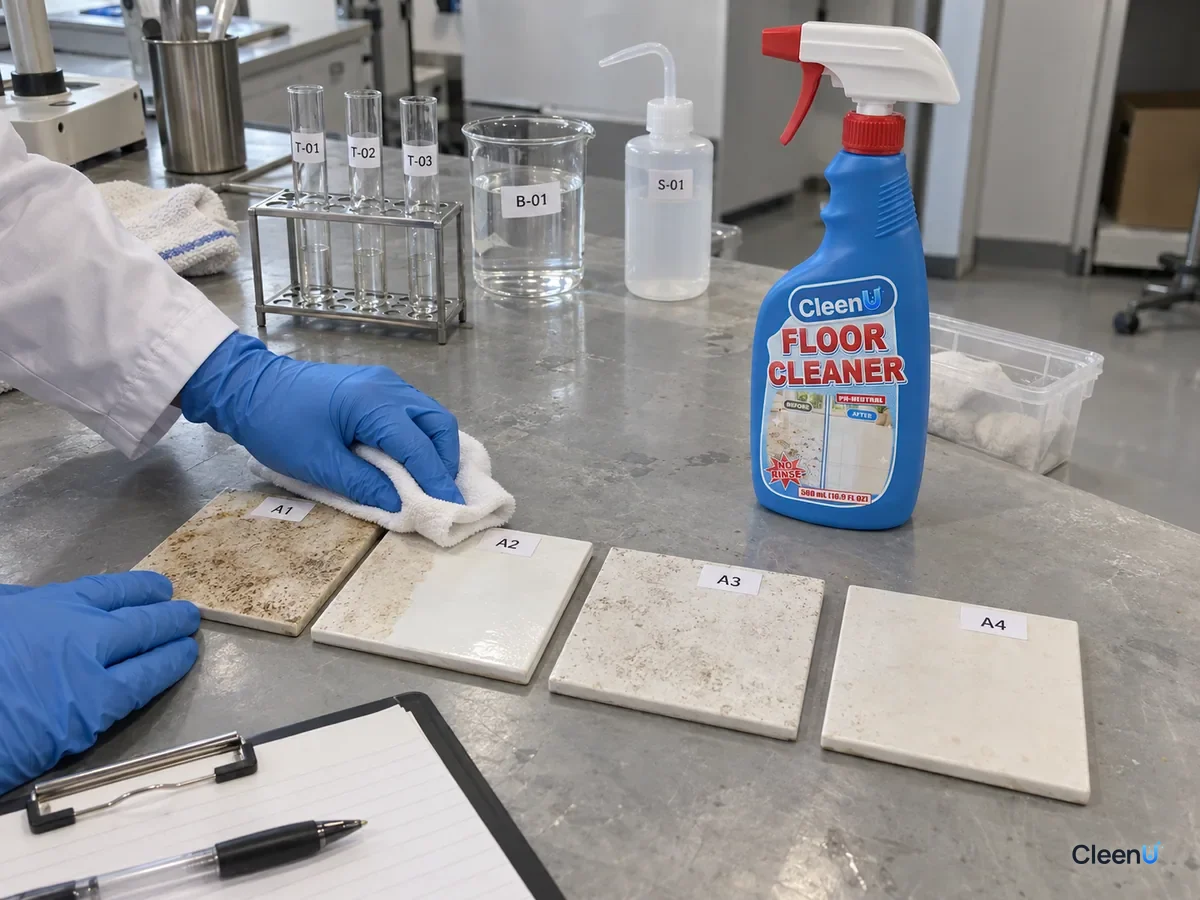
Take a clean, white, damp cloth and rub a small patch firmly where the floor looks dullest, then check the cloth and the floor.
Gray-yellow, slightly tacky dirt on the cloth: residue and grease film. Cleaning will fix it.
The rubbed spot is noticeably brighter: same thing. A deep clean will work.
The floor is still dull, feels less smooth, and shows fine scratches: worn glaze.
Only the grout lines are dark: treat the grout; the tile is fine.
Using a floor cleaner for a deep clean
Take CleenU Floor Cleaner as an example. It's a pH-neutral, no-rinse floor cleaner, pH 7.0 to 8.5 as supplied, made with low-foam nonionic surfactants and a small amount of fast-drying solvent, with low solids. For routine cleaning you spray and mop, or mix 1:20 with water for larger areas, no rinse needed.
A deep clean works a little differently. First you scrub up the long-term residue and film, then remove it completely. The nonionic surfactants emulsify grease film and skin oil so they release from the glaze, and the low-foam formula means you don't get a bucket of suds to rinse away. Because you're lifting months of buildup, finish this one deep clean with a plain-water pass to carry off the loosened dirt and cleaner. After that, go back to no-rinse mopping.
It's made for sealed hard floors like ceramic tile, vinyl, laminate, and sealed wood. Marble, terrazzo, and other natural stone need a neutral cleaner labeled for stone, and it isn't for unsealed or waxed wood or carpet.
Six steps to deep clean tile floors
A deep clean in six steps
Clear the room, sweep, and vacuum
Move chairs, rugs, and anything else you can, then sweep or vacuum up grit, hair, and dust. Grit scratches the glaze when you scrub.
Apply cleaner one section at a time
Divide the room into sections and work about 10 to 20 square feet at a time. Spray floor cleaner, or spread a thin layer of 1:20 solution, just enough to wet the floor without puddles.
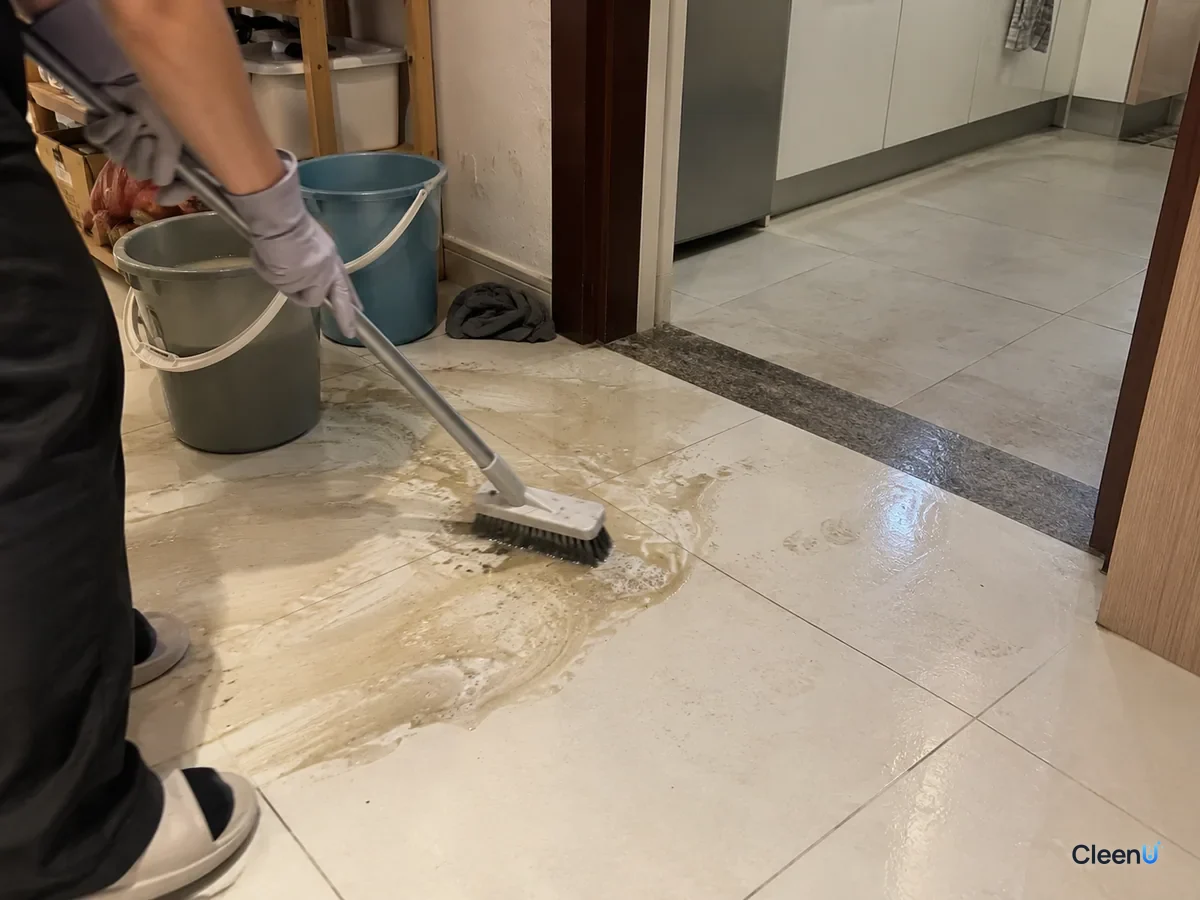
Scrub with a deck brush
Scrub back and forth with a deck brush or stiff brush, focusing on high-traffic paths, the kitchen doorway, and around the table. You'll see gray-yellow dirty water come up; that's the residue and grease film.
Caution:Don't use steel wool or a wire brush; they scratch the glaze.
Mop up the dirty water
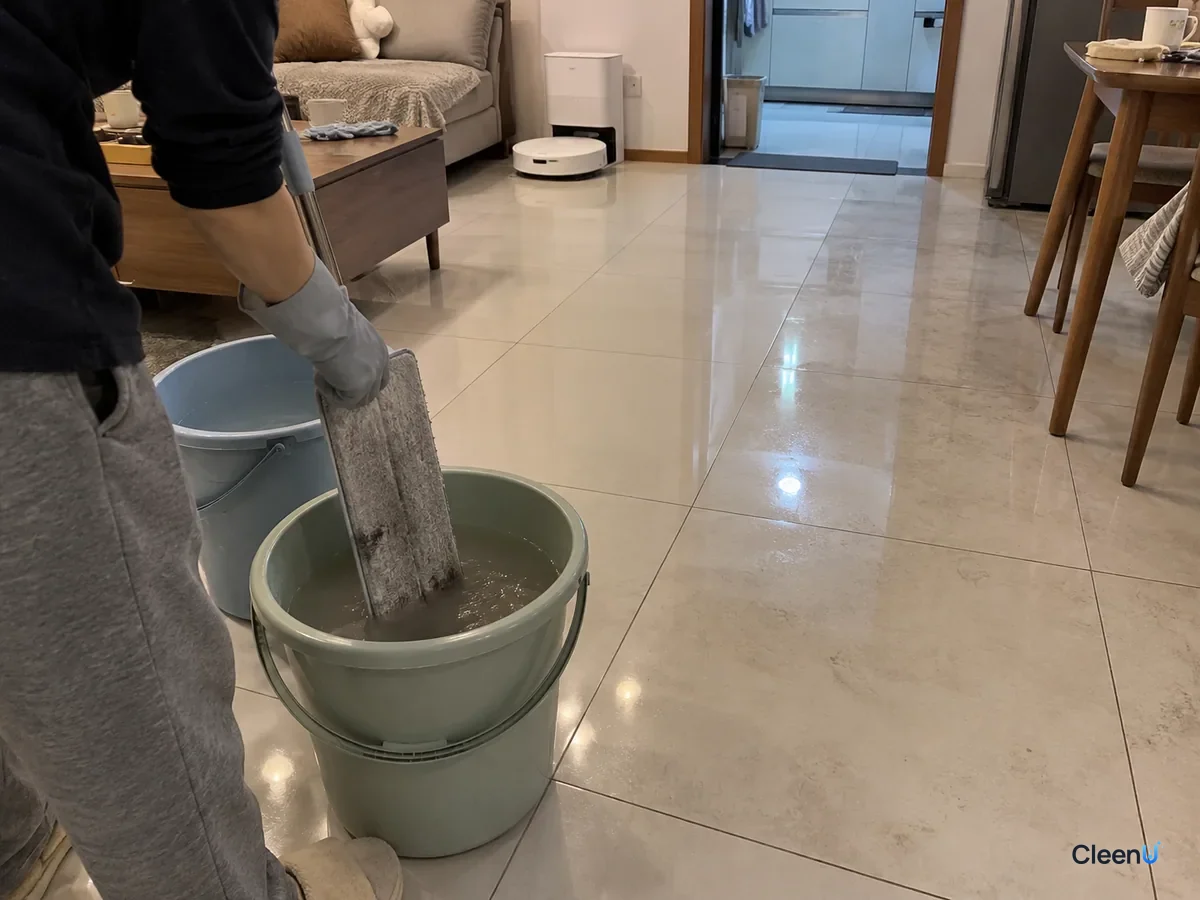
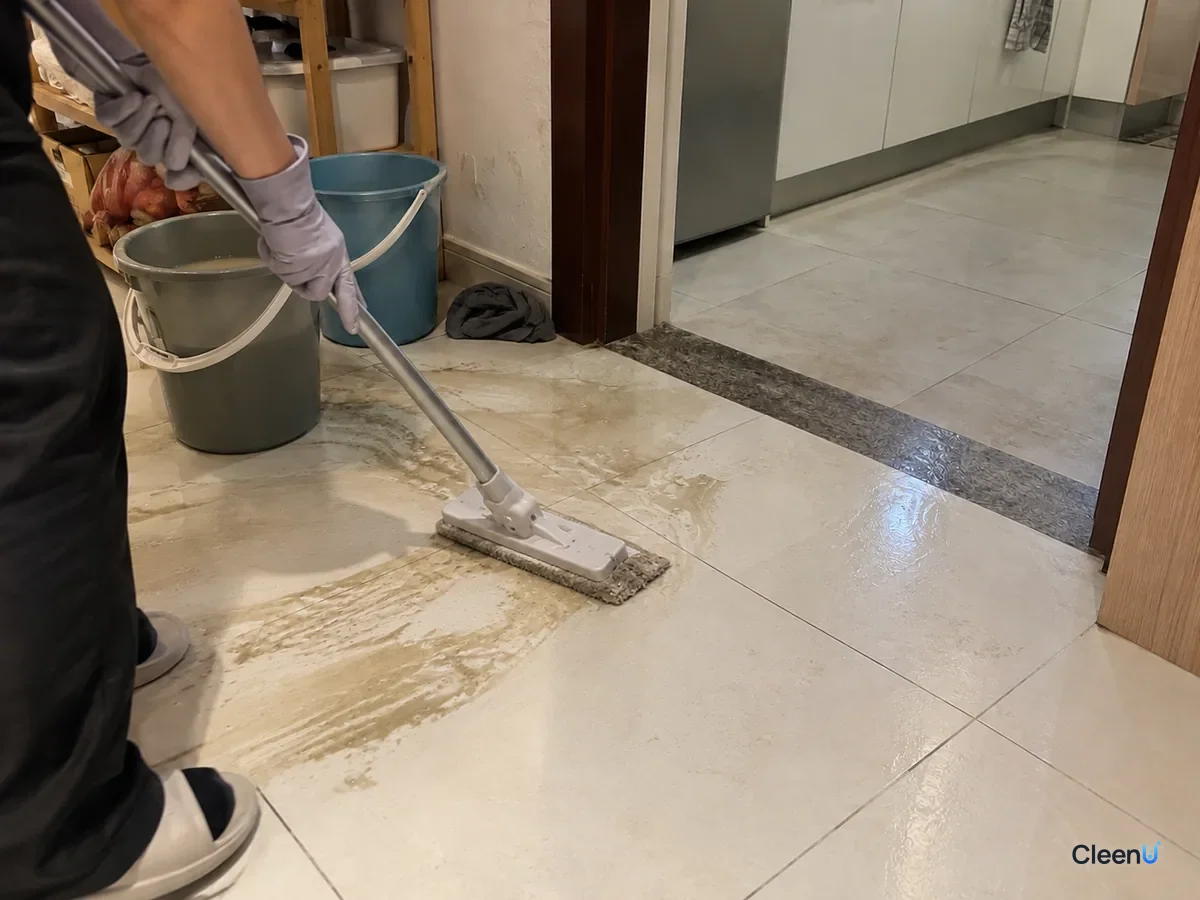
While the floor is still wet, mop up the dirty water, rinsing and wringing the pad as soon as it gets dirty. Use two buckets: one to rinse the dirty pad and one for clean water.
Do one plain-water pass
For this deep clean, mop again with clean water and a wrung-out pad to remove the loosened dirt and any cleaner. When the floor looks clear and feels neither gritty nor tacky, you're done.
Dry and check the grout
Open a window and dry with a dry pad if needed so hard water doesn't leave spots. Once it's dry, look again. If the tile looks good but the grout is still dark, treat the grout separately.
Keeping tile from getting dingy again
Measure cleaner per the label with a cup instead of pouring by eye. Double the cleaner doesn't double the clean, but it does double the residue.
Don't mop with dish soap or body wash, and don't use clean-and-shine products on tile.
Wash and dry the mop pad after each use and change dirty water promptly.
Put a mat at the entry to catch grit and mud, and a washable mat by the kitchen to catch greasy footprints.
Deep clean every one to two months so buildup never gets to the gray-yellow stage.
For related problems like streaks, stickiness, and slick floors, see Why floors look streaky after mopping and Sticky floor after mopping. For other floor types, see How to clean every type of floor.
Why mopping doesn't move it but scrubbing does
Same bottle of floor cleaner, two very different results. Dozens of passes with a flat mop change nothing, but a few minutes with a deck brush turn a bucket of water gray-yellow. The difference is mechanical action.
Built-up residue and oxidized grease form in layers. The bottom layer is bonded tightly to the glaze, the middle holds dust and skin oil, and fresh footprints sit on top. A mop pad is soft and flat, so it only reaches the top layer, and its pressure is spread across the whole pad. Brush bristles act independently. They concentrate pressure on tiny points and work into the fine texture of the tile, prying up soil that the cleaner has already wetted and emulsified. The cleaner weakens the bond between the film and the glaze; the bristles actually separate it. Skip either one and you get half the result.
That's also why you don't need a lot of product. The liquid only has to wet the floor enough to give the bristles something to push. Pour too much and the loosened soil just floats in a big puddle the mop can't absorb, and it settles back onto the floor as it dries.
Different tile, different scrubbing
Glossy glazed tile is the densest surface, so soil mostly sits on top. A softer nylon brush is enough. The key is getting all the dirty water up afterward, because glossy tile shows water spots and haze more than anything else.
Matte and rustic tile have a fine, textured surface. Dust and grease settle into the tiny low spots where a mop can't reach, which is why matte tile is the one that seems to get grayer the more you mop. Use a slightly stiffer brush and go over it in two directions so the bristles hit the texture from different angles.
Anti-slip tile, common on balconies and outside bathrooms, has an even deeper texture. Once it's dirty it looks noticeably darker, and a mop barely touches it. For a deep clean here, the brush does most of the work and the cleaner is the helper.
Polished porcelain has been ground smooth but can have invisible micropores. If it was never treated against staining, colored liquids can soak in and leave marks that won't wipe off. If a white cloth comes away clean but some spots still show color, that's likely a stain inside the tile, not residue on top, and more scrubbing won't help.
How to tell the floor is actually clean
After the final plain-water pass and once the floor is fully dry, rub a clean, damp white cloth hard over what used to be the dirtiest spot. If the cloth stays essentially clean, the residue and grease film are gone. If it picks up visible color, that area can take another round. Feel matters too. Barefoot or with your palm, the floor shouldn't feel draggy, tacky, or slick. A slick floor usually means cleaner wasn't fully rinsed, and one more plain-water pass fixes it.
Adjusting for your situation
The grease film is heaviest by the kitchen doorway and in front of the stove. Let the cleaner sit on those spots for a minute or two before scrubbing so it can wet the film, but don't let it dry. Very heavy patches respond better to two rounds than to one round with more product.
In hard-water areas, the last step has to be drying the floor, with a dry mop or good airflow. Otherwise the rinse water dries into a white haze and the floor looks like you never scrubbed it.
If a robot mop handles the daily work, set its water flow back to normal after the deep clean and use only cleaning solution made for robot mops in its tank, never regular floor cleaner. For more on robot mopping tile, see Robot mops on tile and vinyl plank.
Stop if you see this
If scrubbing scratches or dulls the glaze, or tiles are loose, hollow-sounding, or cracked, stop scrubbing. Don't use this method or a non-stone cleaner on natural stone. If cleaner gets in your eyes or irritates your skin, rinse with water. The floor is slippery while you scrub, so keep kids and older family members out until it's dry. Don't mix with acidic or chlorine products.
Dull, dingy tile floors: common questions
How do I make dull tile look new again?
Usually it's residue and grease film. Scrub in sections with floor cleaner, mop up the dirty water, do one plain-water pass, and dry. It brightens noticeably.
Has my tile turned yellow permanently?
Usually not. Grease and skin oil oxidize and yellow on top of the glaze. Rub a small patch with a white damp cloth; if it brightens, it's dirt.
Will vinegar make tile shine?
Vinegar helps a little with hard-water haze but does almost nothing for grease film or residue, and over time it makes cement grout brittle.
How often should I deep clean tile floors?
If you use the right amount of cleaner day to day, every one to two months is enough; more often by the kitchen and entry.
Do I have to rinse after scrubbing?
For a deep clean, yes, to remove what you scrubbed loose. For routine mopping at the label rate, no.
Can cleaning fix worn, dull glaze?
No. Wear is a change in the glaze itself. Cleaning removes dirt on top; restoring the shine takes professional refinishing.
For a low-foam, low-solids cleaner that's no-rinse for everyday mopping and doesn't foam up when you scrub tile during a deep clean, take a look at our Floor Cleaner.
Dull, dingy tile is usually cleaner residue, grease film, skin oil, and dust layered on the glaze, made worse by hard water and dirty mops. Rub a patch with a white damp cloth: if it brightens, it's dirt and a deep clean will work; if it's still dull and scratched, the glaze is worn. To deep clean, apply floor cleaner section by section, scrub, mop up the dirty water, do one plain-water pass, and dry, then treat dark grout separately. Measure cleaner, wash your mop, use entry mats, and deep clean every month or two to keep tile looking clean.