
How-to
How to Clean a Greasy Kitchen Floor
Direct answer
Sweep up crumbs and grit first, then mop with a floor cleaner that cuts grease. In front of the stove and sink, spray it on and let it sit briefly before mopping. When there's a lot of grease, finish with a plain-water pass and dry the floor so no slick film is left behind.
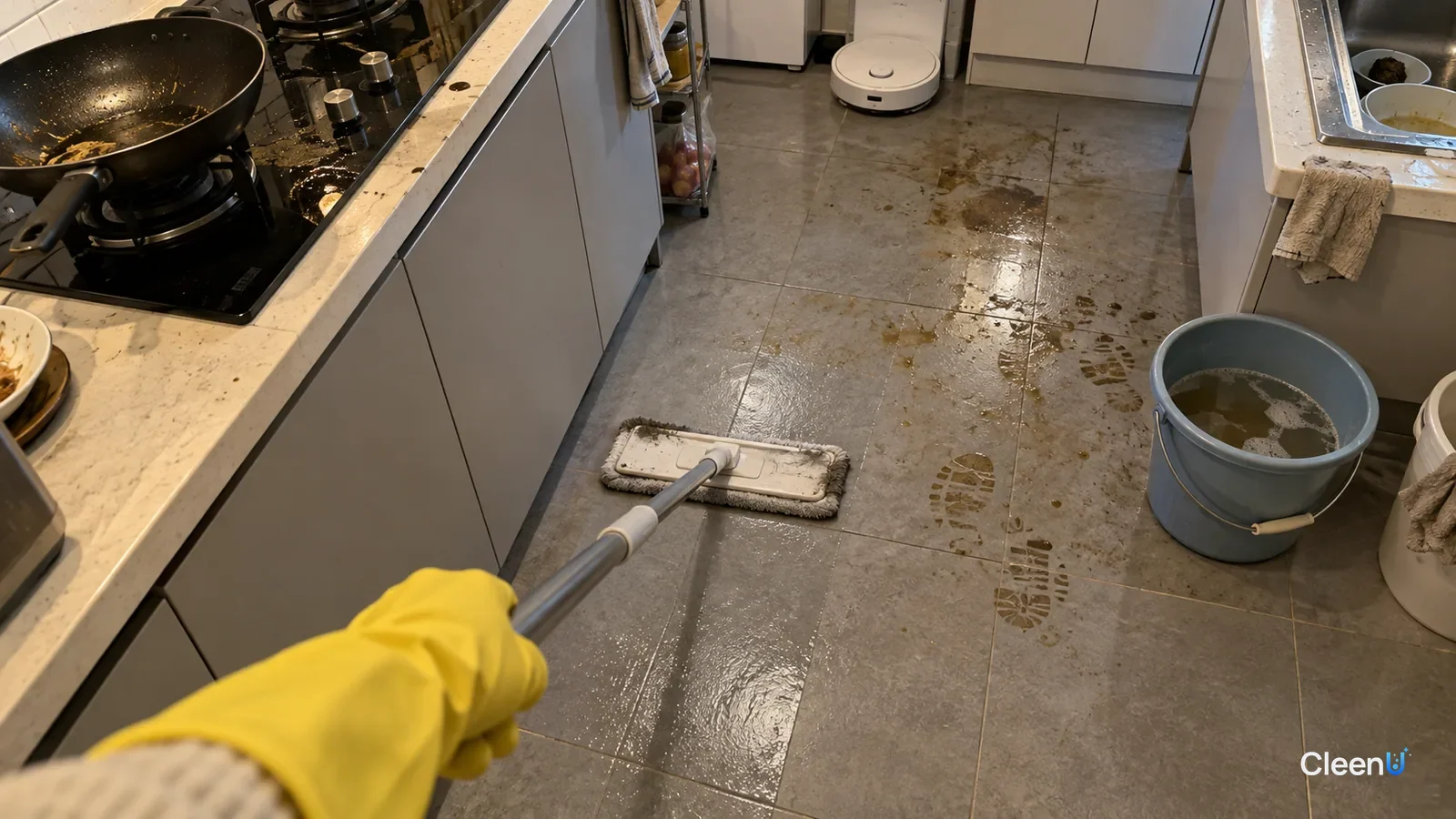
The kitchen floor gets dirty fastest and is the hardest to get truly clean. In front of the stove it's shiny and tacky underfoot, in front of the sink it's always damp with crumbs and water marks, and walking out of the kitchen leaves a trail of greasy footprints. Mop it the usual way and the grease just spreads, and the floor gets slicker.
Where kitchen floor grease comes from
Cooking fumes: whatever the range hood doesn't catch slowly settles, especially within a few feet of the stove.
Splatter and drips: oil from frying and sauce dripped while plating.
Shoes and slippers: walking around the kitchen spreads grease on the floor and carries it into the rest of the house.
Food debris: rice, greens, and flour mixed with grease turn sticky.
Fresh grease is liquid and mops right up with cleaner. Left alone, it oxidizes, gets tacky and yellow, and binds with dust into a film that takes more effort.
Why a normal mop job makes it slicker
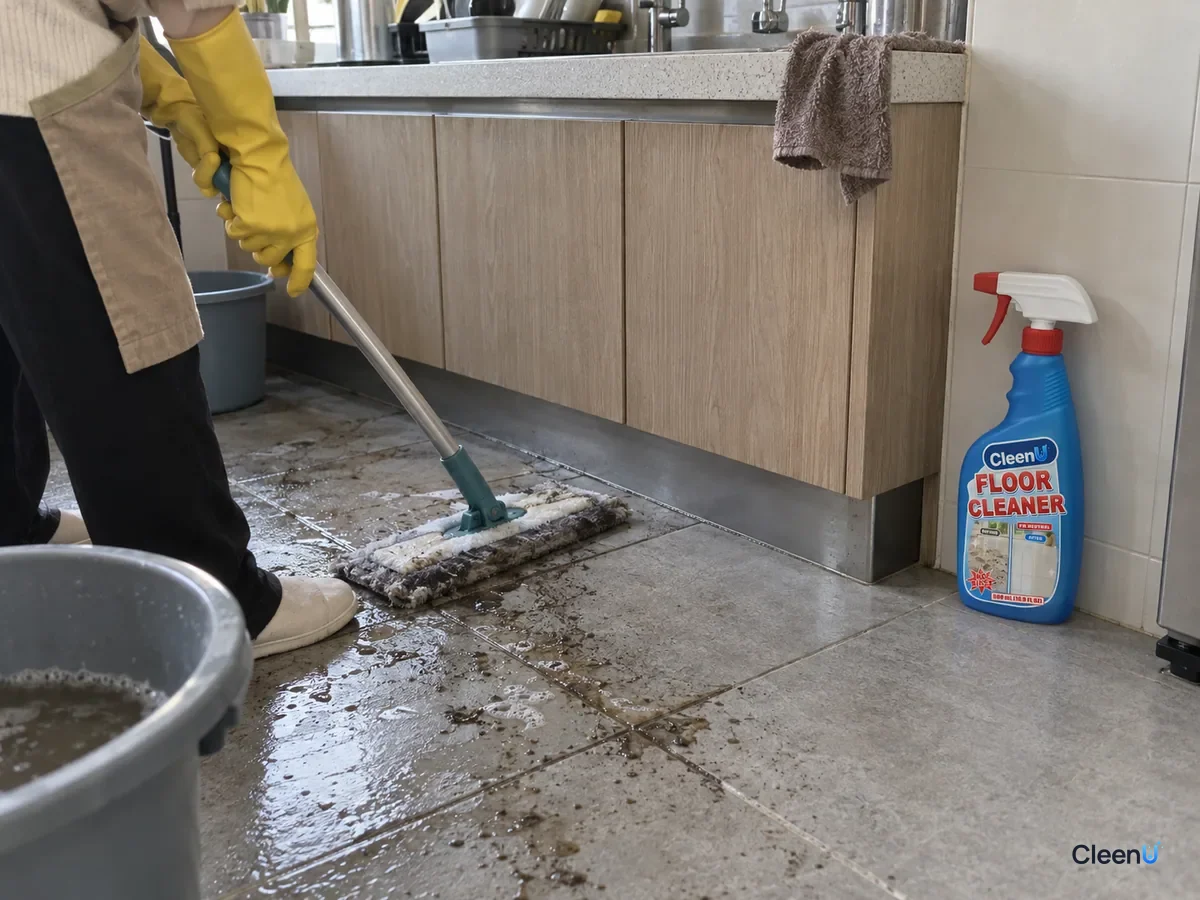
Plain water: oil and water don't mix, so water just pushes grease around and spreads it. When it dries, you have a thinner film over a bigger area, and it's more slippery.
Dish soap: it cuts grease, but it's foamy and high in solids. Without a rinse it leaves its own slick residue on top of the grease.
A dirty mop: a pad full of grease just moves grease from one spot to another.
Using floor cleaner in the kitchen
Take CleenU Floor Cleaner as an example. It's a pH-neutral, no-rinse floor cleaner, pH 7.0 to 8.5 as supplied, made with low-foam nonionic surfactants and a small amount of fast-drying solvent, with low solids. Spray and mop as is, or mix 1:20 with water for larger areas. The surfactants emulsify grease into tiny droplets the mop can pick up, the solvent helps dissolve the film and speeds drying, and low foam and low solids keep residue down.
For everyday greasy footprints, normal use is enough. When there's a thicker film in front of the stove, spray it straight on that area and let it sit a minute or two before mopping to give the surfactants and solvent time to work. On those heavy days, follow with a plain-water pass to remove the emulsified grease and cleaner together.
It's made for sealed hard floors like tile, vinyl, laminate, and sealed hardwood, not unsealed or waxed wood or carpet. If your kitchen has natural stone floors, use a neutral cleaner labeled for stone.
Six steps to mop a greasy kitchen floor
From sweeping to drying in six steps
Sweep up crumbs and grit
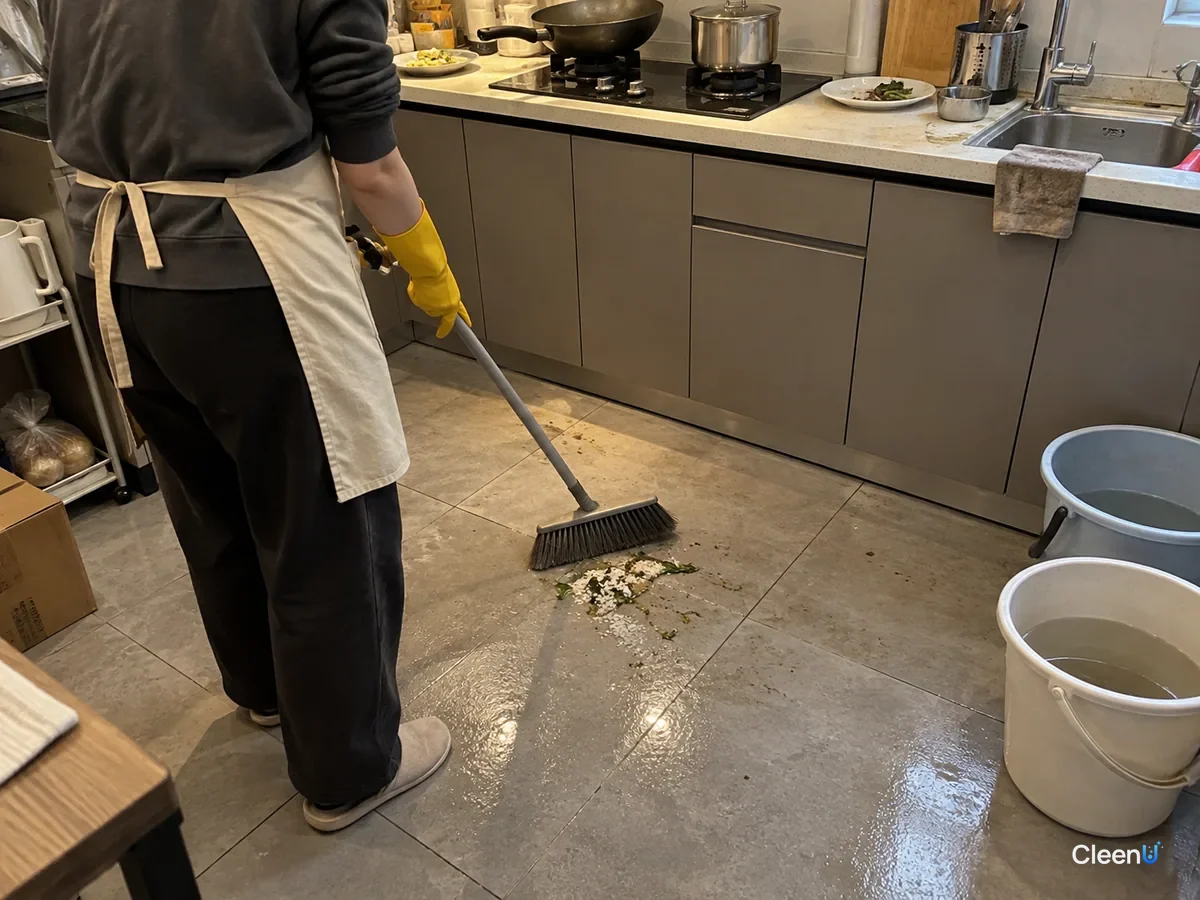
Sweep or vacuum up rice, greens, and grit first. Crumbs mixed with grease turn to paste under a mop, and grit scratches tile.
Pre-treat the greasiest spots
In front of the stove and sink, where the grease is worst, spray floor cleaner directly on the floor and let it sit a minute or two.
Mop with a clean pad
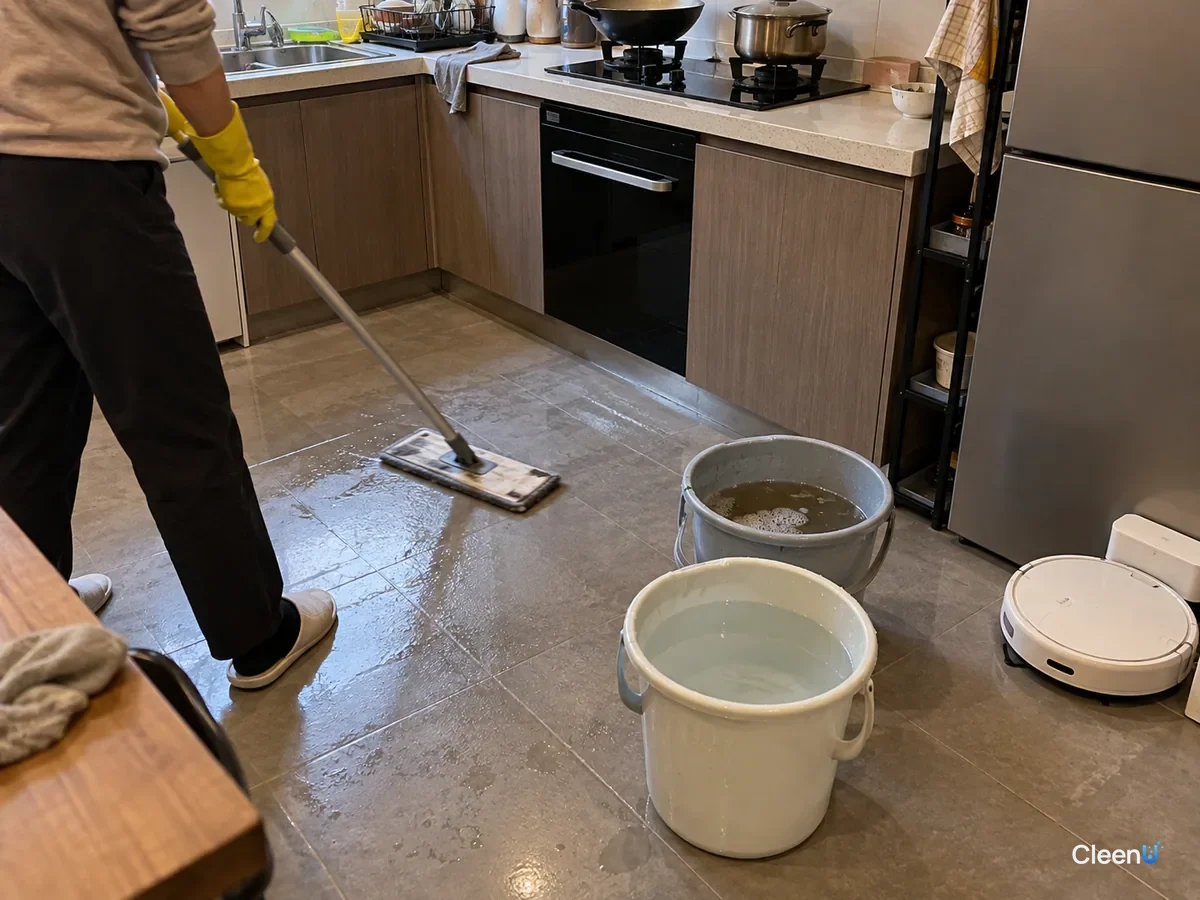
Use a flat mop with a microfiber pad or a spin mop with cleaner mixed 1:20, wring the pad until it's barely damp, and work from the back of the kitchen toward the door. Go over the pre-treated areas a few extra times.
Caution:As soon as the pad gets dirty, flip it or rinse it clean. Don't keep mopping with a pad full of grease.
Change the water and do a plain-water pass
On heavy-grease days, switch to a bucket of clean water and a wrung-out pad and go over the kitchen again to remove emulsified grease and cleaner. Skip this for light everyday grease.
Dry the floor and open a window
Go over the floor with a dry pad or open a window so it dries quickly. A wet kitchen floor is the easiest place to slip.
Don't forget the doorway
The stretch from the kitchen into the dining room or living room picks up greasy footprints too, so mop it as well.
Why some floors hold grease harder than others
The same kitchen grease behaves very differently depending on what it lands on.
Glazed ceramic tile is dense and smooth, so grease sits on top of the glaze. Once it's emulsified, a clean pad takes it right off. Textured and slip-resistant tile is another story. Those tiny ridges and dimples trap grease and fine dust together, and a mop pad only skims the high points. The film in the low spots stays put, which is why textured kitchen tile often looks dingy and feels draggy underfoot even after mopping. On that kind of tile, let the cleaner sit a little longer in the greasy zone so it can work down into the texture, then push the mop in one direction several times. For the small patch right in front of the stove, a soft brush pulls grease out of the texture better than any mop.
Grout lines are the other hiding spot. Cement grout is porous, so grease soaks in and turns dark along with the dust it holds. If the tile is clean but the grout is still dark, spray the grout lines, run an old toothbrush along them, and wipe up with a damp cloth. Mixing a stronger solution for the whole floor won't fix grout.
Vinyl and sealed wood have a coating or wear layer on top, so grease doesn't soak in. These floors don't like standing water, though, so wring the pad until it's barely damp and don't let cleaner sit long on the greasy patch.
How the cleaner actually moves grease
The root problem is that oil and water don't mix. Surfactant molecules have one end that's attracted to water and one end that's attracted to oil. The oil-loving ends work into the grease film and the water-loving ends face outward, breaking the film into tiny droplets that stay suspended in water. That's emulsification. The small amount of solvent helps soften grease that has already oxidized and turned tacky, so the surfactants can reach the bottom layer.
Emulsifying grease only makes it removable. The mop pad is what actually carries it off the floor. Microfiber grabs those droplets, and if you don't rinse the pad, it releases them again on the next pass. That's why a clean pad matters more than adding a little more cleaner.
How to tell the floor is actually clean
Once the floor is dry, walk across the area in front of the stove in socks or bare feet. If it isn't tacky or slick and your feet don't drag, the grease is gone. You can also look across the floor toward a window: no shiny patches and no arc-shaped mop streaks means you can stop.
If it's still sticky after drying, there are usually three reasons. The solution was mixed too strong and left residue. The pad was dirty and put grease back down. Or the heavy zone only got one pass, so the emulsified grease wasn't fully picked up. Don't add more cleaner. Grab a clean pad and go over that area with plain water, which usually solves it. If it's still slippery after a water pass, the floor probably has a wax or oil-based coating from a different product you used before, and you'll want to figure out what that was first.
When not to just keep mopping
If a pool of oil hits the floor, blot up the liquid with paper towels before you bring out any cleaner. Mopping it directly spreads that oil across the whole kitchen in one stroke. The same goes for spilled flour or cornstarch. Sweep it up dry first, because flour turns into paste the moment it meets a wet mop.
Keeping grease off the kitchen floor
Run the range hood while you cook, turn it on before you light the burner, and leave it on a few minutes after.
Put a washable grease-catching mat in front of the stove and wash it regularly.
Use a lid or splatter screen when frying, and wipe up splatter the same day.
Keep a pair of kitchen-only slippers so grease doesn't travel to other rooms.
After cooking each day, spot-mop in front of the stove with a sprayed mop, and mop the whole kitchen two or three times a week.
For tacky or slippery floors, see Sticky floor after mopping. For other floor types, see How to clean every type of floor. For backsplash and stovetop grease, see How to clean grease off a backsplash.
Stop if you see this
While the floor is wet and slippery, keep everyone, especially kids and older adults, out of the kitchen, and wear non-slip slippers yourself if needed. Don't use this method on natural stone or unsealed wood. Don't spray cleaner near a hot stovetop or mix it with acidic or chlorine products. If your skin stings, rinse with water.
Greasy kitchen floors: common questions
What should I mop a greasy kitchen floor with?
A low-foam, low-residue floor cleaner that cuts grease. Let it sit a minute or two on the greasiest spots, and finish with a plain-water pass on heavy days.
Why does my kitchen floor get slipperier when I mop?
Usually plain water spreads the grease, or dish soap leaves residue. Use a floor cleaner to emulsify and lift the grease, and keep the pad clean.
Do I need to mop the kitchen every day?
Spot-mop in front of the stove after cooking each day, and mop the whole kitchen two or three times a week.
Can I mop with kitchen degreaser?
We don't recommend using a strong alkaline degreaser on the whole floor; it leaves more residue, can damage some floors, and gets slippery. Use floor cleaner and let it sit on greasy spots.
How do I clean greasy footprints by the kitchen door?
Spray floor cleaner on the mop or a cloth, wipe, then dry. A mat at the doorway cuts down on grease tracked out.
Do I need to rinse after mopping?
Not for routine mopping at the label rate. On days with heavy grease in front of the stove, when you've used it full strength, a plain-water pass helps.
For a low-foam, low-residue floor cleaner that emulsifies kitchen grease and is no-rinse for everyday mopping, take a look at our Floor Cleaner.
A greasy kitchen floor is cooking fumes, splatter, drips, and tracked-in grease building up layer by layer, and plain water or dish soap just spreads it into a slick film. Sweep first, spray floor cleaner directly in front of the stove and sink and let it sit a minute or two, mop with a clean pad, and on heavy days finish with a plain-water pass and dry the floor. Swap or rinse the pad as soon as it's dirty, and mop the doorway too. Run the range hood, use a grease mat by the stove, and spot-mop after cooking, and the floor won't turn tacky again.